Getting It Booked In
King is a small town
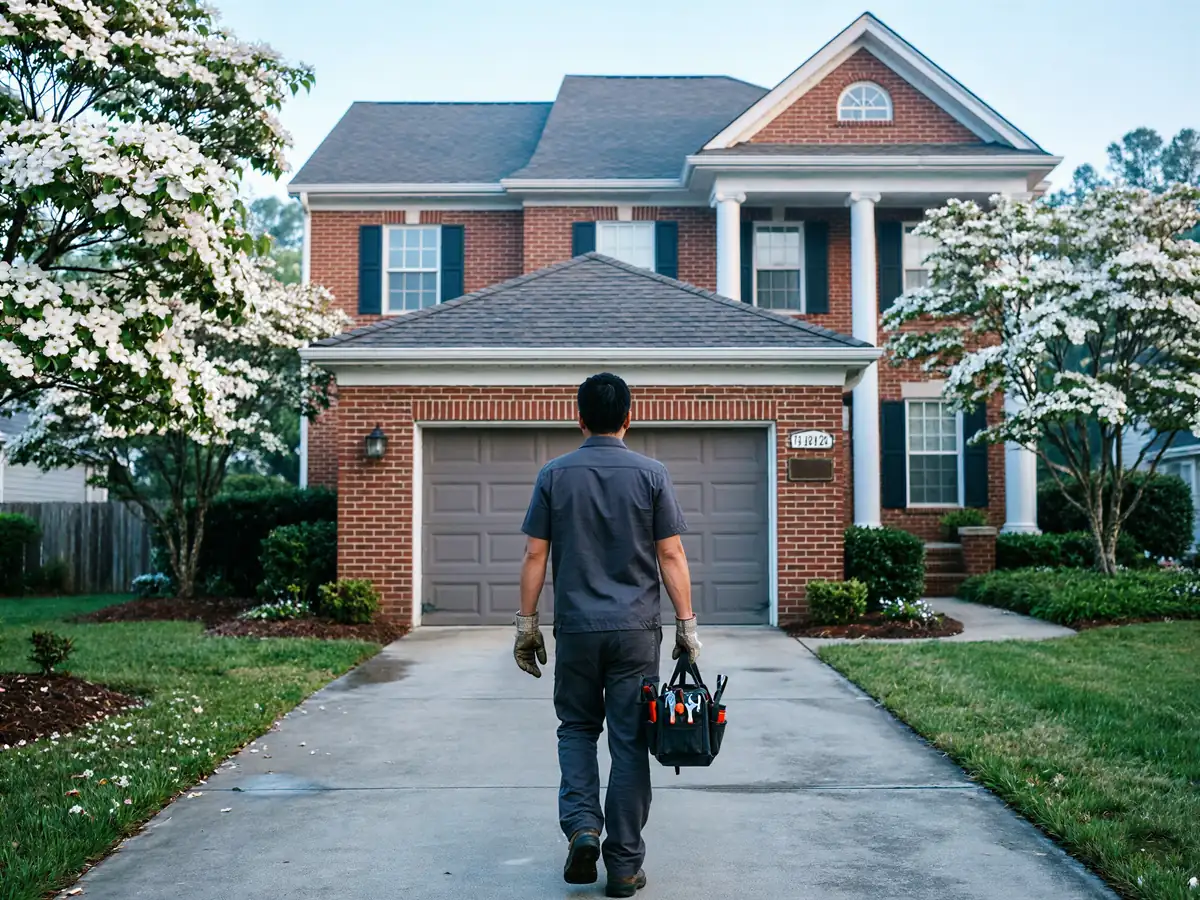
About 3,074 households sit inside it, which is a fraction of the 56,928 across the wider Winston-Salem service area we cover. That matters for how we handle a call here: we're not running a crew that's already on your street, we're coming from Winston-Salem, roughly 13 miles out. We don't pretend otherwise. What that means in practice is we batch King calls where we can and we're upfront on the phone about when we can get to you, rather than promising a window we can't hit from that distance.
- 3,074 households
- 13 miles
When you call, tell us what the opener is doing
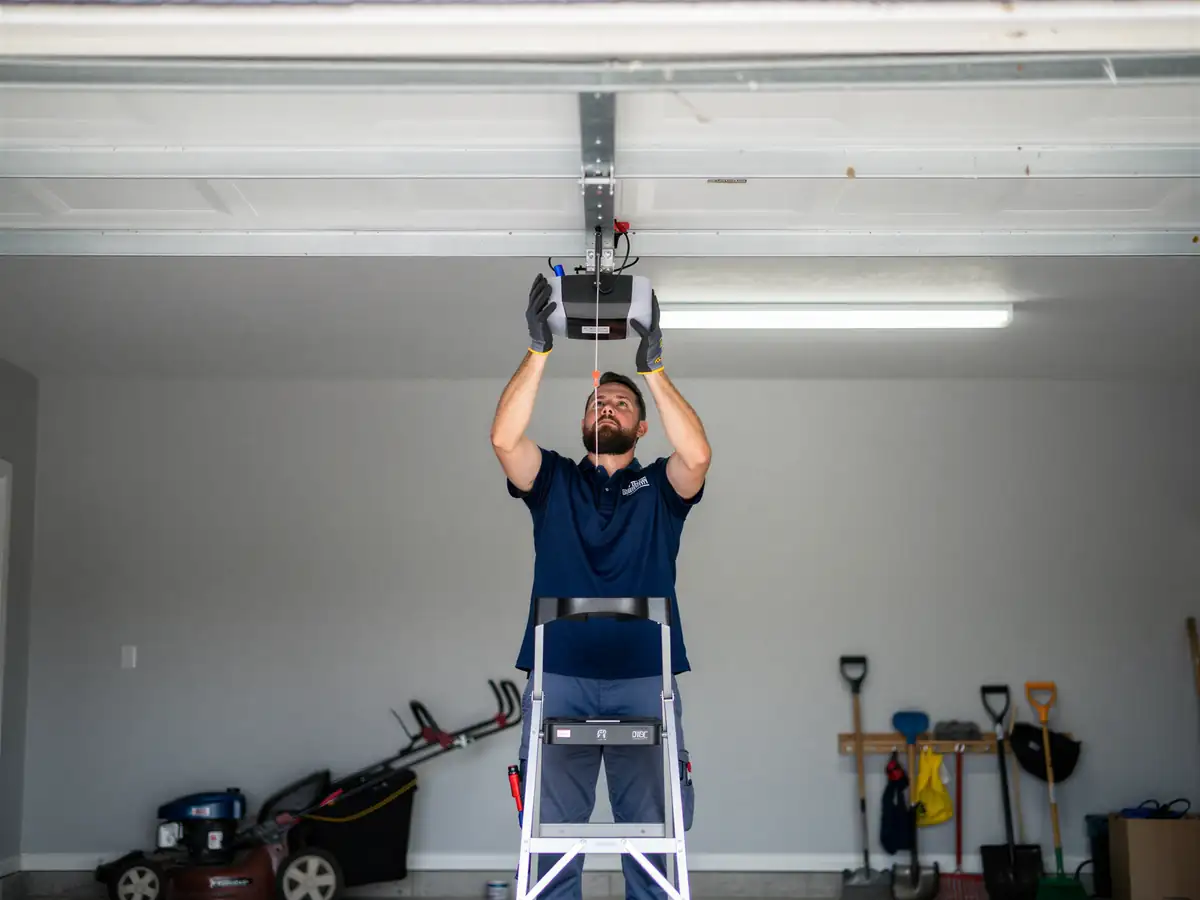
Grinding, reversing, not responding to the remote at all - and the brand if you can read it off the unit. That lets us bring the right receiver, sprocket, or logic board on the first trip instead of a second one. Most of King's housing went up around 1986, which is useful to know before we even leave the shop, because it points us toward the generation of hardware we're likely to find bolted to your ceiling.
Can You Do This Yourself
Some of this is genuinely DIY. Reprogramming a remote, replacing the wall button, checking the safety sensor alignment at the bottom of the tracks - those are screwdriver jobs and we'd rather you not pay a truck to come out for them. Check your manual or the sticker on the motor housing first.
What isn't a weekend job is anything involving the logic board, the drive gear inside the housing, or a motor that hums but won't move the door. On a house built in the mid-1980s, that motor and gear set are original or close to it, and parts for that generation aren't sitting on a shelf at the hardware store. Pulling the unit apart without knowing what you're looking for usually turns a $40 part replacement into a full opener swap. If the door moves fine by hand but the opener won't engage, that's worth a call before you start removing covers.
How We Fix It
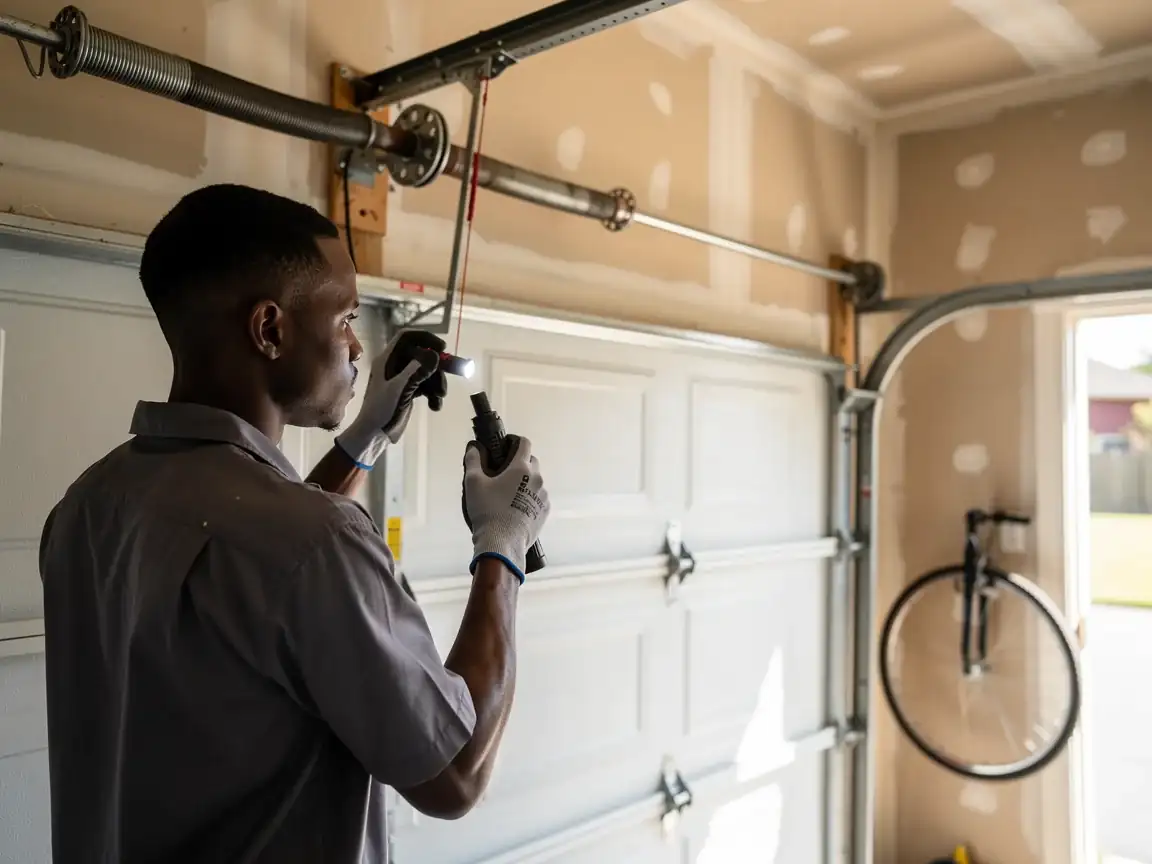
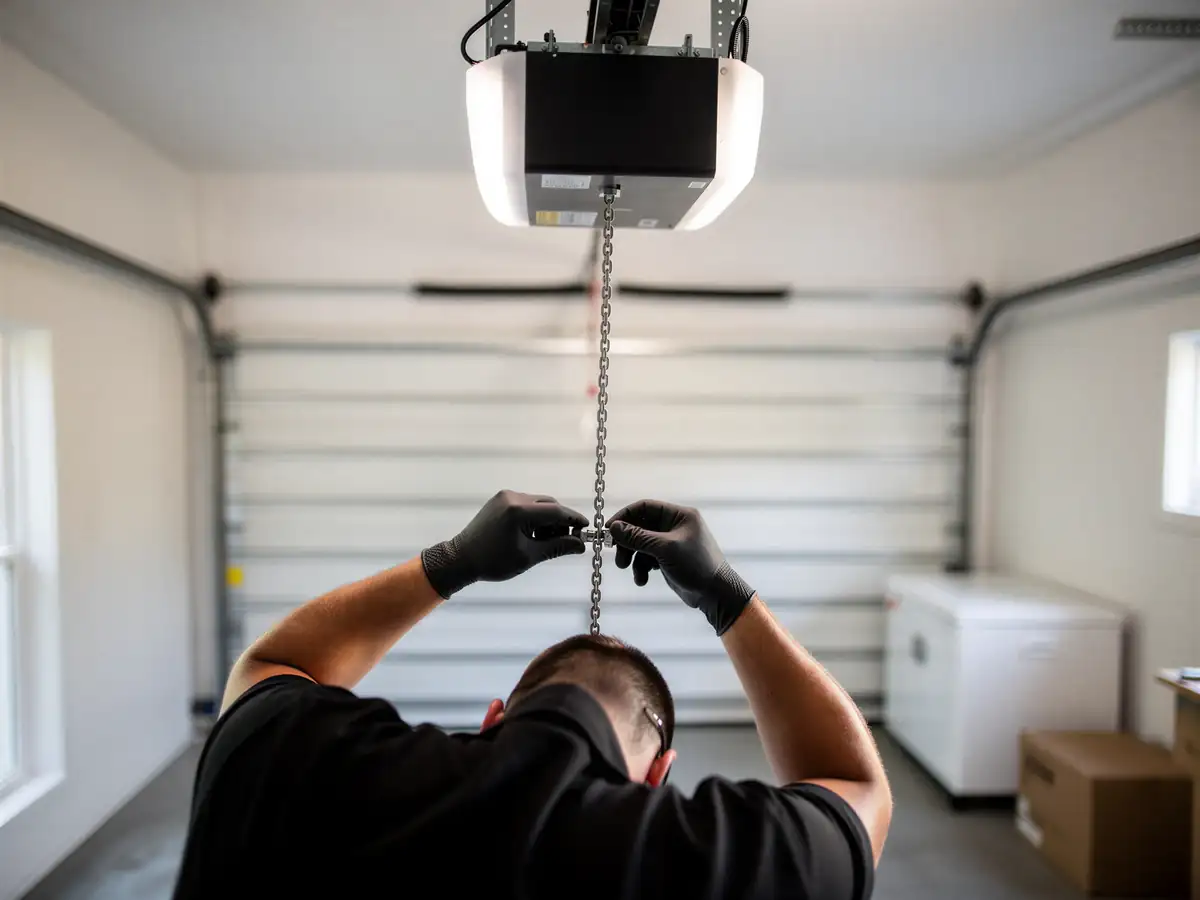
We start at the unit itself, not the door. Chain and belt-drive openers from the mid-1980s and 1990s - the stock King mostly has, with a median build year of 1986 - tend to fail at a handful of predictable points: the drive gear strips, the capacitor on the motor goes, or the logic board loses the ability to talk to the remote. We test the wall button, the remote signal, and the travel limits separately so we're not guessing which one quit.
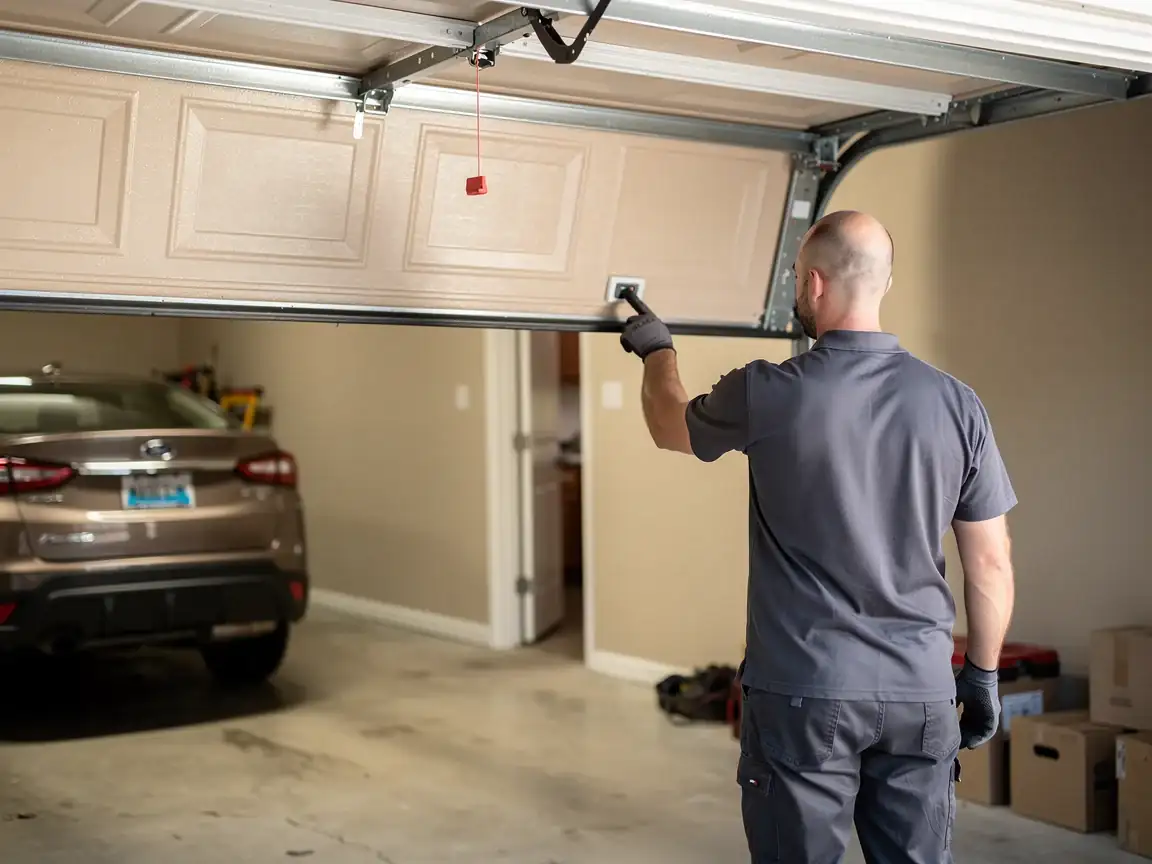
If the gear or capacitor has failed, we replace that part rather than the whole unit, as long as a replacement is still made for your model. If it isn't - and on openers this age, sometimes it just isn't - we'll tell you that straight and walk you through a new unit instead of chasing a part that doesn't exist anymore. We also check the sensors and the travel settings before we leave, since a door that reverses or won't close often gets blamed on the opener when it's really a sensor knocked out of alignment.
What You Are Seeing
The opener on a King house built around 1986 is old enough that its control board and drive components are a different generation than anything you'd buy today
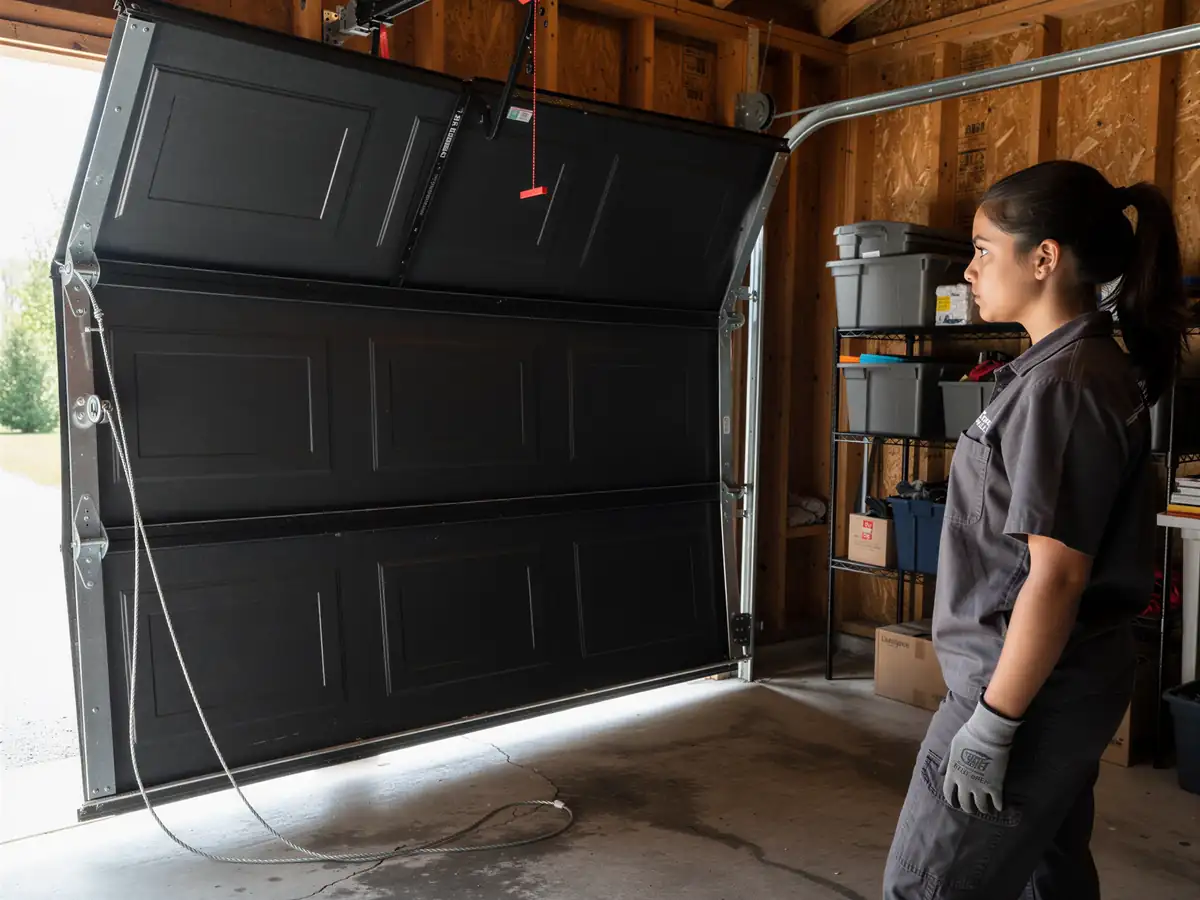
That shows up as specific symptoms: a motor that runs but the carriage doesn't move (stripped gear), a door that reverses halfway for no clear reason (failing logic board or misaligned sensor), or a remote that used to work and now does nothing (dead receiver or a board that's lost its memory).
Winston-Salem's broader service area runs a colder winter than a lot of the South
And cold makes weak capacitors and tired gears fail faster - a motor that's been straining all fall is more likely to quit on the first hard freeze. If your opener has been getting slower or noisier for months, that's the warning before the full stop, not a separate problem.