Getting It Booked In
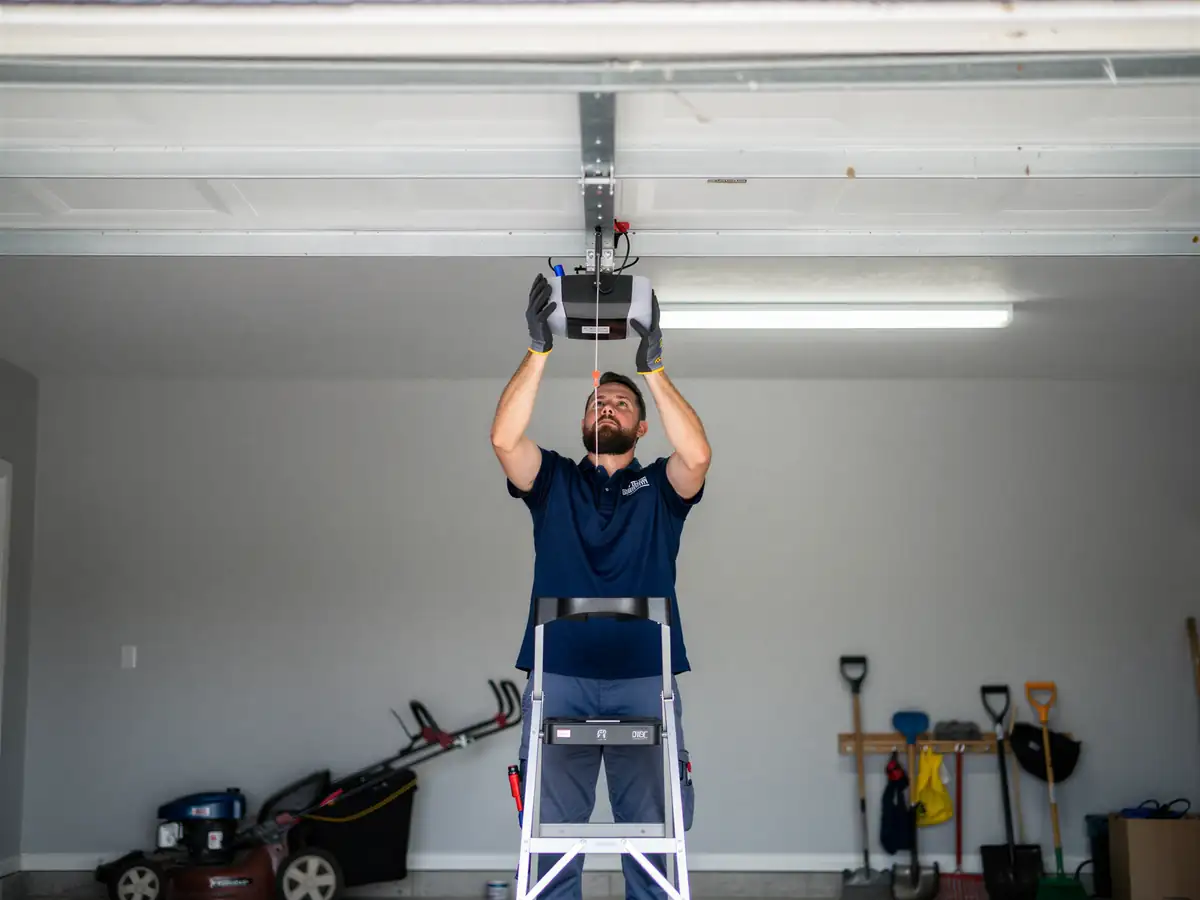
Opener work doesn't need an emergency truck roll the way a snapped spring does, so we schedule it as a standard job - you tell us the drive type if you know it (chain, belt, or screw), the door size, and whether the old unit is still attached or already dead on the floor. We confirm the headroom and the bracket situation before we show up with a unit, since older houses in this area sometimes have non-standard mounting that needs an adapter kit. If you're not sure what you have, a few photos of the motor head and the rail are usually enough for us to plan the job properly. We don't keep every opener brand on the truck at all times - a specific belt-drive model you've got your eye on may mean a one-day wait while we bring it in, and we'll tell you that up front rather than after we've already pulled the old one down.
Why This Fails Locally
This region sits in a cold moderate climate band, and that matters more for openers than people expect. The freeze-thaw cycling through winter works on the logic board contacts, the belt tension, and the drive gear the same way it works on a door's weatherstripping - slow, cumulative wear that shows up as intermittent failures before it shows up as a dead unit. Combine that with a housing stock where the median build year is 1987, and you get a lot of garages where the opener predates modern safety-reversal sensors entirely, or where a mismatched replacement from years back is running on the wrong horsepower for the door it's lifting. Across the 56,928 households and 31,728 owner-occupied houses we serve - from Walkertown six miles out to Jamestown twenty miles the other direction - that same decade-of-construction pattern repeats. It's not a coincidence that opener calls cluster around houses from that same build era; the hardware and the climate exposure are doing the same thing to all of them.