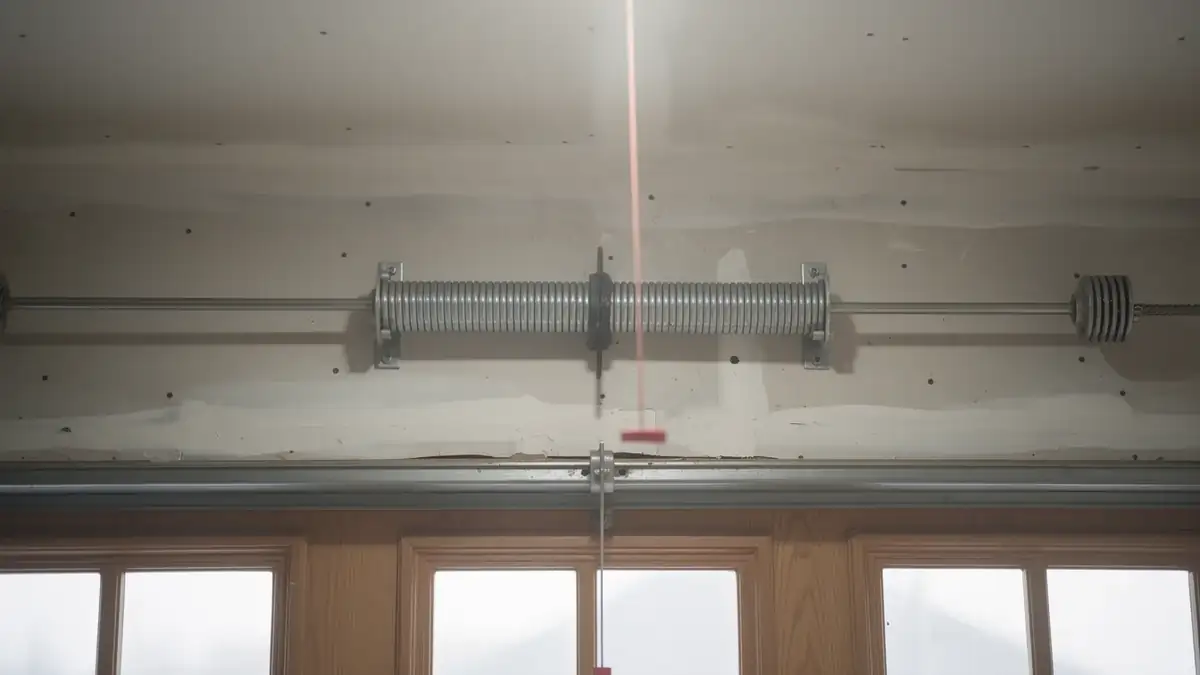
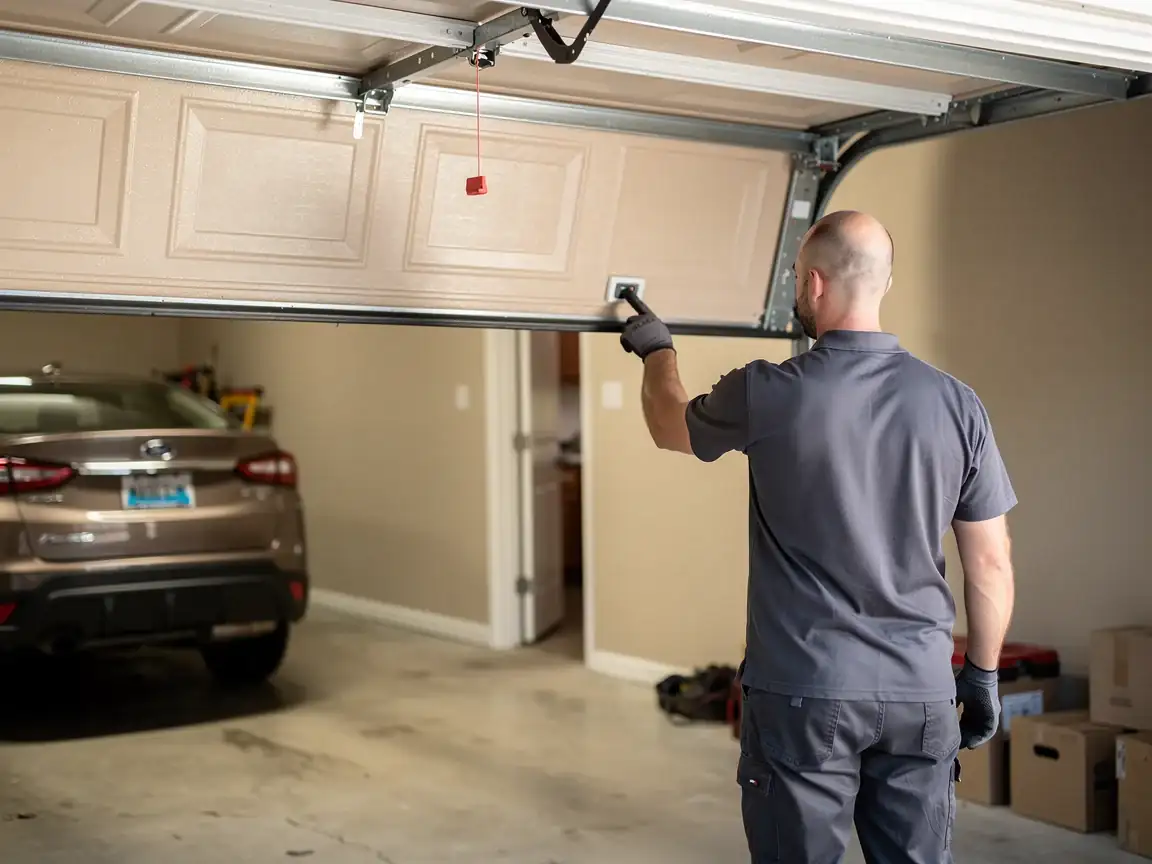
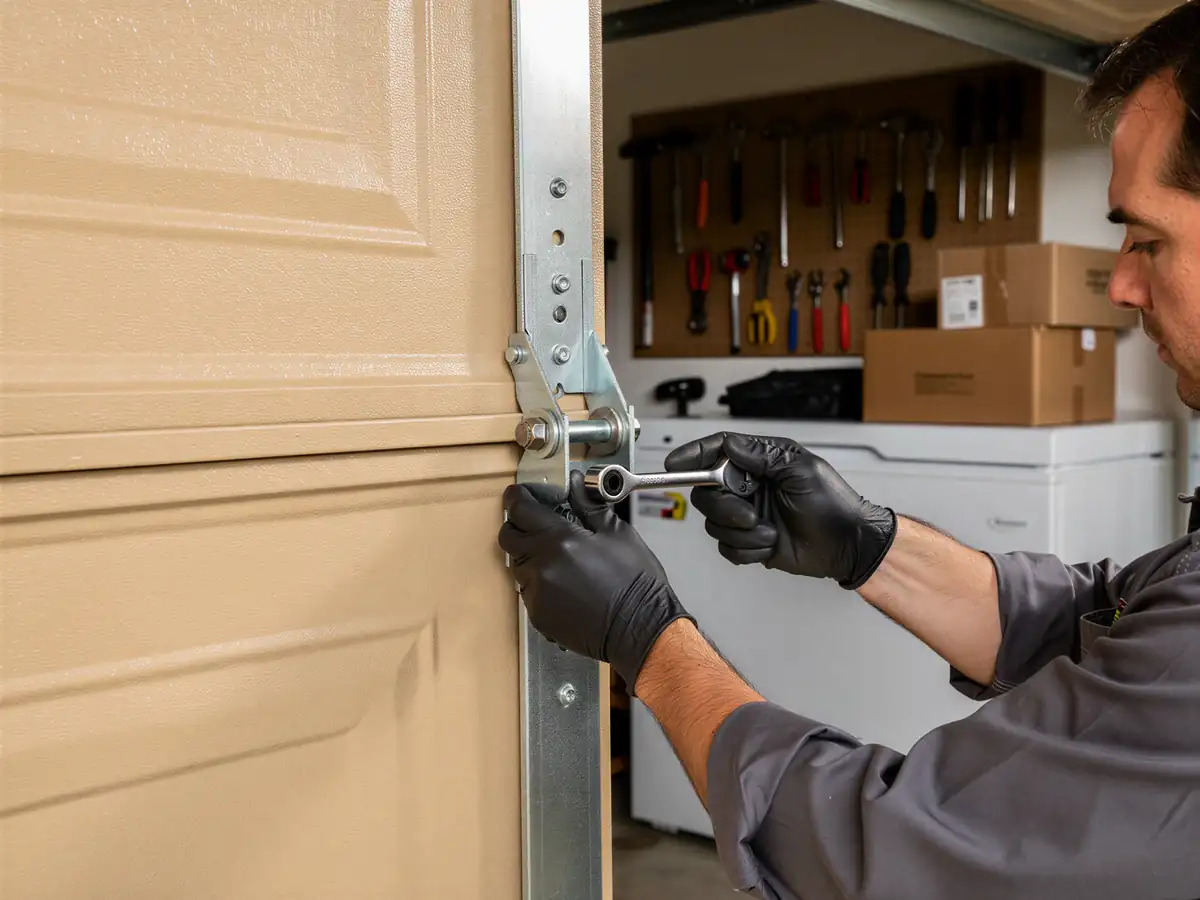
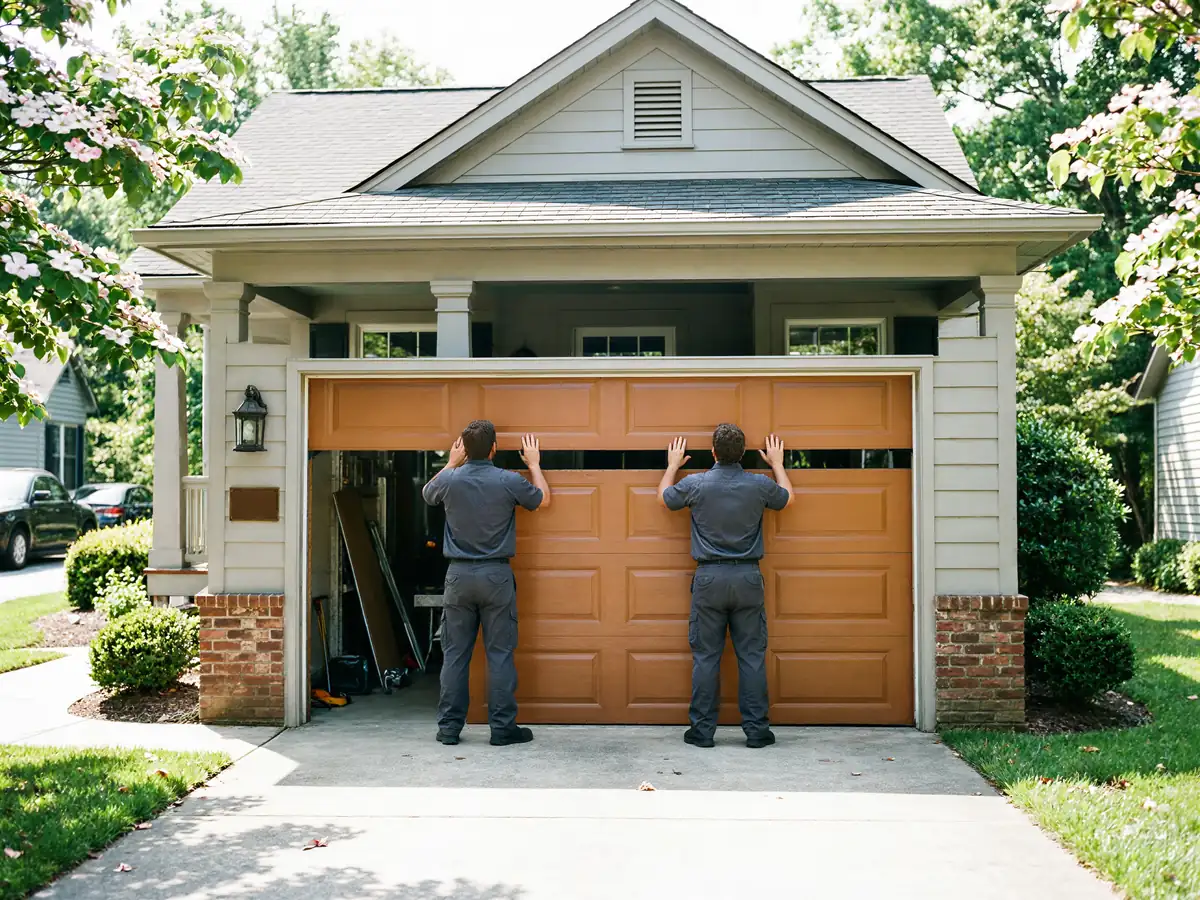
We're not going to put a number here that doesn't match what shows up on your invoice, because that number depends on spring size, door weight, and whether one spring went or both. What we can tell you is what drives the cost on a typical call in this area. A lot of the doors we see came in with houses built between 1973 and 2002, and double-door torsion setups from that era often run a different spring size than what's sold off the shelf today, which means we're matching wind and wire gauge rather than grabbing a generic part. Median household income across the service area sits around $78,821, and most of the jobs we quote land in a range homeowners expect for a spring swap plus a safety check on cables and rollers while the door is open anyway. The honest limitation: if your opener board also took damage from the same cold snap that snapped the spring, that's a separate repair, and we'll tell you before we touch it, not after.}
The Situation
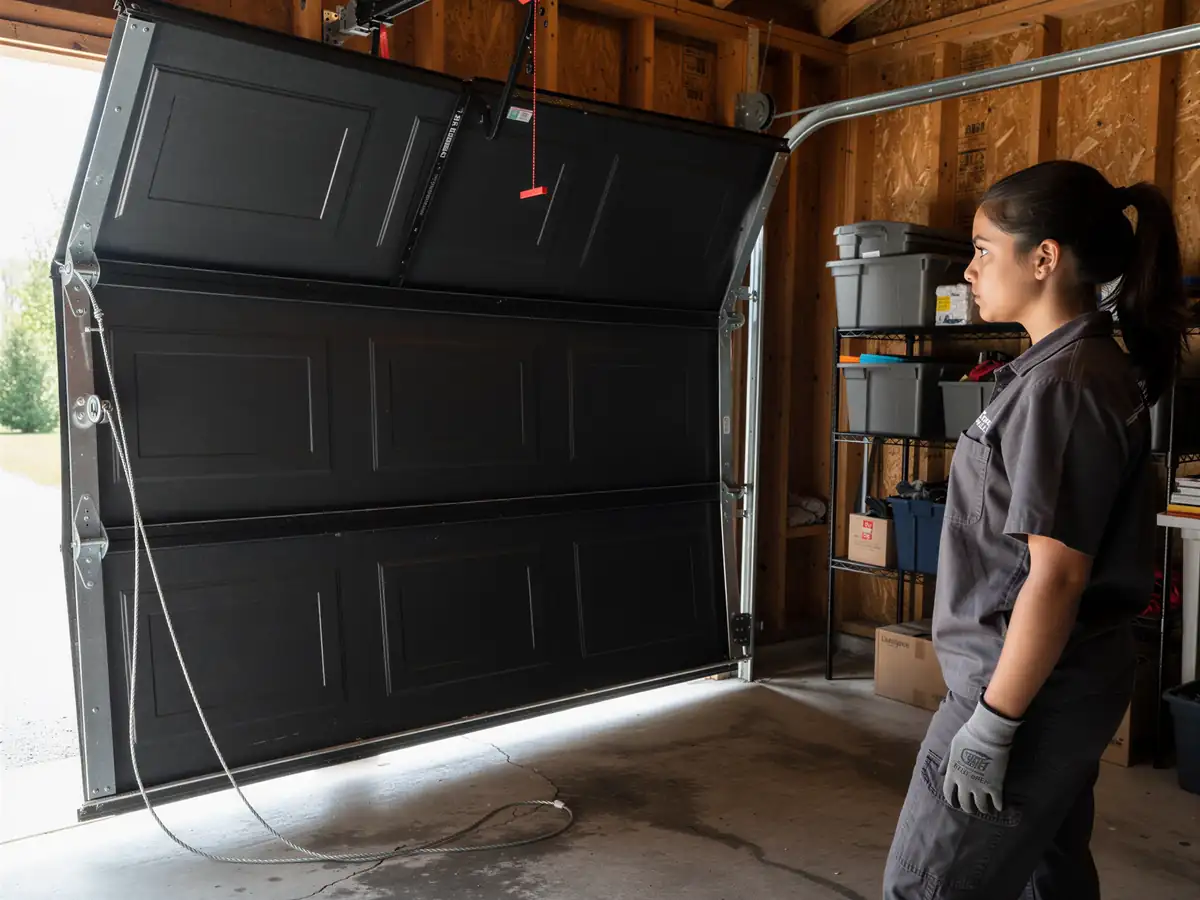
A broken torsion spring doesn't ease into failure. It's fine one morning and then it's a loud bang and a door that won't lift, usually first thing when the temperature has dropped overnight. Steel contracts in the cold, and a spring that's already near the end of its cycle count is more likely to let go on a 28-degree morning than a mild one. Winston-Salem sits in a cold-moderate climate band, which means we don't get the deep-freeze stress that snaps springs across the Upper Midwest, but we get enough swing between a 65-degree fall afternoon and a hard overnight freeze to push a tired spring past its limit. Across the 17 named areas that make up this service area, most of the housing is 1980s and 90s construction, and springs installed with those original builds are long past due regardless of weather. If your door is from that era and you haven't replaced the spring yet, cold mornings are when it tends to show.
How Local Conditions Play In
The reason this matters here specifically: a house built in 1987, which is close to the median for this area, likely still has its original torsion hardware unless someone's already replaced it once. That spring has had three and a half decades of open-close cycles, and the cold doesn't create the wear, it just finishes the job. In a cold-moderate climate, the garage itself often isn't insulated the way the rest of the house is, so the temperature inside the garage tracks close to outdoor temperature overnight. That matters because the spring is doing its heaviest lift work on the coldest mornings, right when the steel is least forgiving. We don't see the extreme cold-snap failures you'd get further north, but we do see a seasonal bump every time the first hard freeze of the year hits, concentrated in the older sections of the 17-area footprint rather than newer construction.
Season by Season
Late fall into winter is when we get the most spring calls, tied directly to that first run of overnight freezes. A door that's been limping along all summer on a weakening spring usually finishes failing once temperatures drop consistently below 40. Spring and summer are quieter for spring breaks specifically, though that's when we see more opener and sensor issues from humidity and pollen buildup on tracks. If your house falls in the 1973-2002 range that covers most of this service area, the practical move is to have the spring checked before the first freeze rather than after it snaps, since a scheduled swap costs less in downtime than an emergency call on a morning you need the car out. We work throughout the area, including out toward Walkertown, Clemmons, and Kernersville, and the same seasonal pattern holds across those towns because the housing stock and climate band are shared.
How it works
From “it’s stuck” to “it’s fixed”
1
Tell us what’s wrong
Describe the symptom - won’t open, loud bang, opener runs but the door won’t move.
2
On-site diagnosis
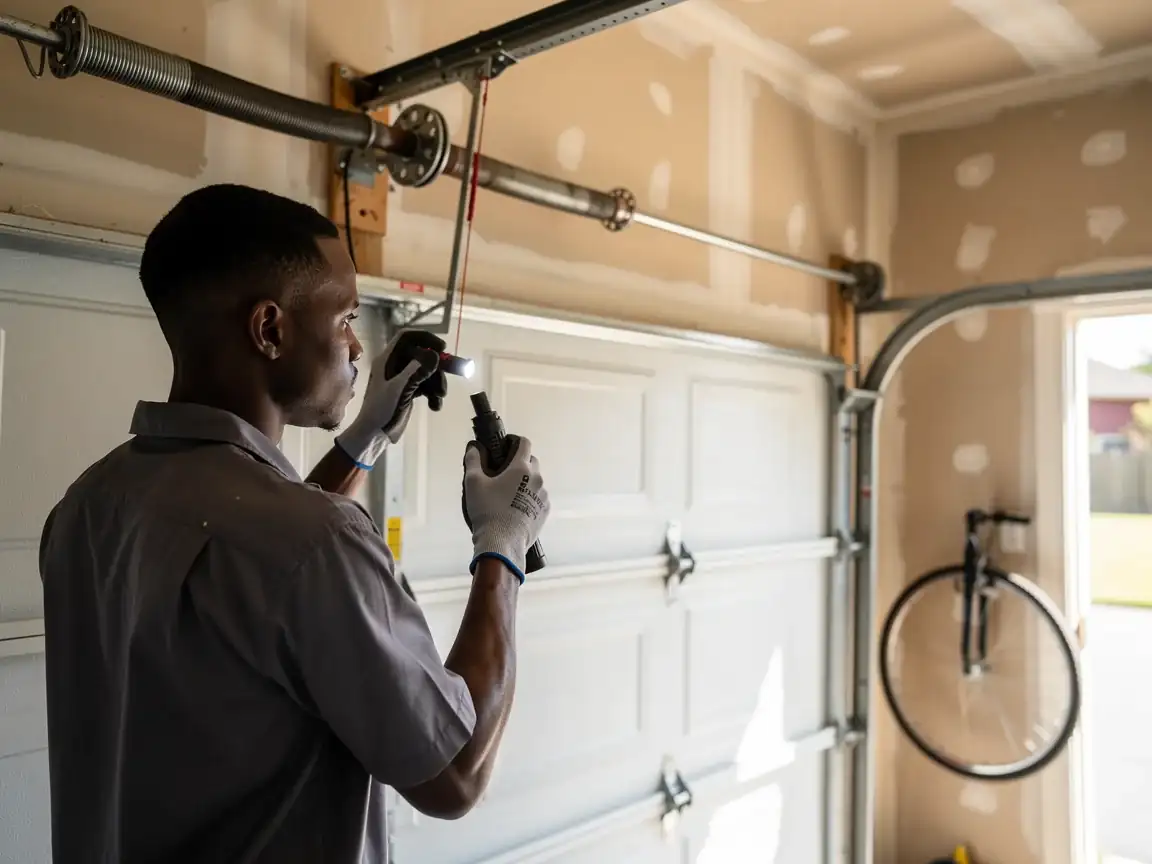
A technician tests the door under power and by hand and finds what actually failed.
3
Clear, up-front plan
You get the fix that’s needed and what drives the cost - before any work starts.
4
Repaired & tested
The repair is done, the door is set true and tested, and the work area left clean.
Not sure which repair your door needs in Winston-Salem, NC? Describe what it’s doing - every job starts with a diagnosis.
Why did my spring break on such a cold morning specifically?
Steel loses some flexibility as it cools, and a spring that's already near the end of its cycle life is more likely to fail when it's under that extra stress. It's not that cold alone breaks springs, it's that cold tips over a spring that was already close to done.
Is my garage door spring original to the house?
If your house was built in the 1973-2002 range, which covers most of this area, there's a real chance the torsion spring hasn't been replaced since the original install. That's a long service life for a part that cycles every time the door opens.
Do unheated garages make this worse?
Yes. Most garages in this area aren't insulated like the living space, so the temperature inside tracks close to outside overnight. That means the spring is doing its hardest lift work exactly when the steel is coldest and least forgiving.
Should I replace one spring or both?
If your door runs on two springs and one broke, the other is usually close behind in cycle life since they were installed together. We'll look at the wear on both before recommending a one-spring or two-spring job.
Ready to get your garage door sorted?
Tell us what it’s doing and where you are in Winston-Salem - we’ll take it from there.