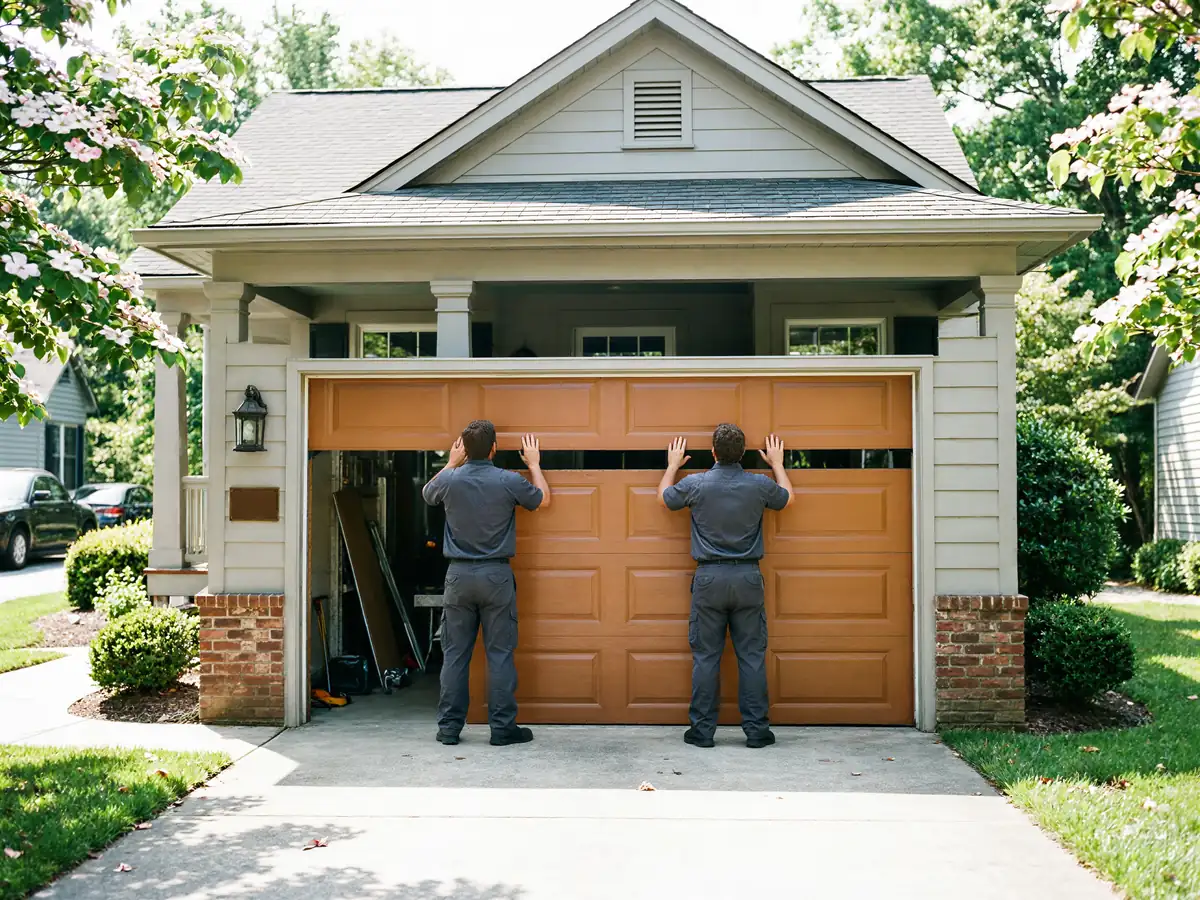
King homes built around 1986 mostly run steel sectional doors on standard lift cable - here's what fails on that hardware and how we fix a snapped or frayed cable.
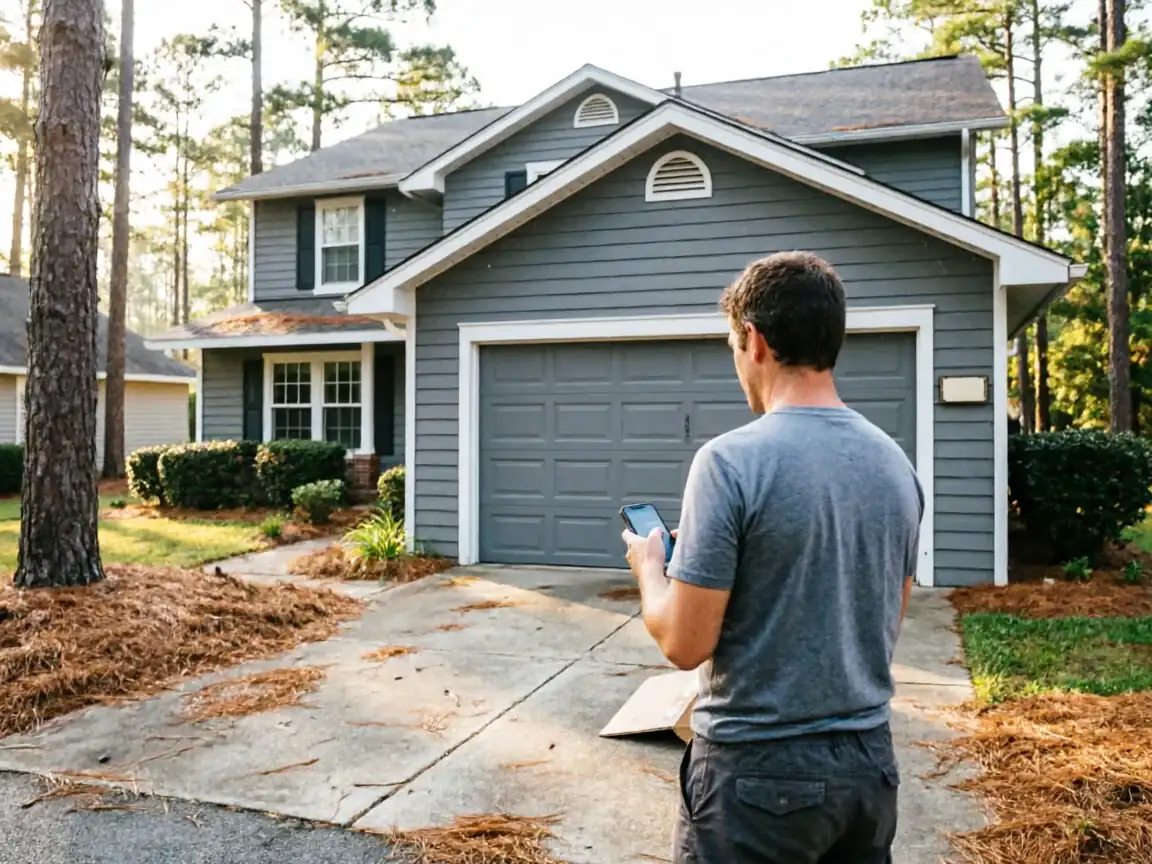
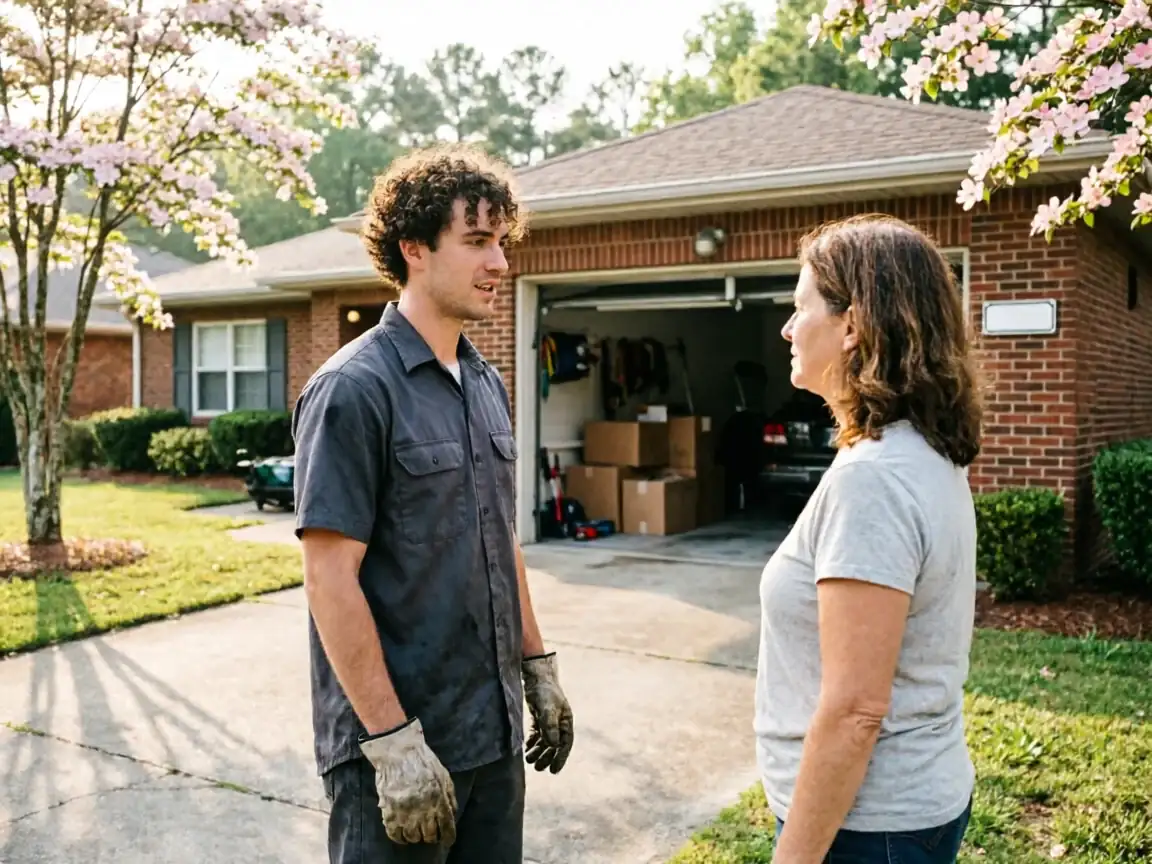
King sits about 13 miles out from our Winston-Salem base, so when you call about a snapped cable, we're scheduling a drive, not a walk from around the corner. That's worth knowing up front - we don't keep a truck parked in King, we send one out. Once we've got your address and a description of what you're seeing (door stuck half open, one side hanging lower than the other, a cable curled up on the floor), we can usually tell you over the phone whether it's a straight cable swap or something bigger, like a spring that let go at the same time. Most King service calls we get are for doors original to houses built in the mid-1980s - that median build year for this area is 1986, and a lot of that original lift cable has simply worn through after three and a half decades of daily cycles. We bring stock cable sized for the standard double and single-car steel doors common to that era, so in most cases we're not waiting on a special order. We'll give you a window before we leave Winston-Salem, not an exact-minute promise, because 13 miles of two-lane road doesn't always run on schedule.
Can You Do This Yourself
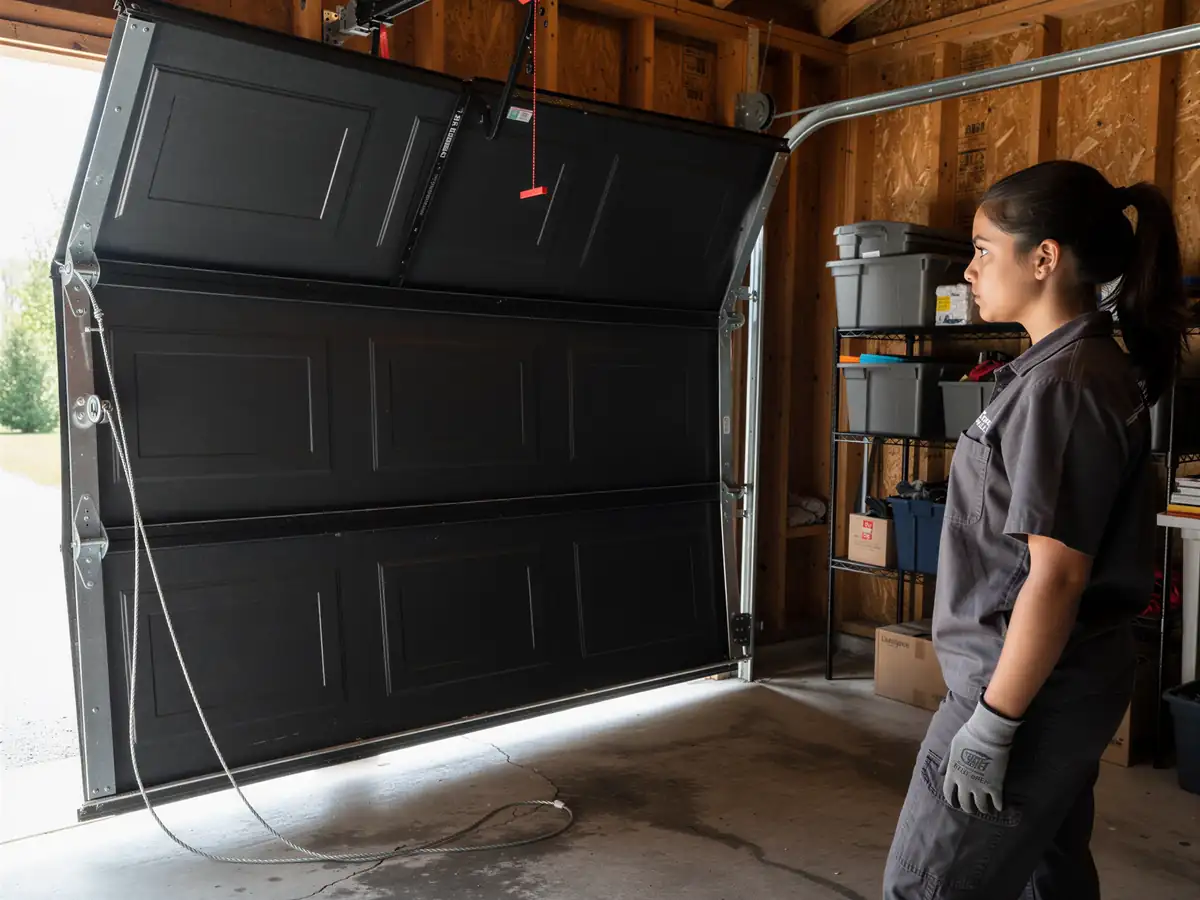
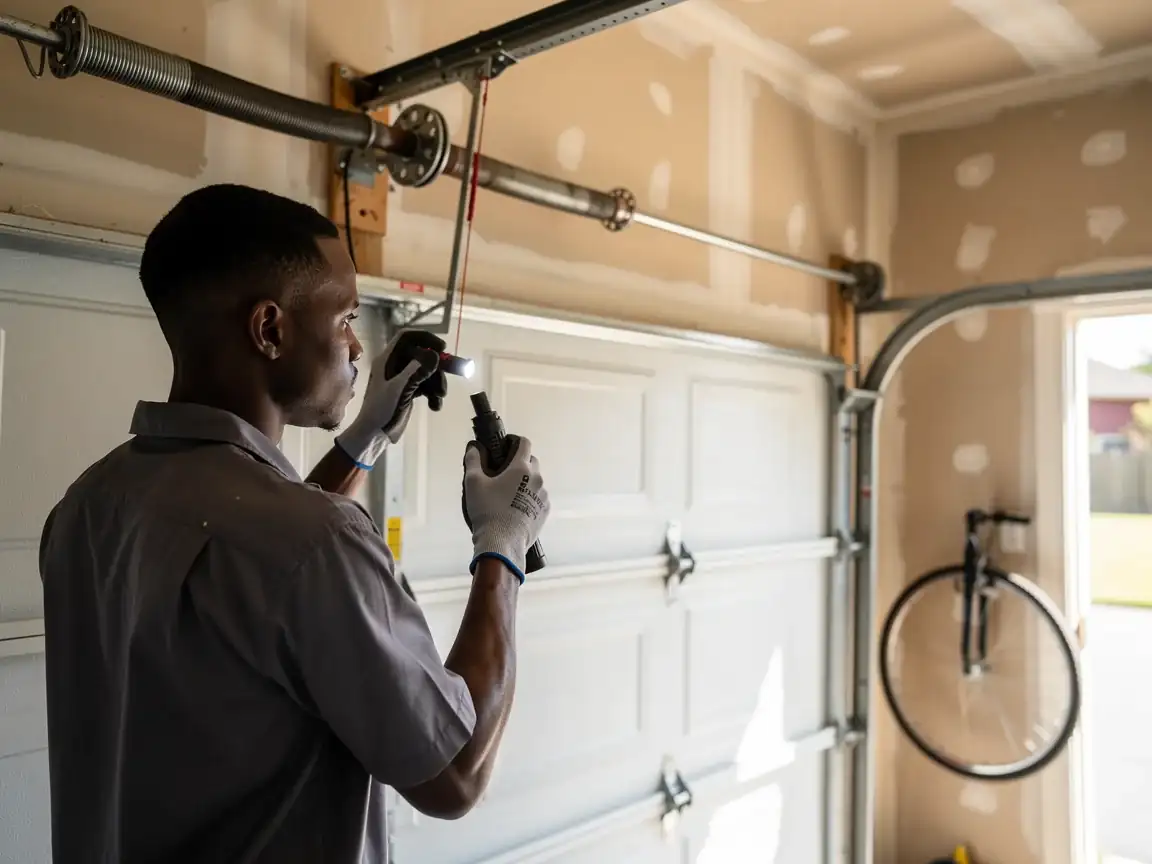
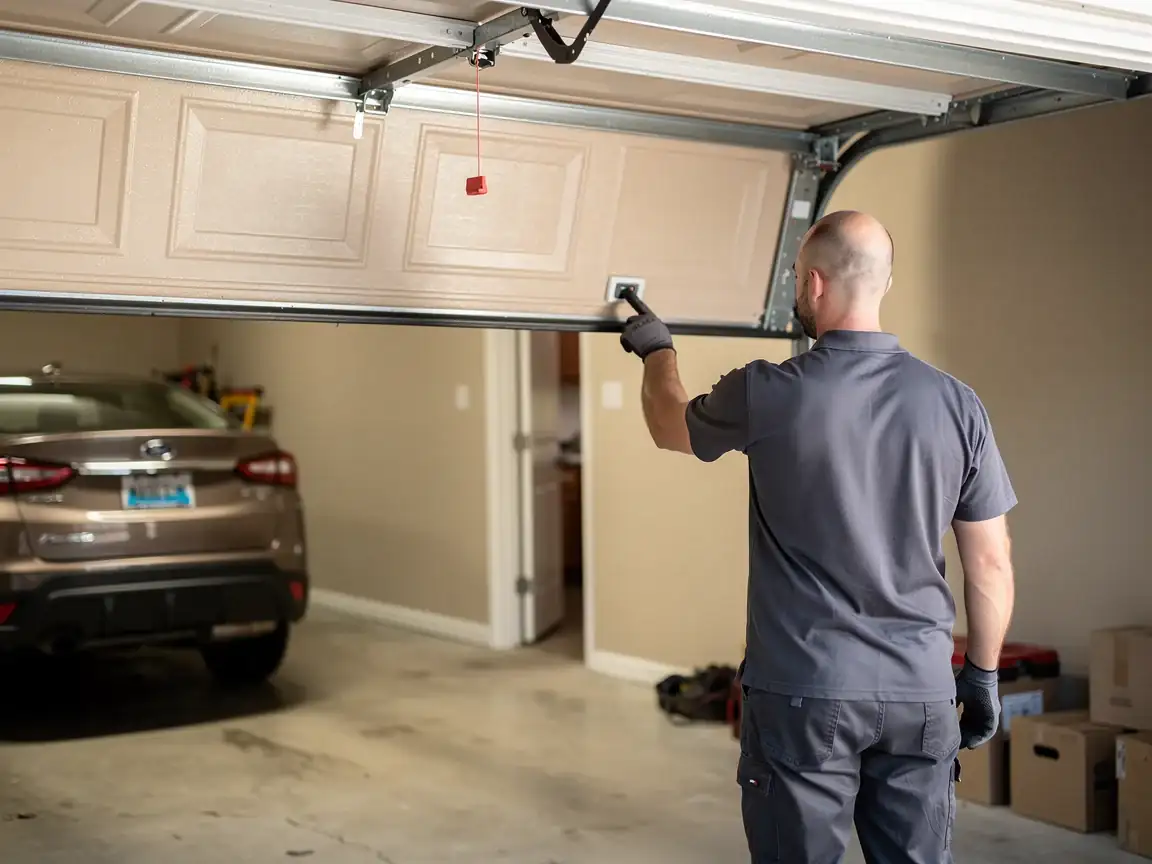
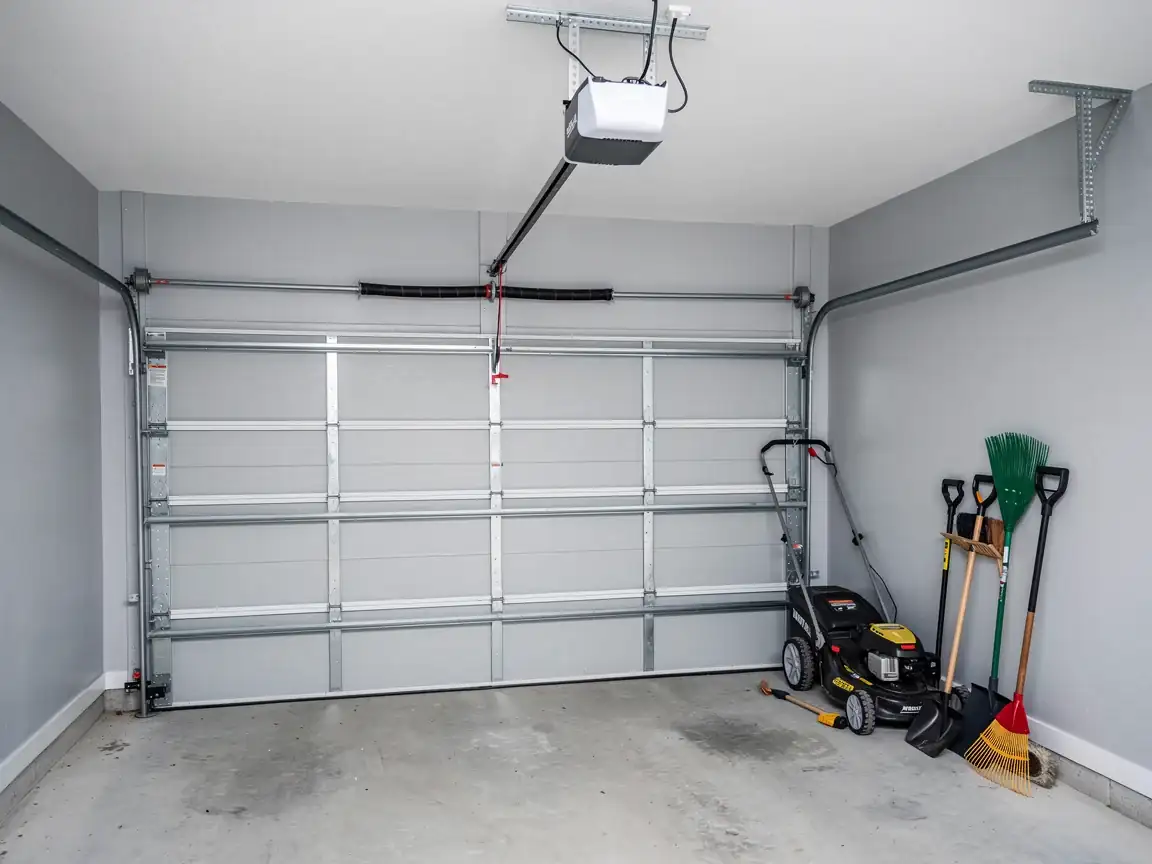
A broken garage door cable is not a safe DIY repair, full stop. The cable is under tension from the spring system even when the door looks like it's just sitting there, and a cable that's already frayed or snapped can whip when it releases load. If one cable has gone and the door is sitting crooked or jammed in the track, the safest move is to leave it alone - don't force the opener, don't try to muscle the door up by hand, and unplug the opener so it doesn't try to run the door on a bad cable and strip the gears. What you can do yourself: look at the cable where it wraps the drum near the spring and see if it's frayed, kinked, or has come off the drum entirely. That tells us a lot before we even get there. Past that, leave the spring and drum alone. On the steel sectional doors common in houses built around 1986, the cable and spring work as one system, and pulling on one without releasing tension on the other is how fingers get caught.
How We Fix It
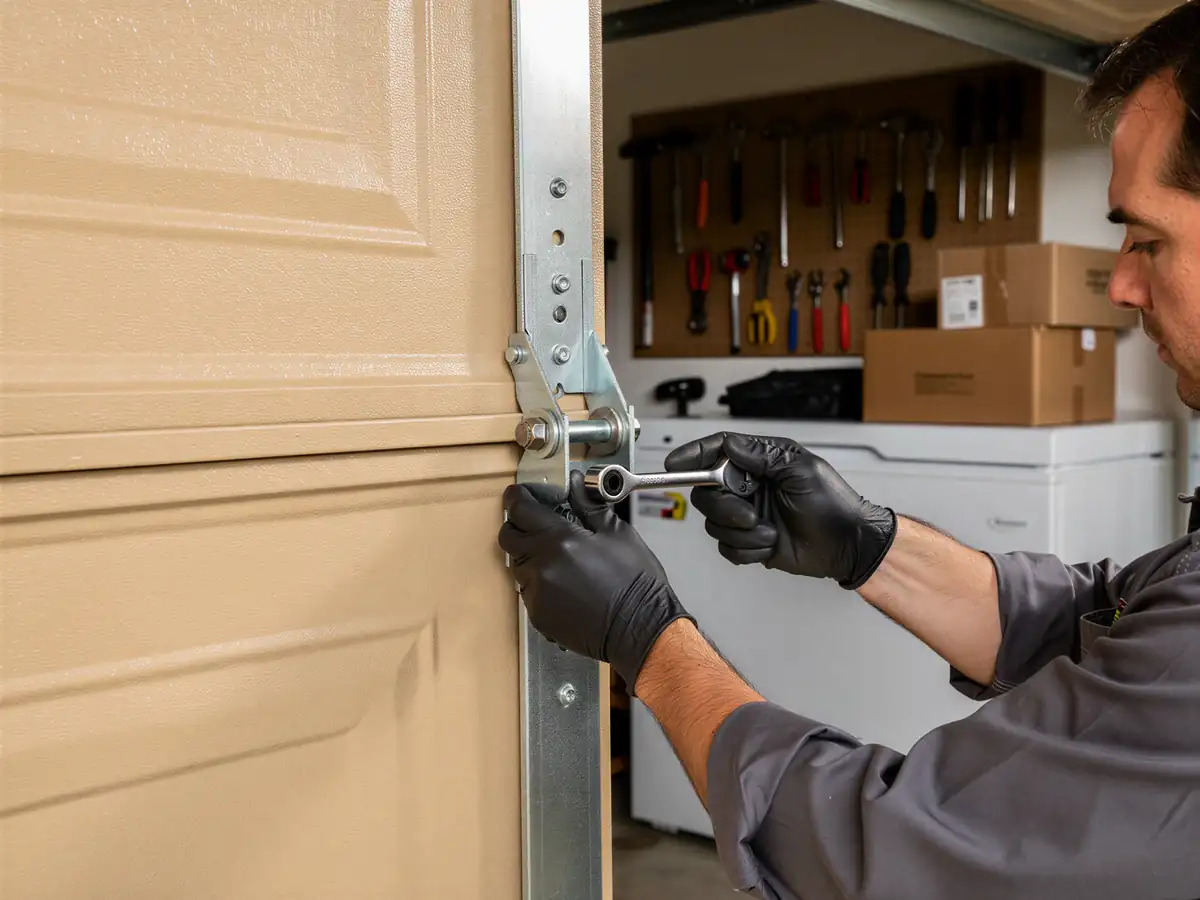
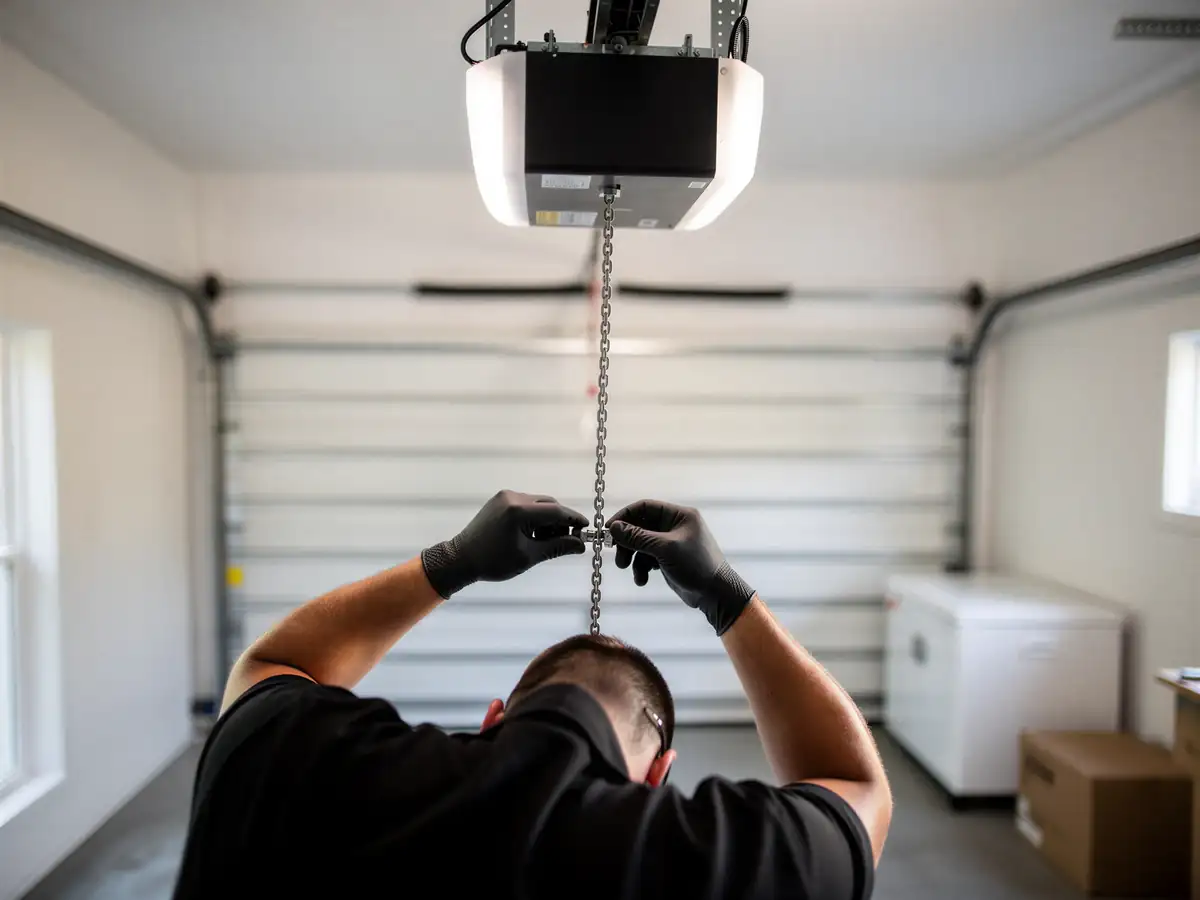
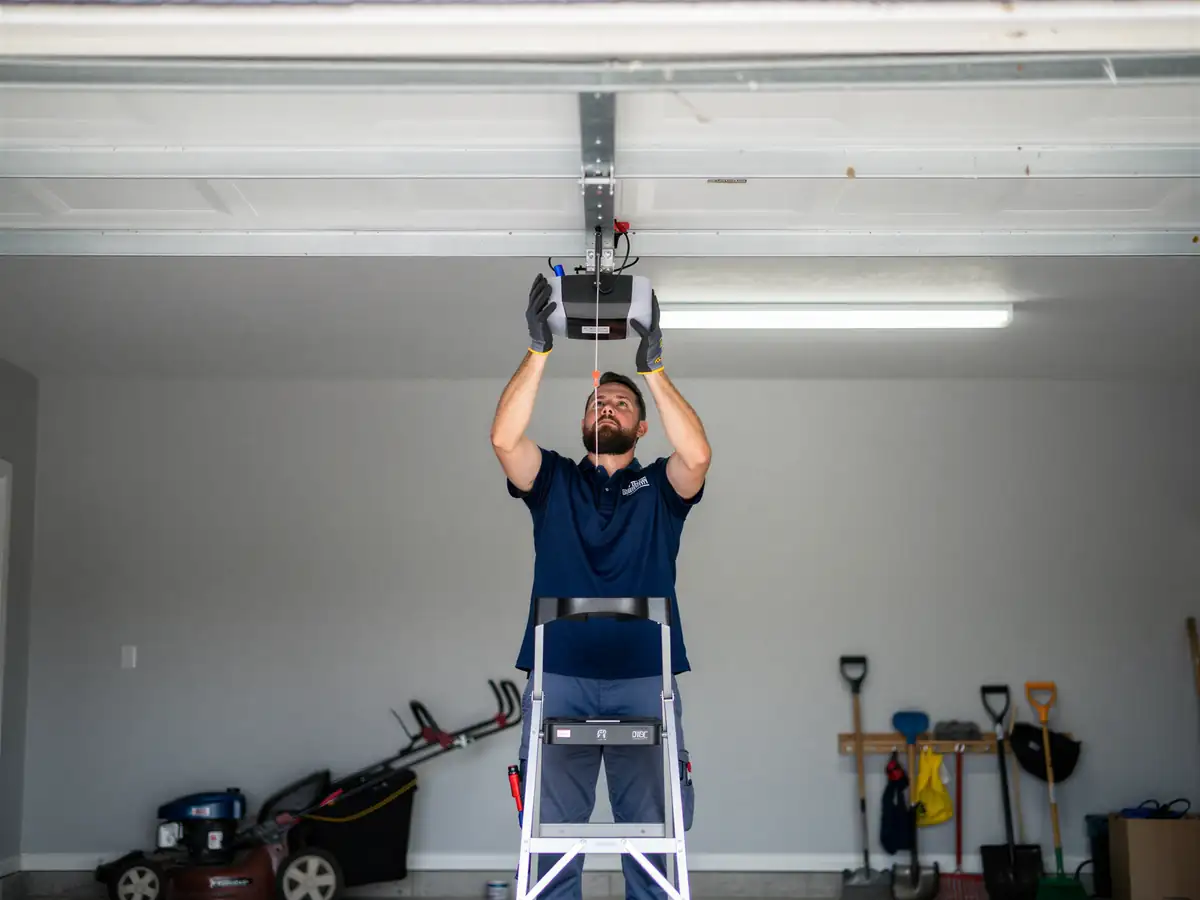
We replace the cable, not patch it - a spliced or re-looped cable is a repair that fails again, usually at the worst time. We match the cable gauge and length to your door's drum and track setup, which on 1980s-era King doors is almost always a standard extension or torsion configuration built for a 7-foot steel sectional door. Before we touch the cable, we clamp the spring to kill the stored tension, because that's the part of the job that actually causes injuries if it's skipped. Once the new cable is run, seated on the drum, and tensioned evenly on both sides, we cycle the door by hand first, then on the opener, checking that it tracks straight and doesn't bind on the rollers. If we find the drum itself is grooved or worn from the old cable riding wrong, we'll flag that - a cable held in place by a bad drum will cut through again inside a year, and that's not a repair worth doing twice.
What You Are Seeing
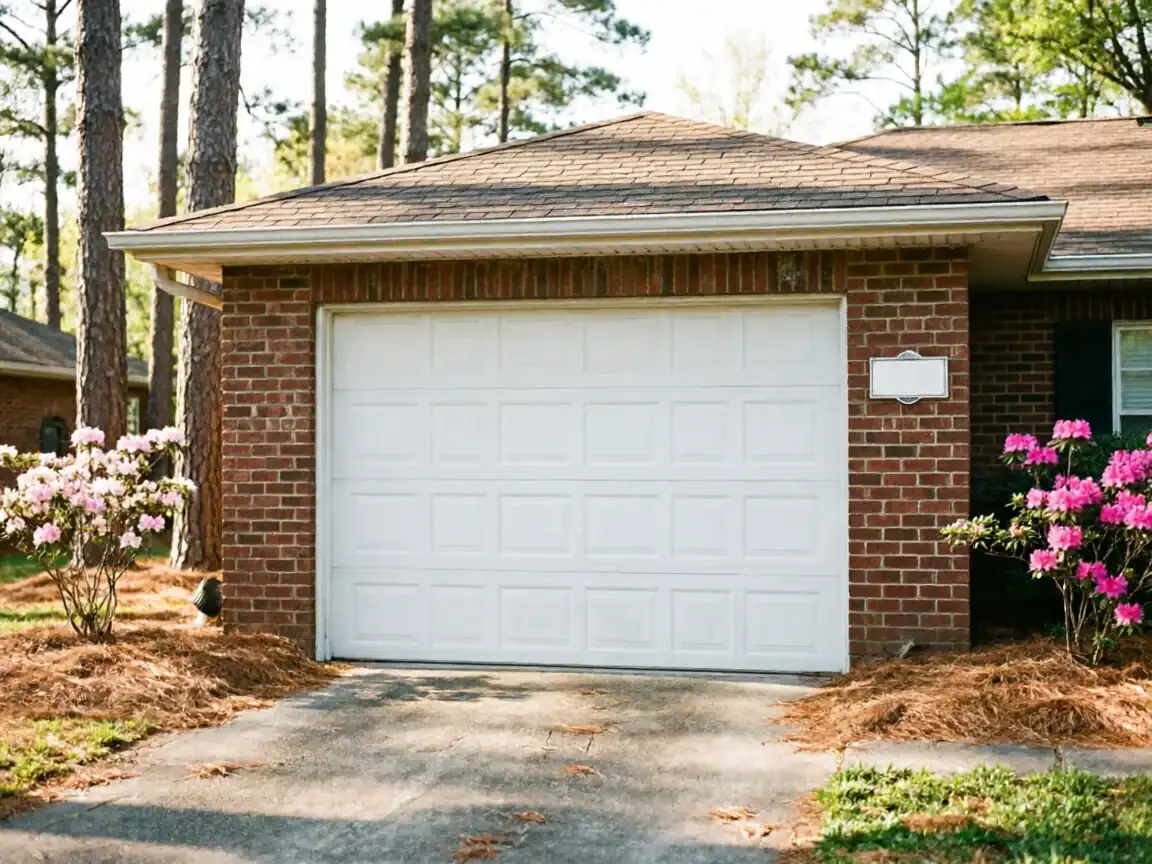
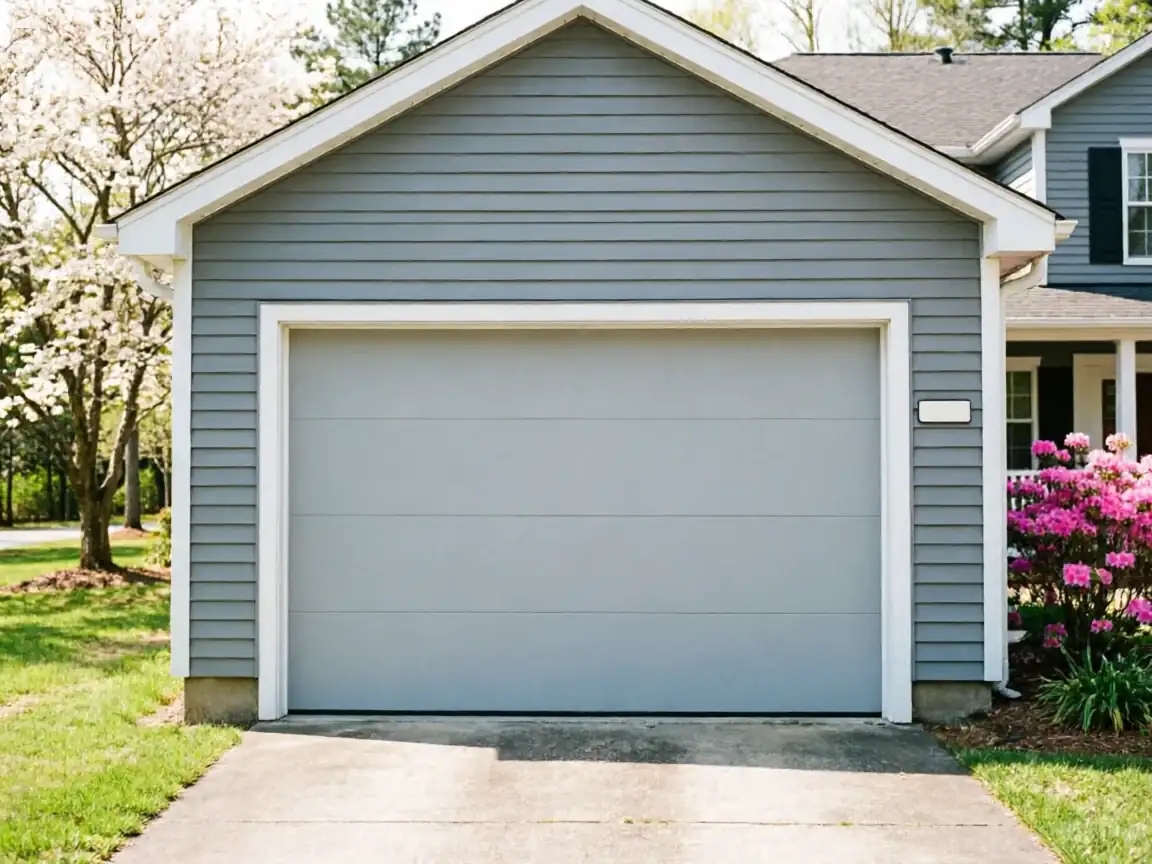
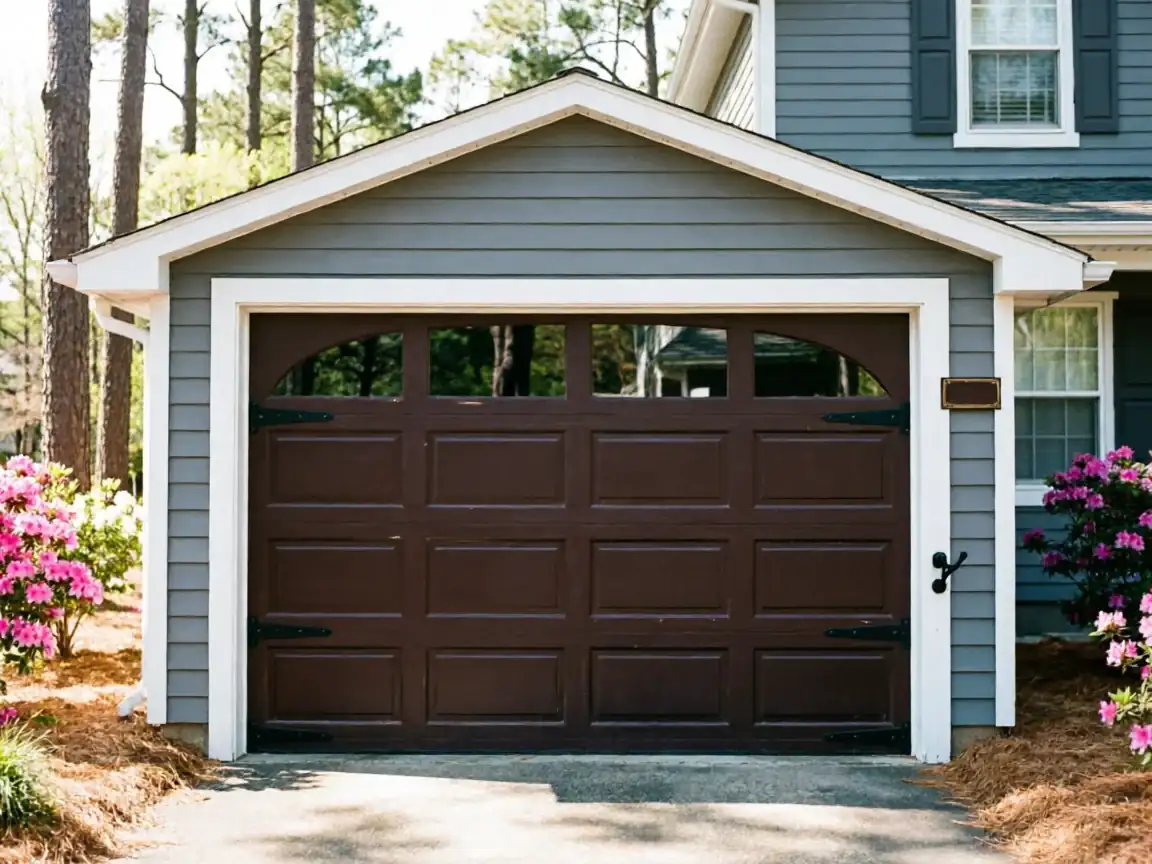
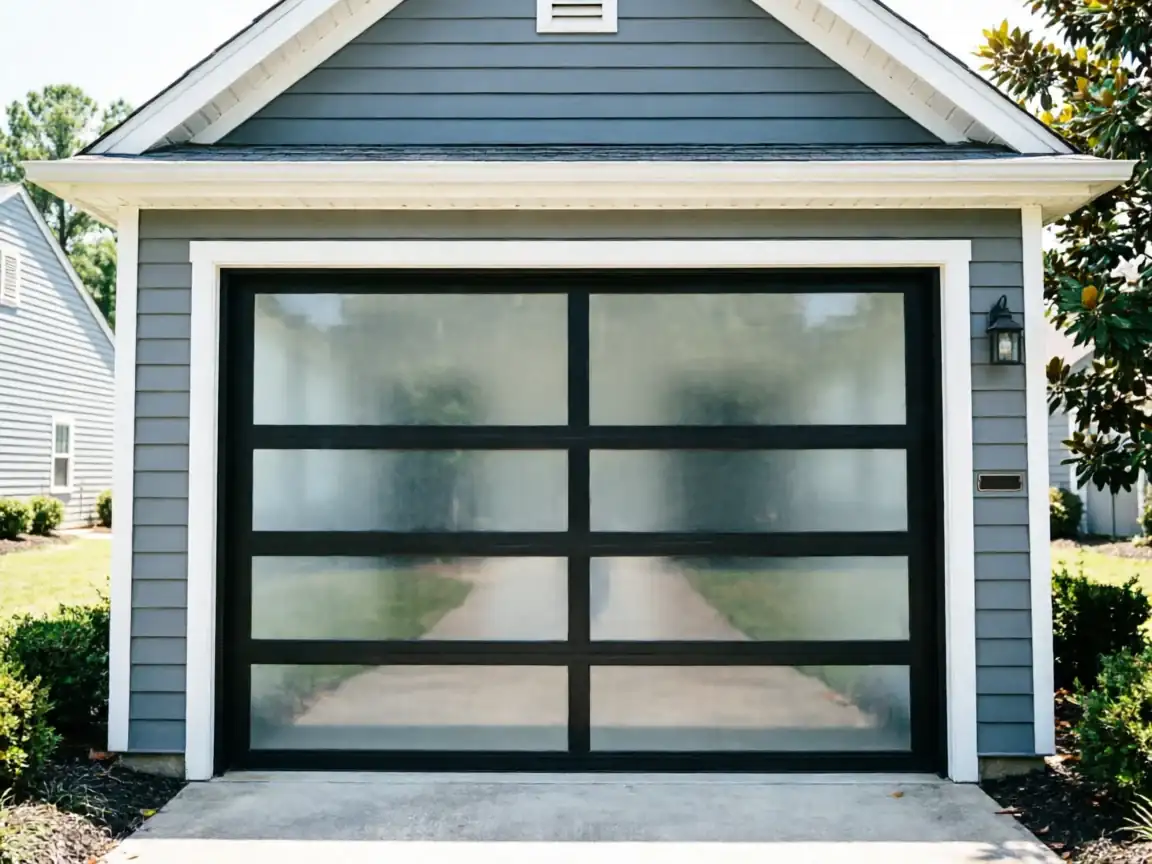
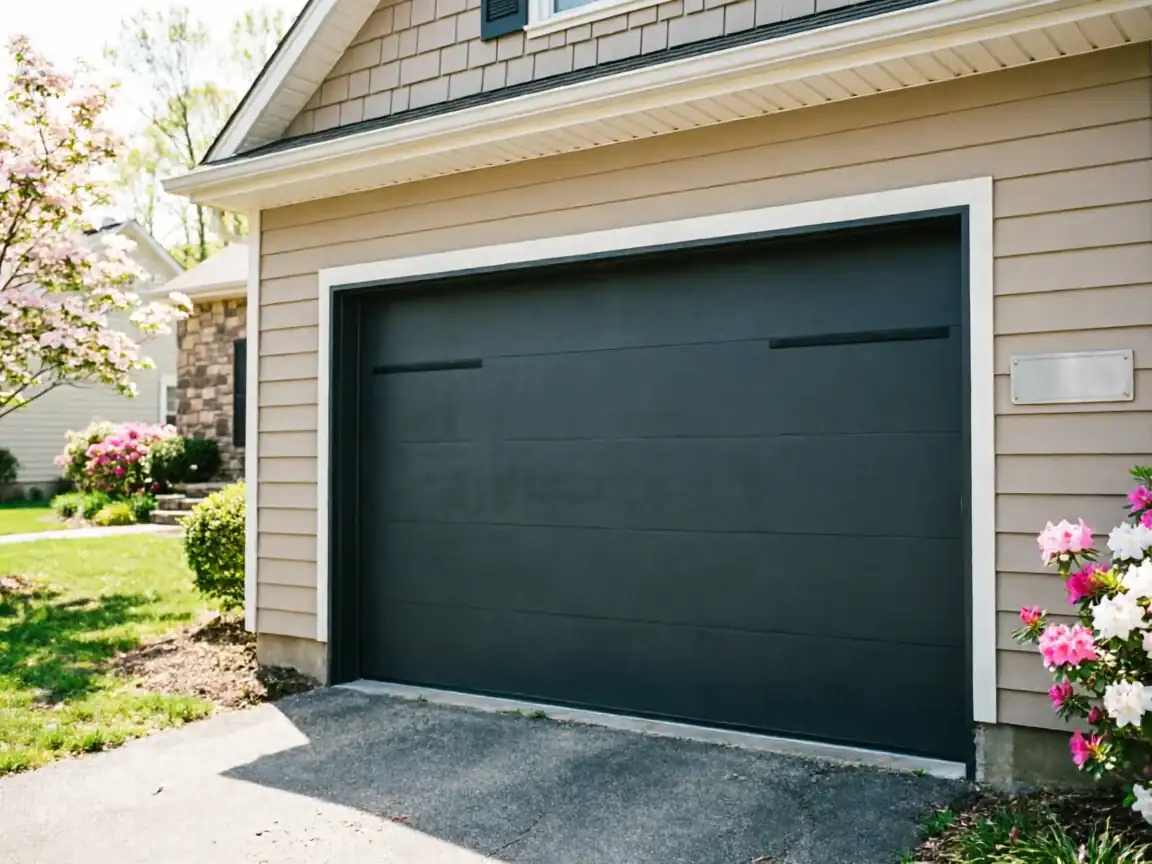
Steel sectional doors are what you'll find on most King driveways, sized to the standard single and double-car openings built into houses from that 1986-ish wave of construction - nothing exotic, nothing custom-wide. When a cable goes, you'll usually see one of a few things: the door hangs crooked, tilted down on the side with the broken cable, or it won't budge at all because the opener senses the imbalance and stops. Sometimes you'll find the cable itself, a loose coil of braided wire sitting on the garage floor near the track. Winters here bring enough cold and damp cycling - this area sits in a moderate cold climate band - that cable sheathing and spring coatings age faster than they would somewhere milder, and a cable that's been fraying slowly for a year can finally let go on a cold morning when the steel contracts. If you're also hearing a grinding or popping sound before the cable actually breaks, that's often the spring complaining first, not the cable - worth mentioning when you call.
How it works
From “it’s stuck” to “it’s fixed”
1
Tell us what’s wrong
Describe the symptom - won’t open, loud bang, opener runs but the door won’t move.
2
On-site diagnosis
A technician tests the door under power and by hand and finds what actually failed.
3
Clear, up-front plan
You get the fix that’s needed and what drives the cost - before any work starts.
4
Repaired & tested
The repair is done, the door is set true and tested, and the work area left clean.
Not sure which repair your door needs in Winston-Salem, NC? Describe what it’s doing - every job starts with a diagnosis.
We don't keep a crew stationed in King - we dispatch from Winston-Salem, about 13 miles away. We'll give you a realistic window when you call rather than promise an exact time, since it depends on the drive and what's ahead of your job that day.
Is a broken cable the same as a broken spring?
No, though they're often confused. The spring stores the lifting force; the cable transfers that force to the door. A cable usually snaps from fraying at the drum, while a spring breaks from metal fatigue. Sometimes one failure causes the other, which is why we check both when we're out.
My door is original to the house, built around 1986 - is the cable original too?
Often, yes. Lift cable isn't something most homeowners replace unless it fails, so a lot of King doors from that era are still running their first set. Cable this old is usually at or past the end of its service life, even if it looks intact.
Can I just tighten or re-loop the broken cable myself?
We don't recommend it. A spliced cable is weaker at the splice and tends to fail again, often without warning. It's also a job that requires releasing spring tension safely first, which is where most DIY injuries happen.
Ready to get your garage door sorted?
Tell us what it’s doing and where you are in Winston-Salem - we’ll take it from there.