What Is on the Truck
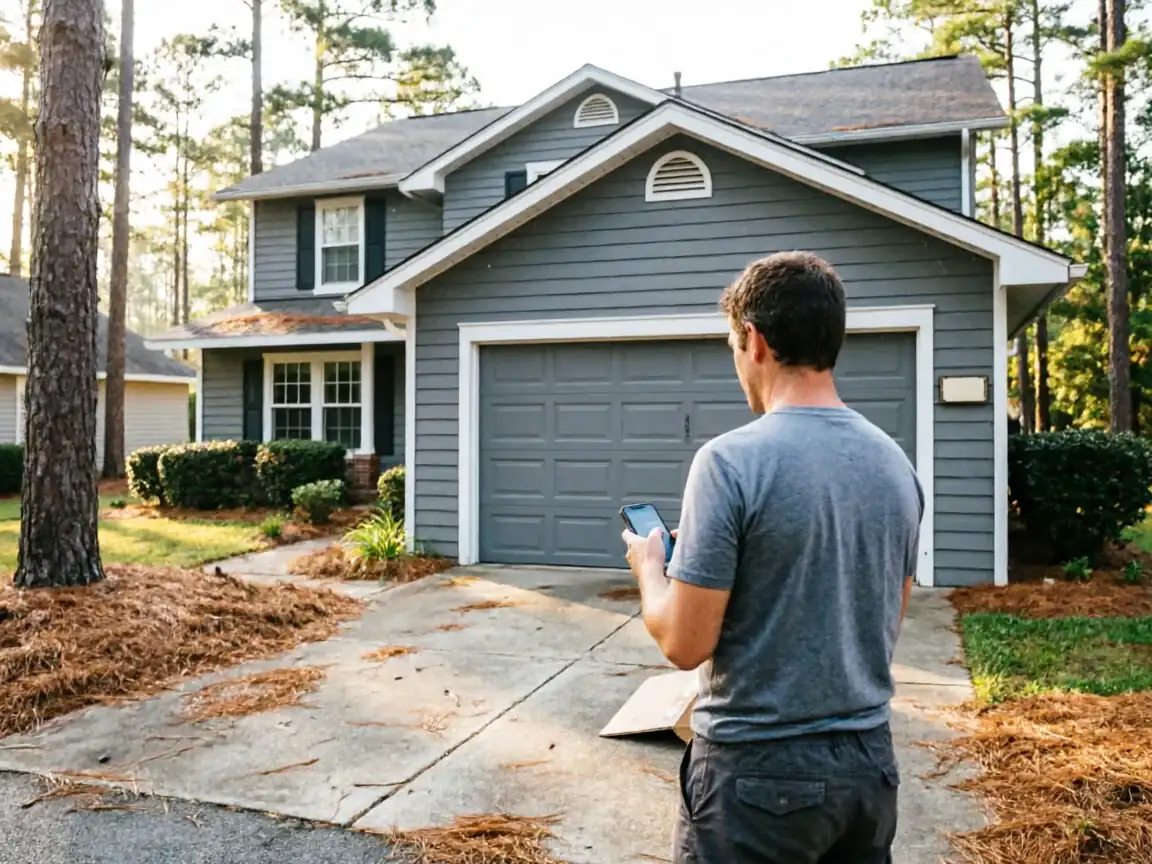
Walkertown sits six miles out from our Winston-Salem shop
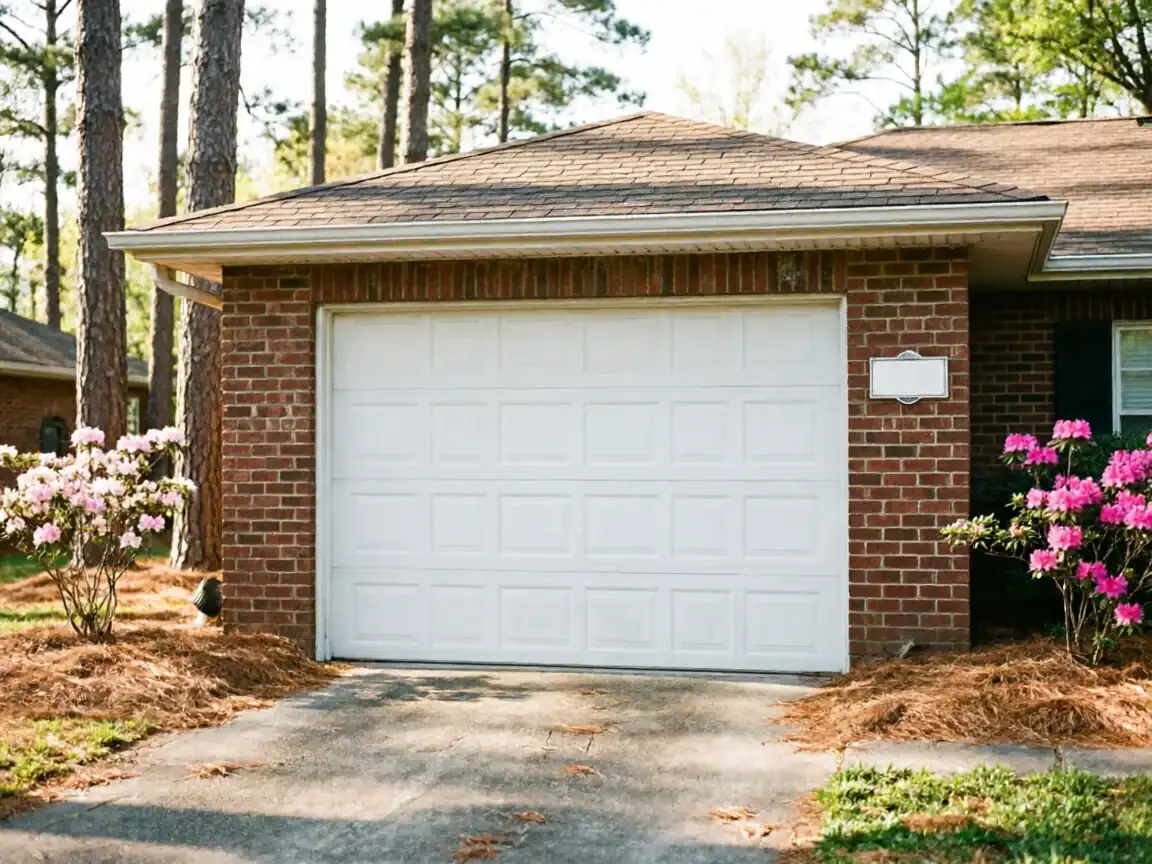
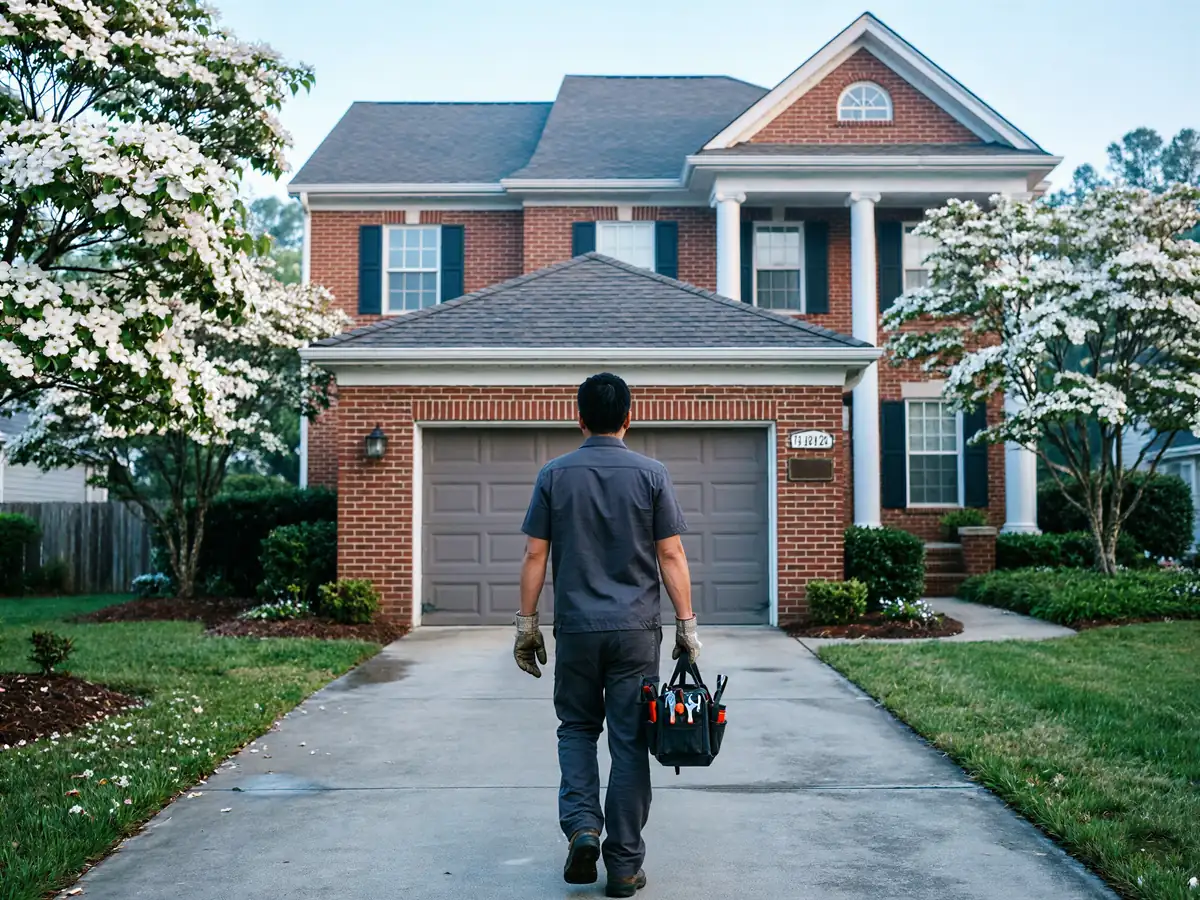
Close enough that a panel job doesn't turn into a half-day trip, but far enough that we load for the door we're expecting before we leave, not after we knock. Houses here were mostly built around 1993, which puts most of the doors we see on steel sectional panels from that era's common widths and heights rather than the older wood or the newer insulated steel you'd find on a fresh build. We carry a range of panel stock sized to those mid-90s door dimensions, plus the end hinges and stile hardware that go with them, because showing up with the wrong panel width means a second trip and nobody wants that.
We also bring touch-up paint stock in common garage-door white and almond
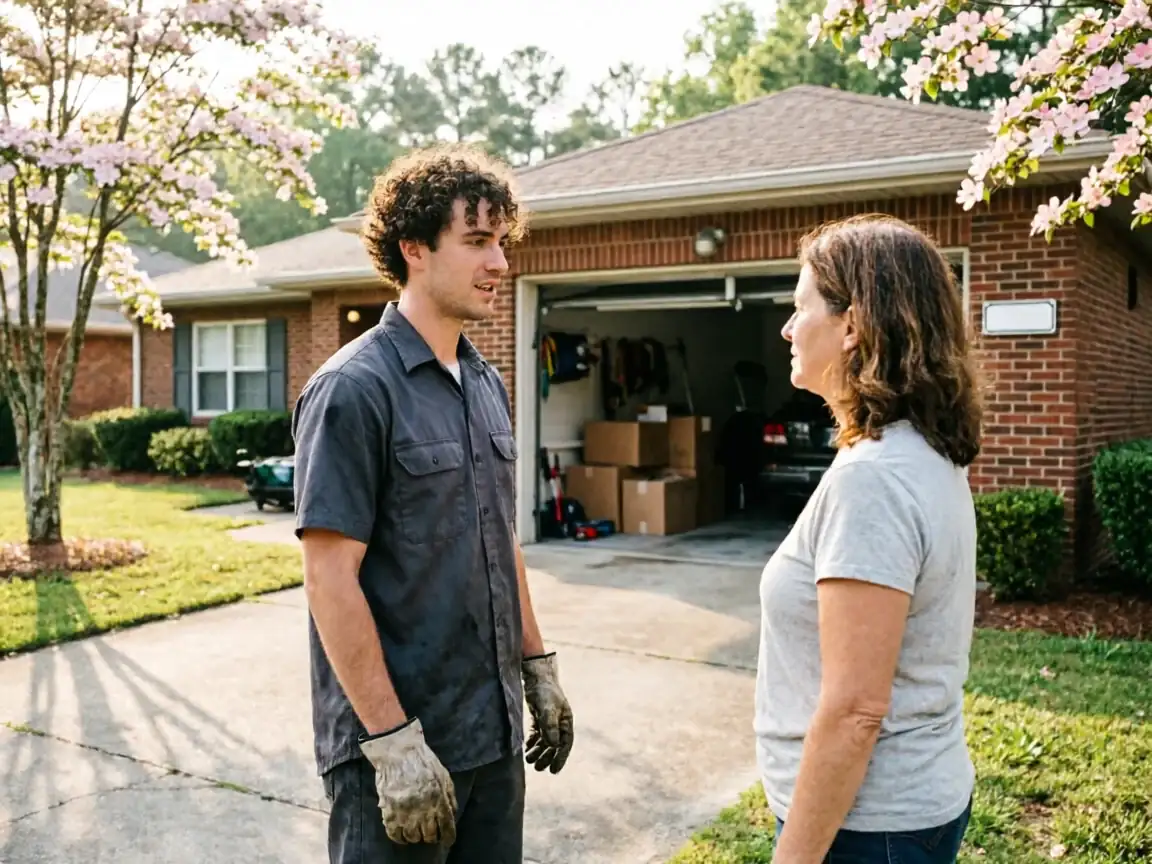
Since a lot of 1990s doors were never a custom color to begin with. If your door is an odd size or a brand we don't stock sections for, we'll tell you that on the first visit rather than order blind and bill you for a guess. That's the honest limit of what fits on the truck: we stock for what this part of the county typically has, not for everything that exists.
How We Fix It
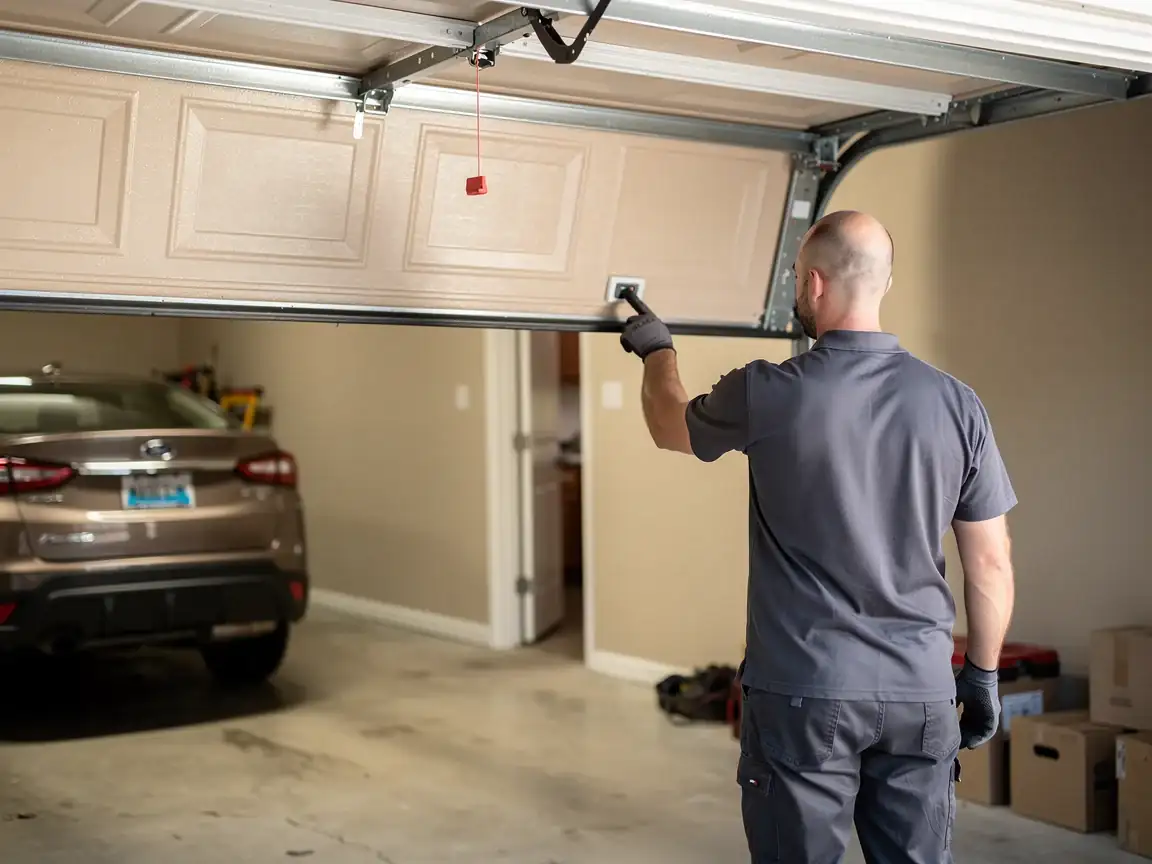
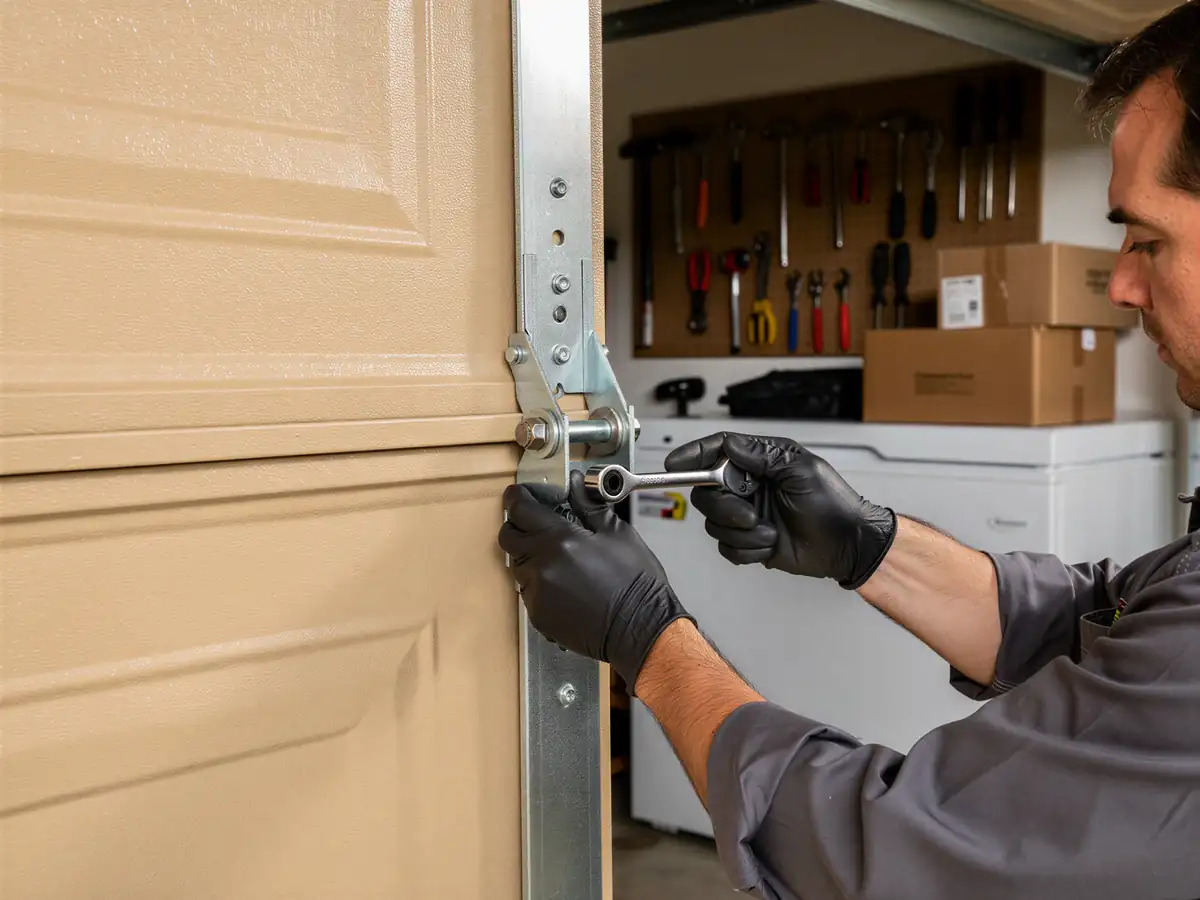
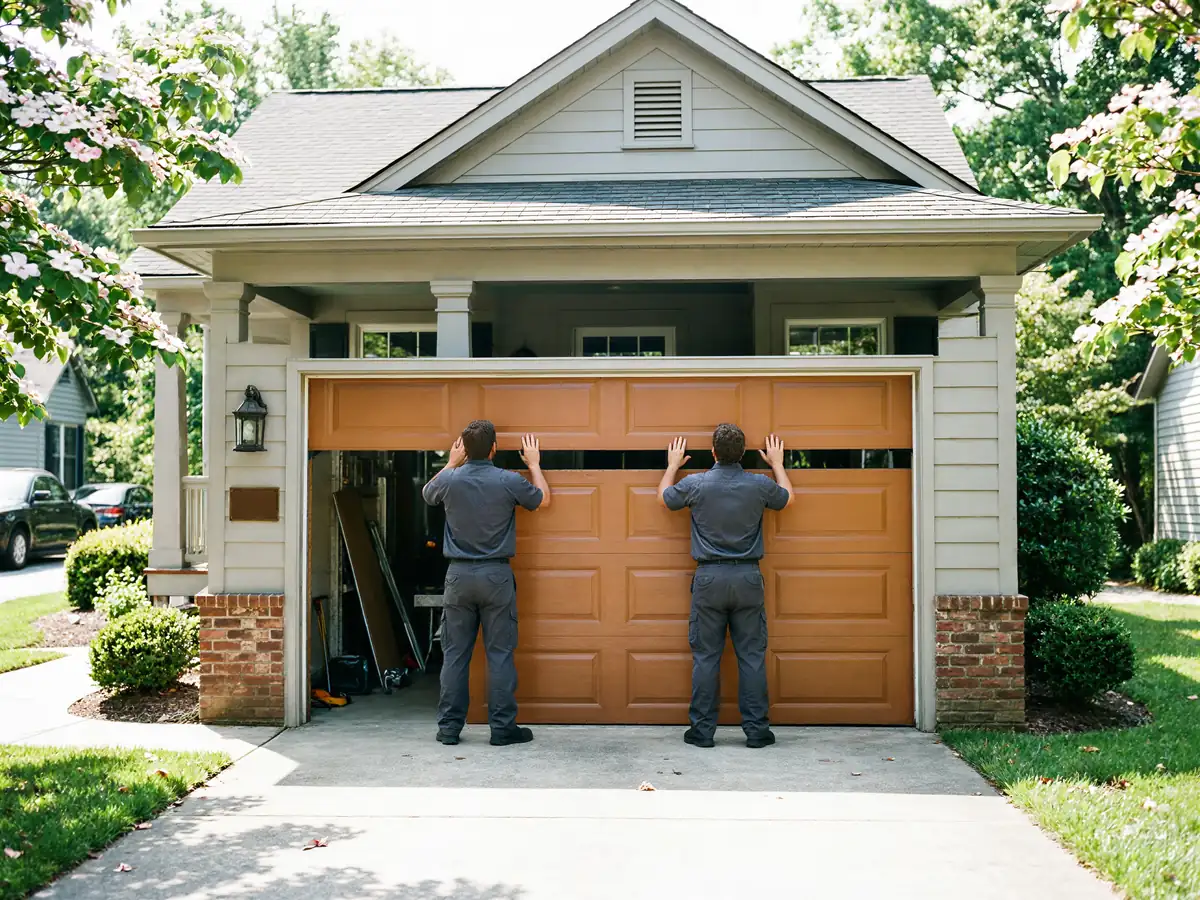
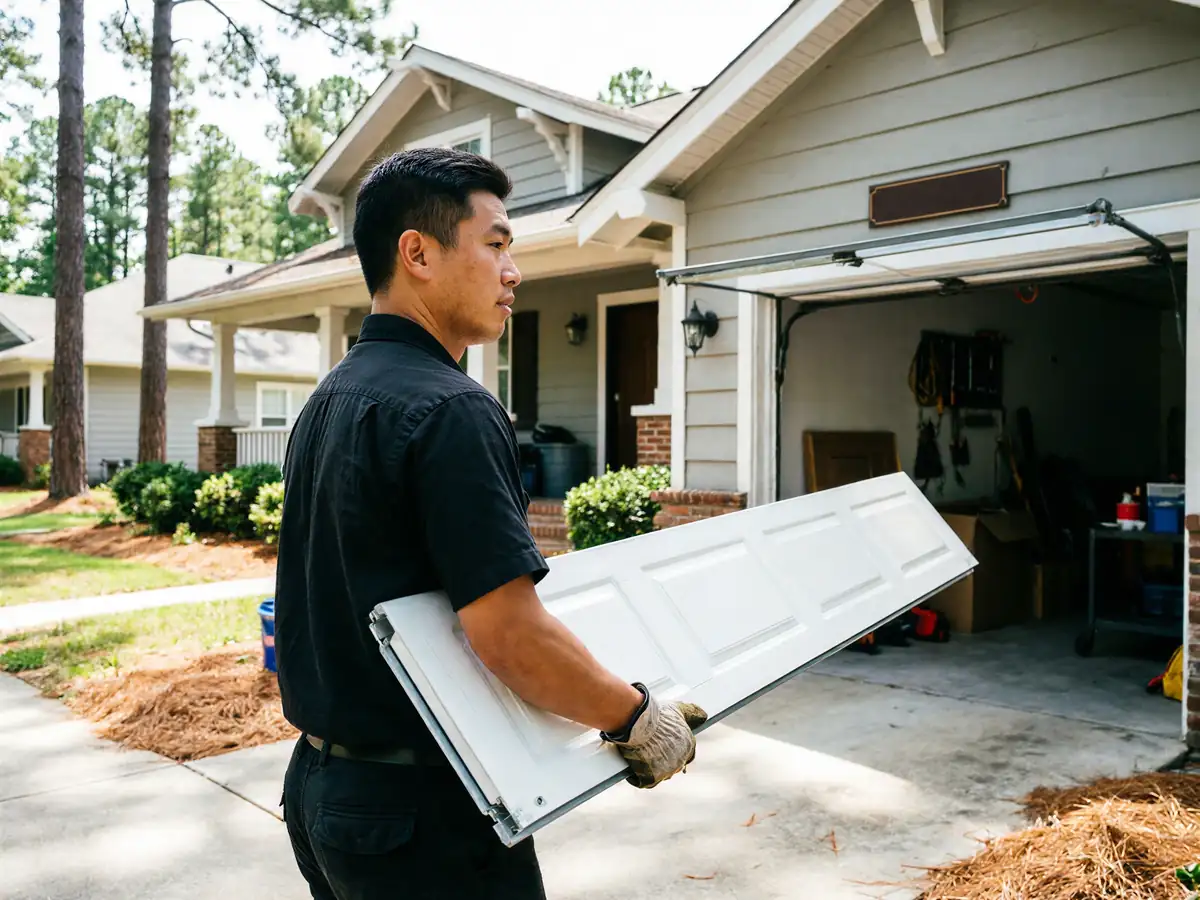
A damaged panel on a sectional door almost never means replacing the whole door. We pull the bent or cracked section, unhook it from the adjoining panels at the hinge points, and set in a matching piece sized to the opening. On doors built around 1993 the sections are usually a standard steel profile, which makes sourcing a close match realistic rather than a guessing game.
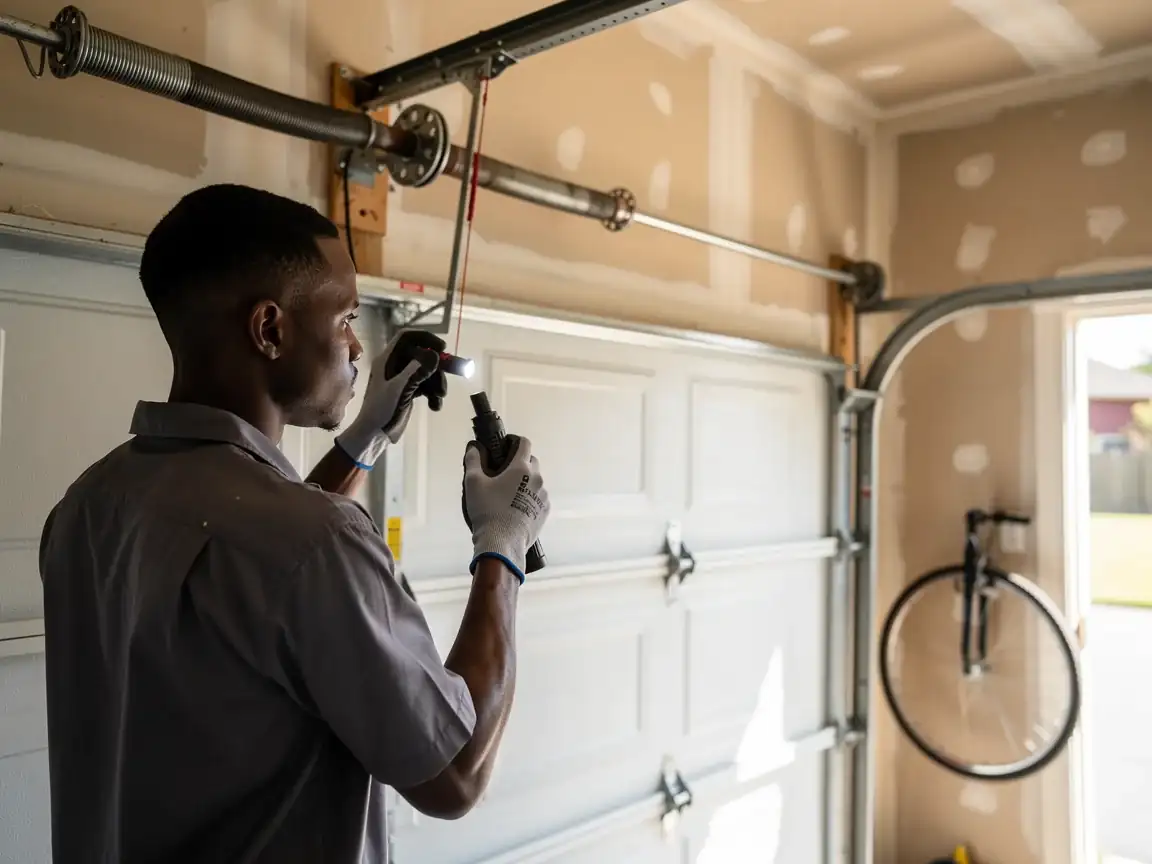
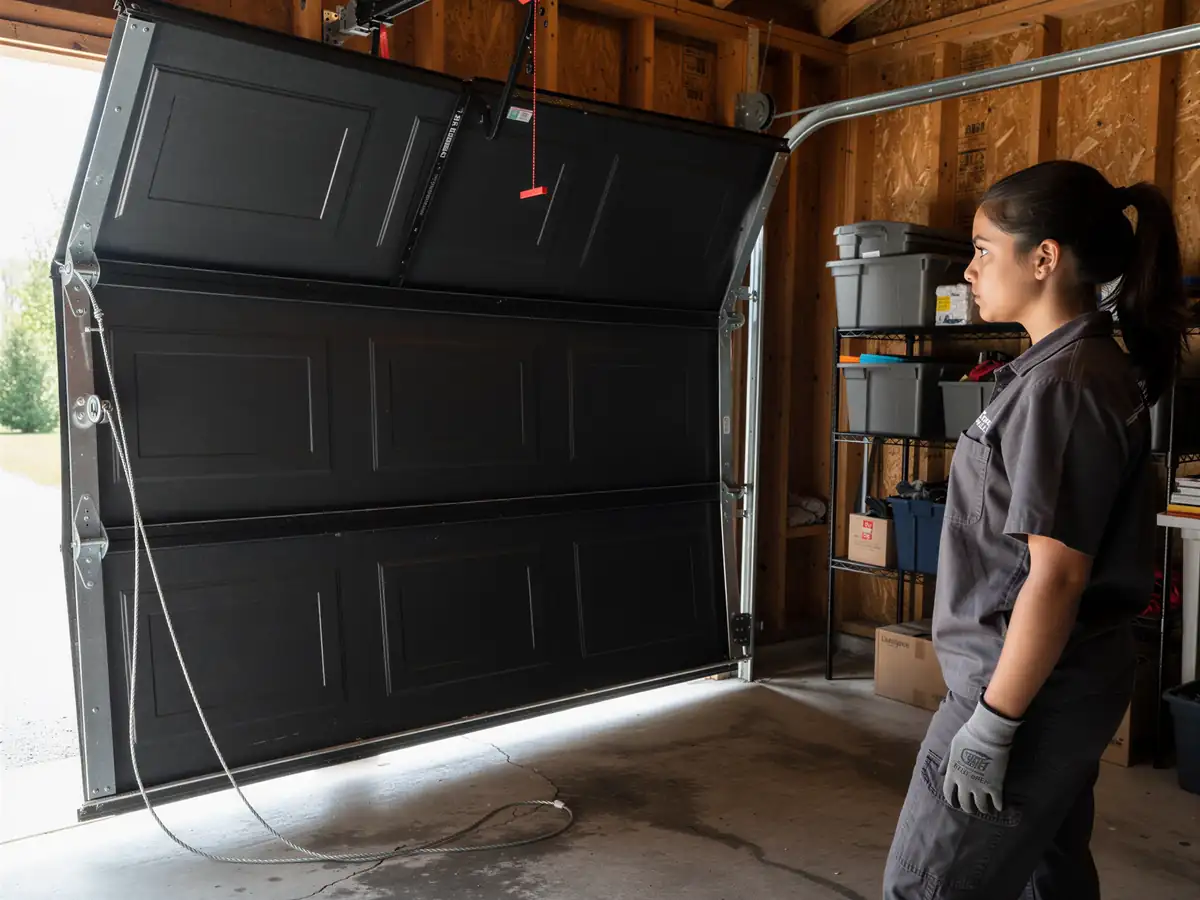
What takes the real time is squaring the new panel to the track afterward. A door that's run crooked for months on a bad roller or a bent track will fight a new panel even if the panel itself is right, so we check roller condition and track alignment before we call the job done, not after. If the spring tension looks off once the new weight is hung, we adjust it then rather than leave you with a door that slams or won't hold position.
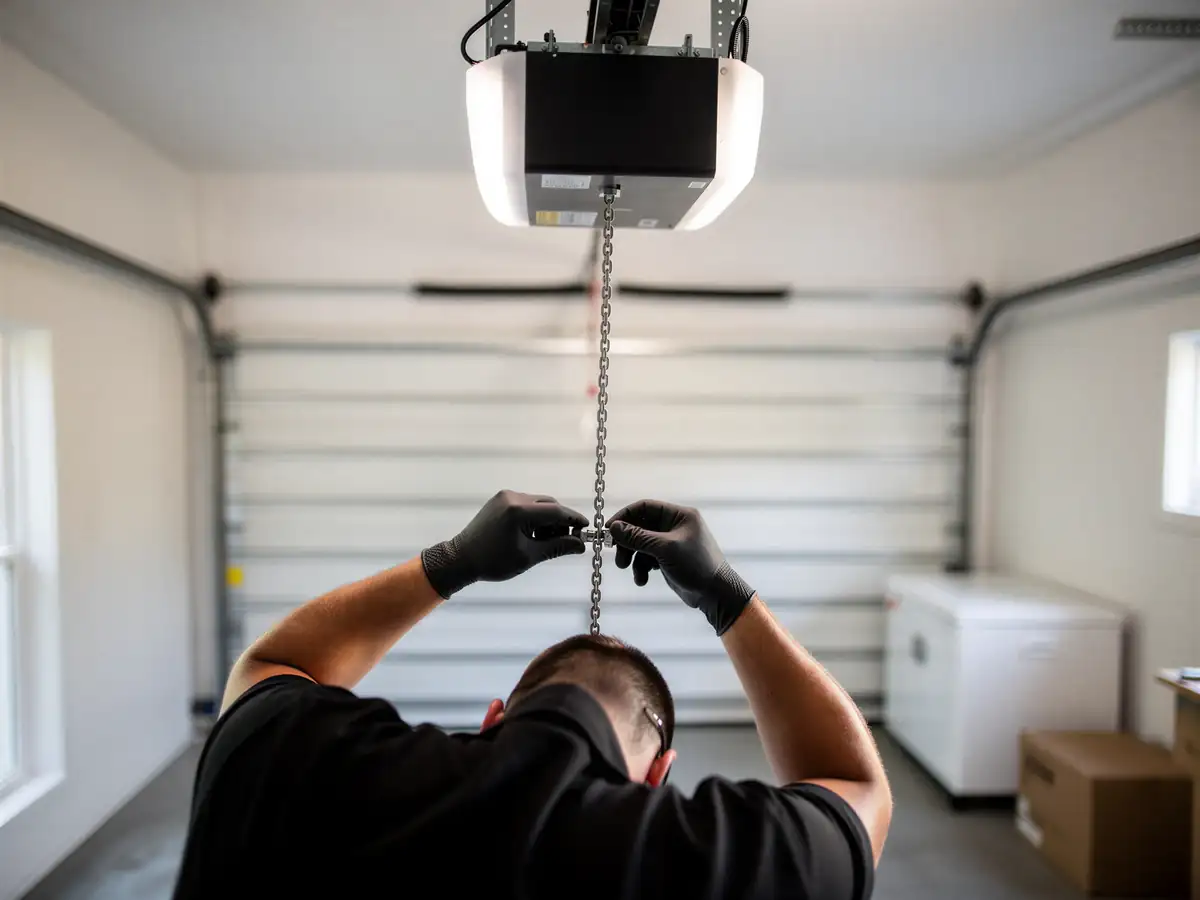
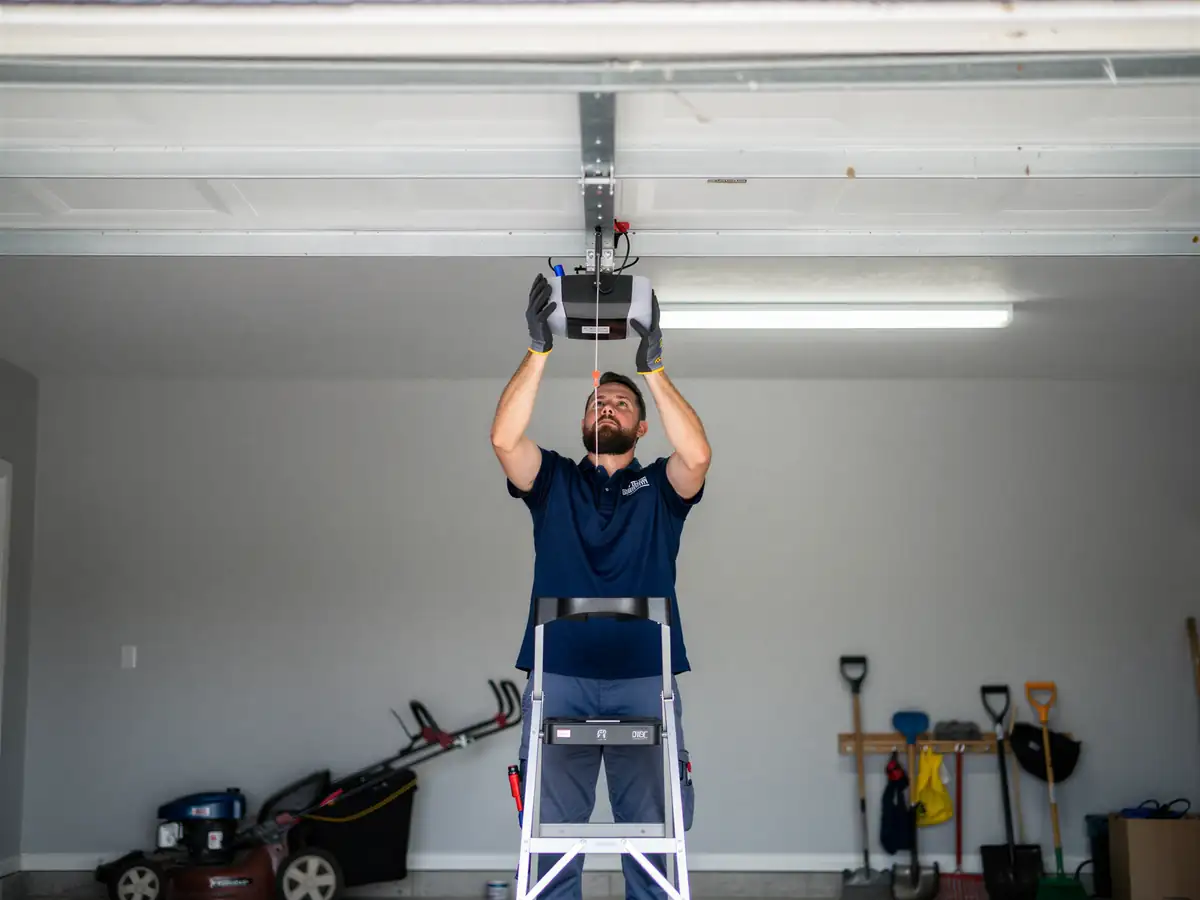
We also check the opener's force settings once the panel is in, since a door that's slightly heavier or lighter after a repair can trip the safety reverse wrong. That's a five-minute check we don't skip, even on a straightforward single-panel swap.
What You Are Seeing
With a median build year around 1993 and 2,292 households in Walkertown, most of what we're called out for is the same handful of failures: a car backed into the bottom section, a basketball dent in a middle panel, or a section that's rusted through at the bottom where it sits closest to the ground and catches runoff. Cold-season swings in this part of the state put stress on steel panels that already have a hairline crack, so a small dent from last year sometimes shows up as a split seam this winter.
With a median household income of $80,761 here, we also see a fair number of owners who'd rather replace one panel cleanly than let a cosmetic problem turn into a functional one, which is the right call most of the time. If the damage is at a hinge point or has started pulling the track out of alignment, that's a different repair than a clean panel swap, and we'll say so before we quote it as one.
Can You Do This Yourself
Swapping a single bottom panel on a door that isn't under spring tension at that section is within reach for a careful homeowner with the right tools and a helper
The part that trips people up is matching the panel profile and color to a door that's roughly thirty years old, since manufacturers change section designs over time and a mismatched panel will show even under fresh paint.
Where we'd tell you to stop and call someone is any panel next to a bent track, a damaged end hinge, or anywhere near the torsion spring assembly
That's not a DIY repair with hand tools, and getting it wrong is how people get hurt. If you've already got the door open and the panel out, we're happy to just handle the parts matching and the install rather than the whole job start to finish - ask when you call.