What Is on the Truck
The fault we see most in Walkertown isn't the spring itself
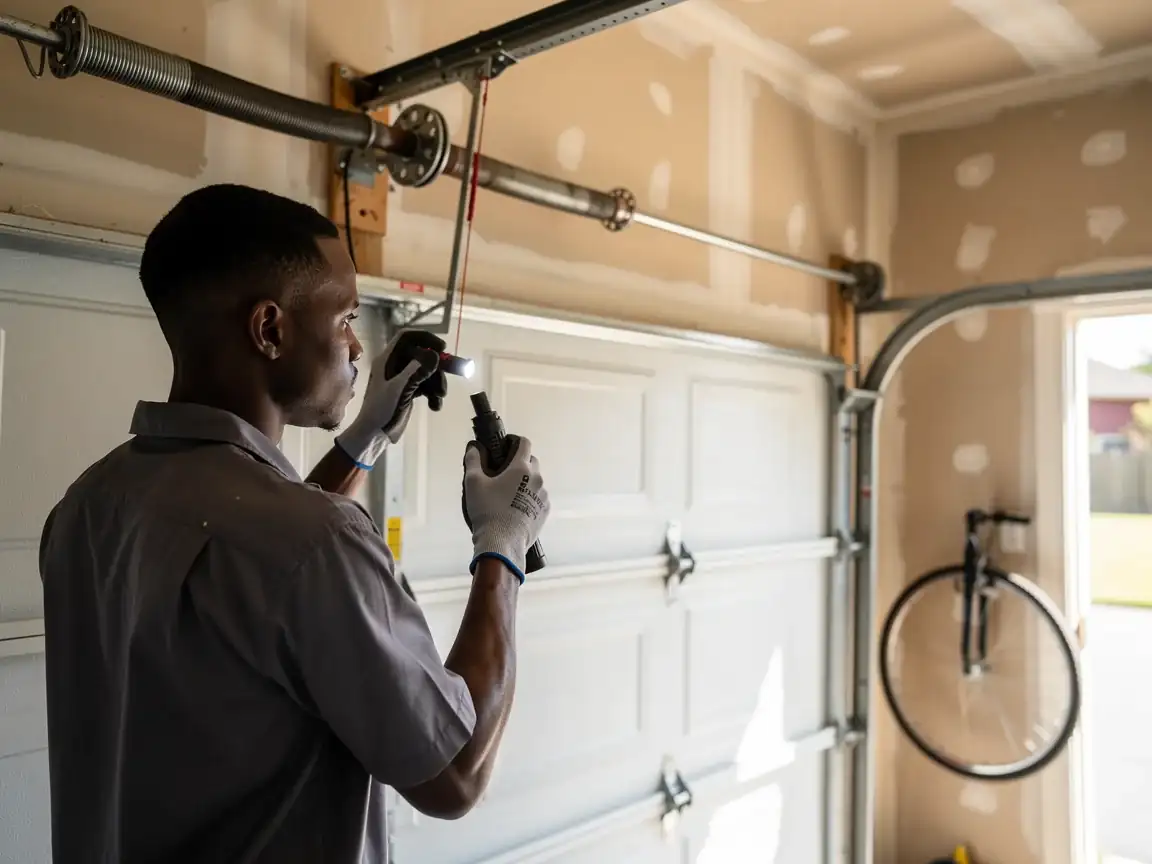
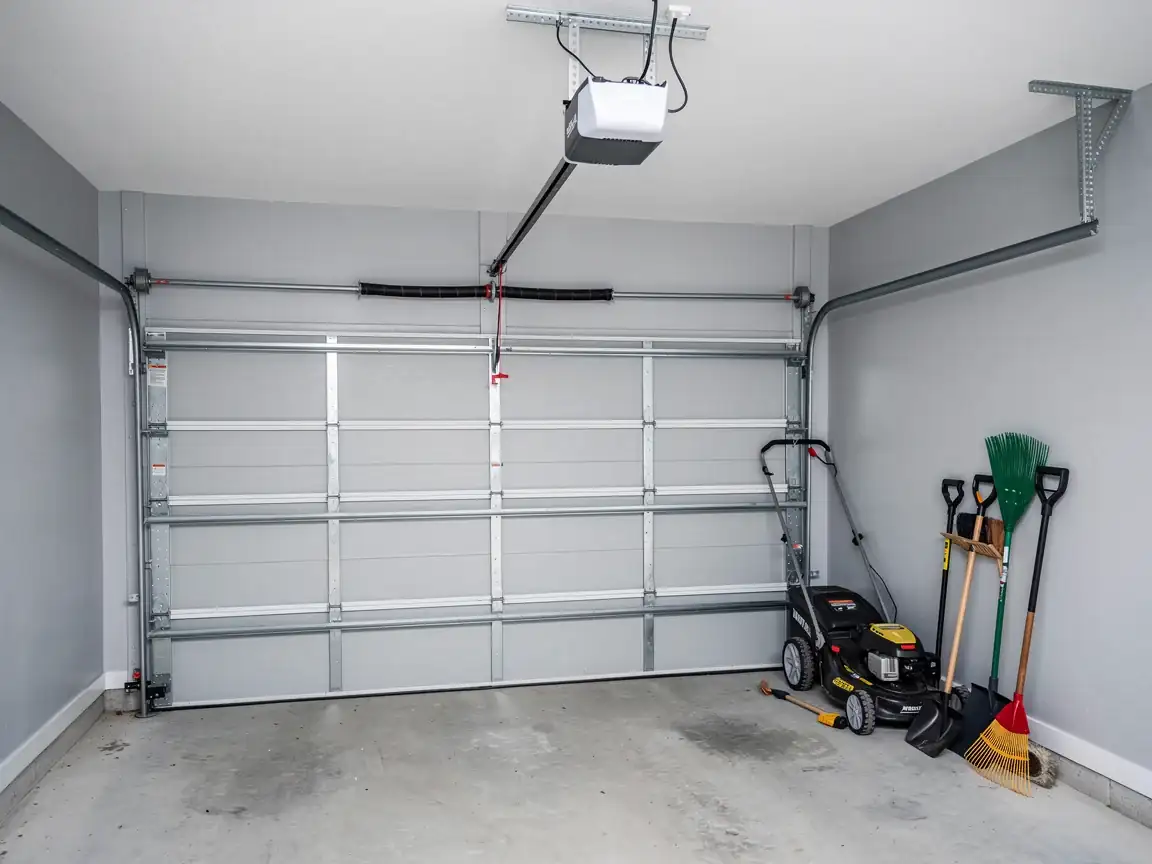
It's the lift cable that rides alongside it. Homes here went up mostly around 1993, which means standard torsion-spring doors with galvanized aircraft cable wound on steel drums at each end of the shaft. After thirty-plus years, that cable doesn't usually snap clean. It frays strand by strand near the bottom bracket or where it wraps the drum, and you get a door that tilts, binds, or drops crooked on one side before anything lets go completely.
We carry replacement cable sized for that era of drum and bracket
1/8 inch aircraft cable in the lengths that match a standard 7-foot door, plus the drums themselves when the cable has chewed a groove into the old ones. We also carry the safety cables some of these doors never had installed in the first place, since cable-and-bracket setups from the early 90s often skipped that extra piece. If your bottom bracket is rusted through, that's a stocked part too - we don't like reusing a bracket that's already failed once.
What we don't carry on every truck is a cable in every oddball length
Most Walkertown doors are standard heights, so this is rarely an issue, but a custom or oversized door can mean a short wait on a part we don't stock.
How We Fix It
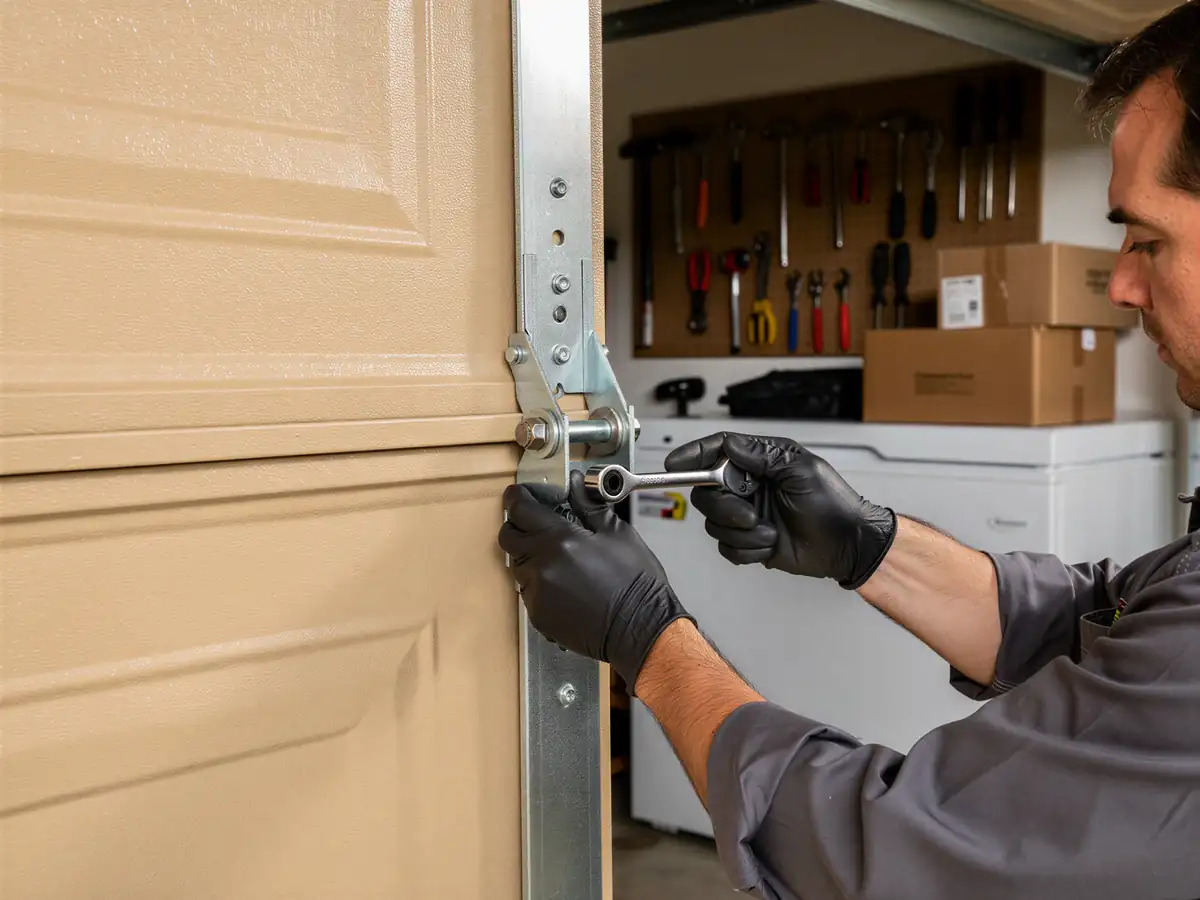
First we check whether the spring that cable rides on is still good - a frayed cable on a 1993-era door often means the spring is near the end of its life too, and replacing one without looking hard at the other is how you end up doing the same job twice in a year. If the spring's fine, we unwind it to kill the tension, pull the old cable off the drum, and run new cable through the bottom bracket, up the track roller, and back onto the drum at the right number of wraps for that door's height.
We set the tension so both sides lift evenly - a door that's gone crooked on one cable almost always means the other side is close behind, so we check both cables, not just the one that failed. If the drums are grooved from the old cable or the bottom brackets are bent from a door that's been dragging unevenly, we replace those too rather than put new cable on worn hardware.
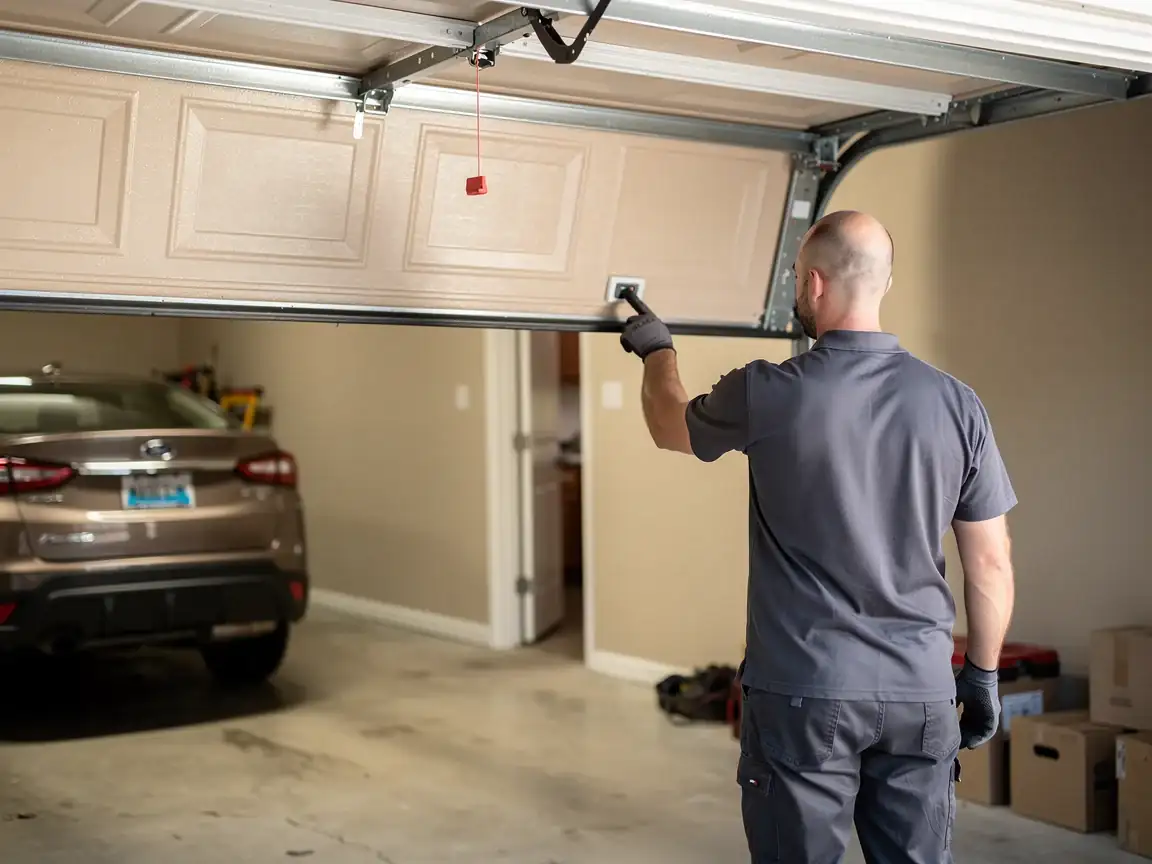
We test the door through a full open-close cycle under power before we leave, watching for drift, listening for drum noise, and checking that the auto-reverse still works once tension is back where it should be.
What You Are Seeing
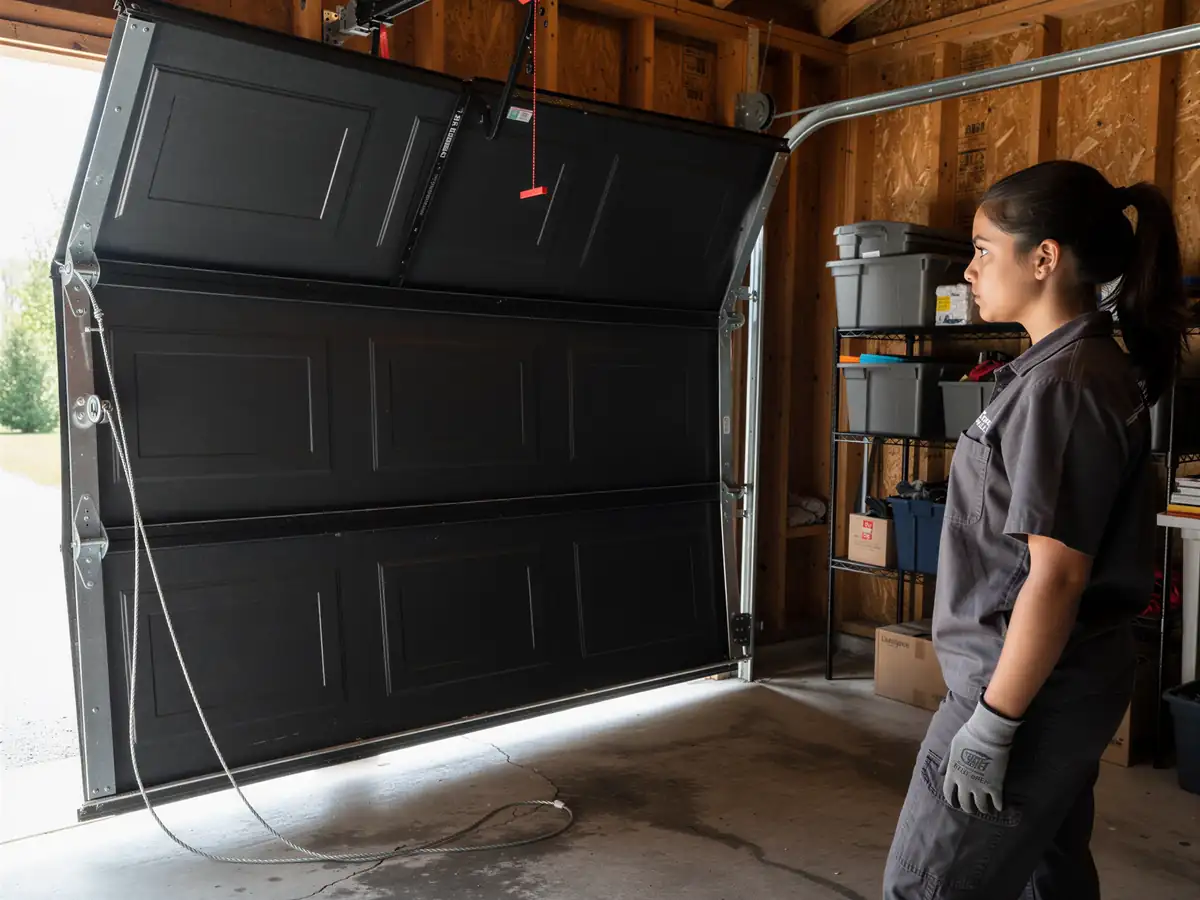
A door that looks fine standing still but runs crooked going up is the classic sign - one cable has stretched or frayed enough that it's no longer pulling its side evenly. You might also see a loose loop of cable hanging off the drum, visible fraying near the bottom bracket, or the door dropping suddenly a few inches and jamming partway through a cycle.
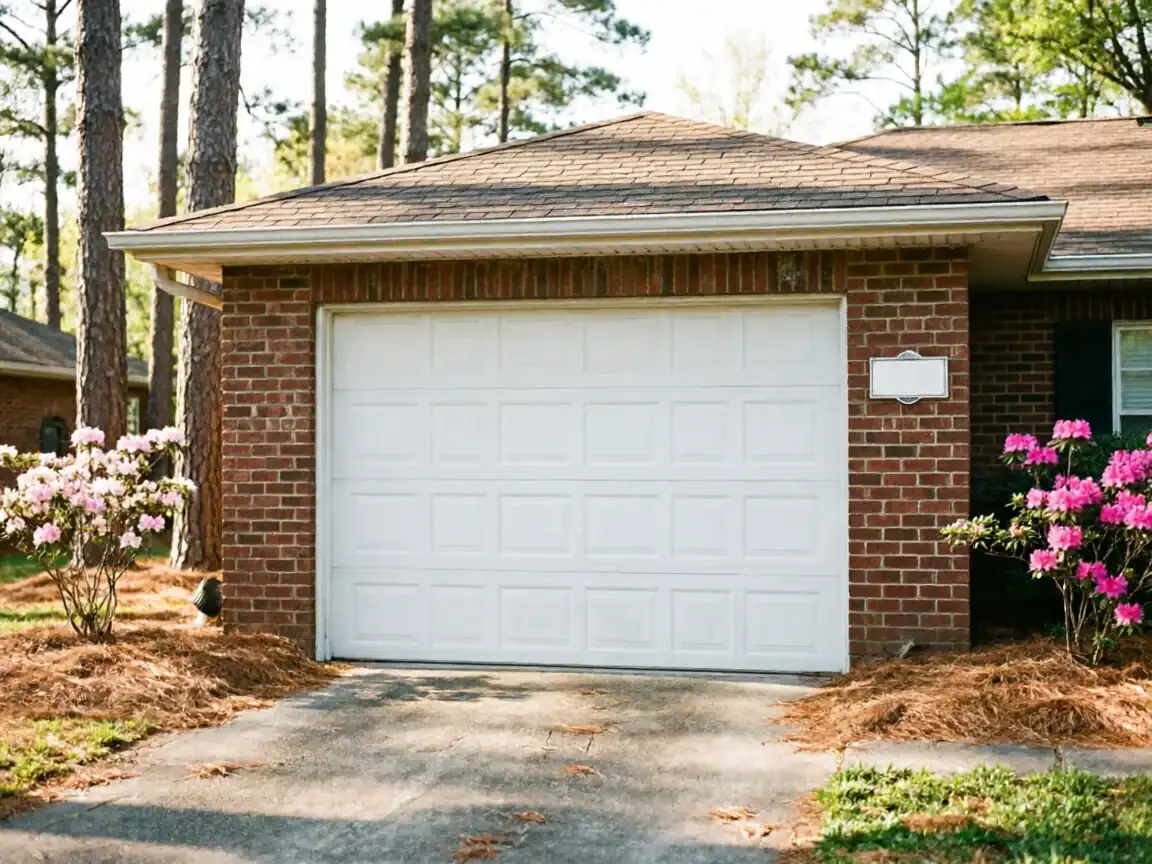
In Walkertown's housing stock, most of this traces back to age rather than damage. A door installed when a house was built in the early 1990s has had three decades of daily cycles on the same original cable, and galvanized cable doesn't last forever even without a car backing into it. We also see it on doors where a previous spring replacement didn't include new cable - the spring gets swapped, the worn cable stays, and it fails a year or two later anyway.
If you hear a loud bang and the door won't move at all, that's more often a broken spring than a cable - cables tend to fail gradually, with warning signs, rather than all at once.
Can You Do This Yourself
Don't
A lift cable is under tension from the torsion spring the whole time the door is closed, and pulling a frayed cable off a loaded drum without releasing that tension the right way is how people lose fingers or catch a bracket to the face. This isn't like swapping a roller.
What you can safely do is look
Check both cables for fraying near the bottom bracket and at the drum, check that the bottom brackets aren't bent or rusted through, and note whether the door runs level or leans. That information helps whoever comes out to look at it, including us.
One honest limit - if your door is an older extension-spring design rather than torsion
With cables routed differently along the horizontal track, that's a different job with different parts, and we'll tell you that on the call rather than quoting blind. For most Walkertown houses from the 1990s build era, though, it's the standard torsion-and-drum setup described above.