Where This Job Goes Sideways
The mistake we catch most on a Clemmons install isn't the door itself - it's the opening
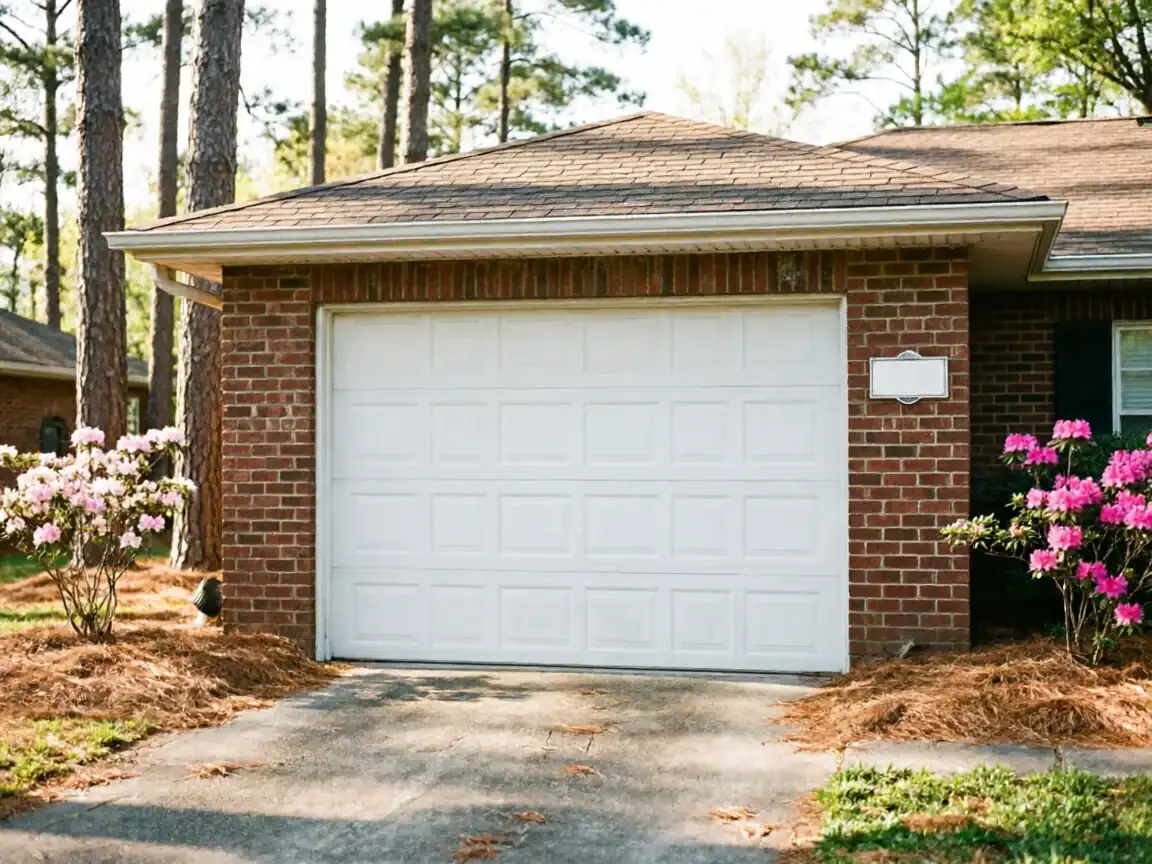
A lot of this area went up around 1993, right in the stretch when builders were framing garages to fit whatever steel sectional door was cheapest that year, not to any fixed standard. Header heights, track clearance, and the rough opening width can all be an inch or two off from what a modern door box assumes.
That gap doesn't show up until the new door is halfway in
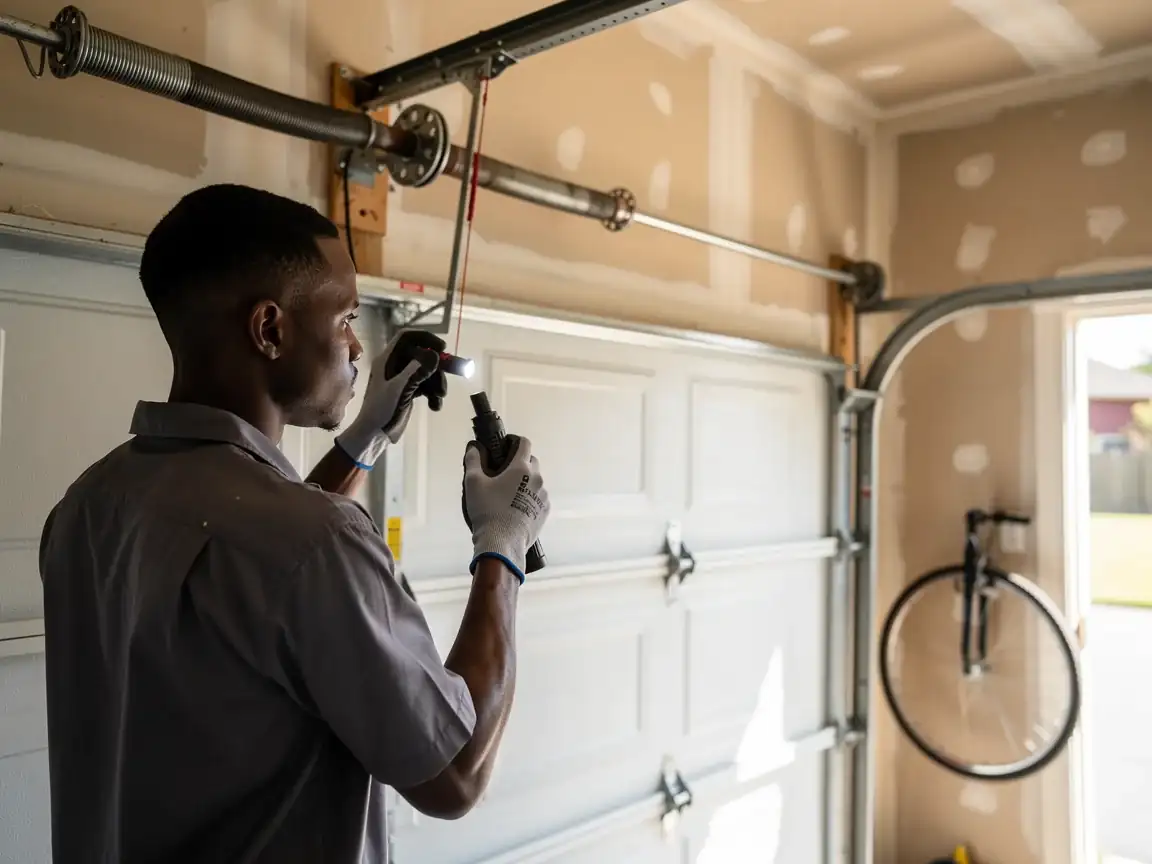
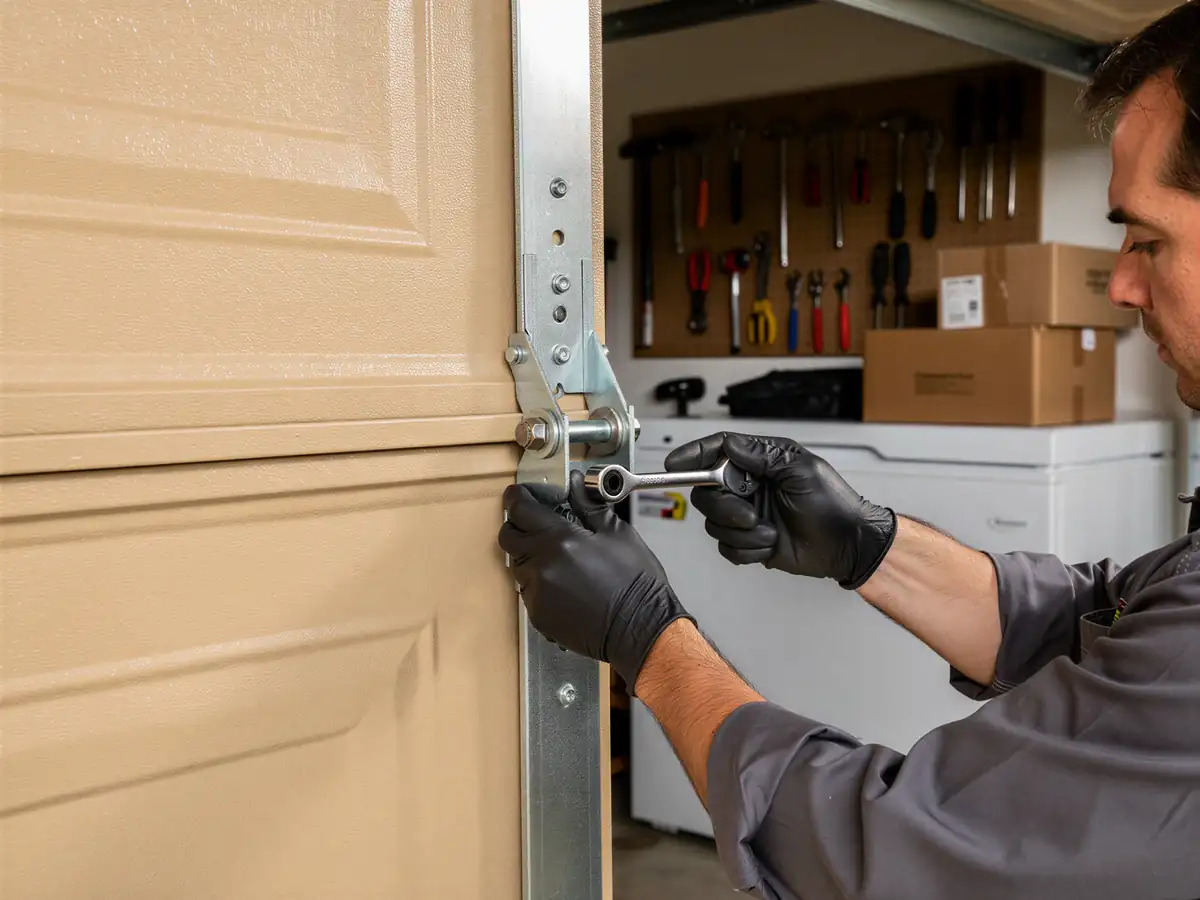
We've seen jamb brackets that need re-shimming because the original framing was never square to begin with, and headroom that's too tight for a standard torsion spring setup without swapping to low-headroom hardware. None of this is a defect in your house - it's just what you get from a neighborhood built in one tight window, with one set of builder habits, thirty-some years ago. Knowing that going in changes how we measure and what we quote, before a crew ever shows up with a door on the truck.
What You Are Seeing
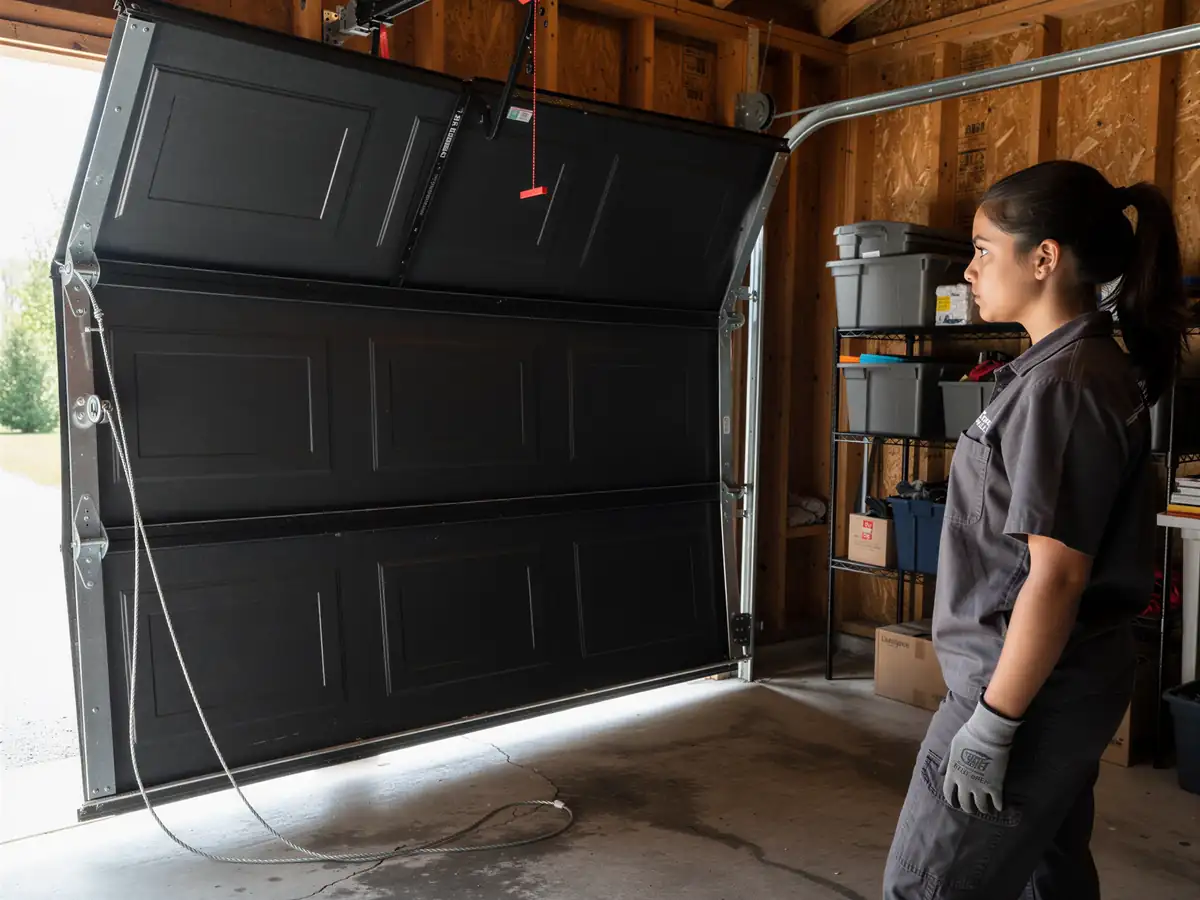
If your door is original to a house from that early-90s wave, the signs are usually mechanical before they're cosmetic. Panels bow slightly at the bottom corners under their own weight. The opener strains or reverses partway up because the spring was sized for a lighter door than what's actually hanging on it now, especially if a prior owner swapped to a heavier insulated panel without re-tensioning the spring. Daylight shows at the bottom seal even with the door fully closed, because the slab has warped a fraction over three decades of expansion and contraction.
None of that means the door is unsafe today, but it does mean the hardware is working harder than it should. When we come out for a new install, we're not just hanging a replacement - we're checking whether the track spacing and spring size that worked for a 1990s door still make sense for whatever you're putting in its place.
Getting It Booked In
We run out of Winston-Salem, about 8 miles from Clemmons, so there's no local branch to swing by - the first step is a call to get a measurement visit on the calendar. We ask for the door's rough opening dimensions if you have them, or we take them ourselves on the first trip, since guessing on a house this age is how you end up with a door that doesn't seat right.
Because we're coming from Winston-Salem rather than sitting in Clemmons already, we batch trips where we can, so the exact day isn't always same-day. If timing matters - a trip, a listing, winter coming - say so when you call and we'll tell you honestly what's realistic rather than promising a date we can't hit.
How Long You Are Without the Door
A straight swap - same opening, new door, no reframing
Is usually a single visit from start to close. If the opening needs shimming or the track has to be reset because the jamb has shifted, which isn't rare in a house pushing thirty years old, that adds time on site but doesn't usually turn into a second trip.
Where it does turn into a second trip is custom sizing
If the door you want isn't a stock width or height and has to be ordered to match an opening that's slightly off from standard. That's a parts lead time question more than a labor one, and it's worth asking about up front rather than assuming the door will just show up next week. We'd rather tell you it's a two-week wait on a non-stock size than have you plan around a date we can't deliver.
What You Pay
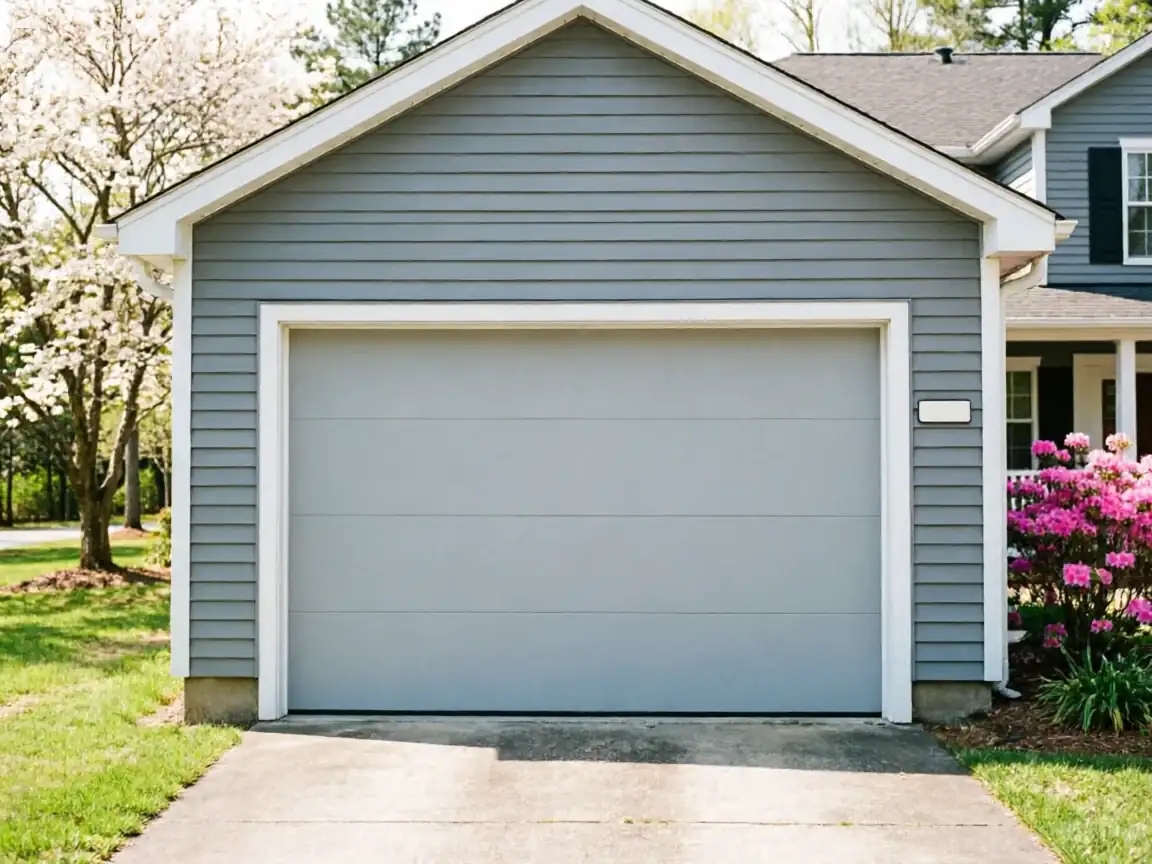
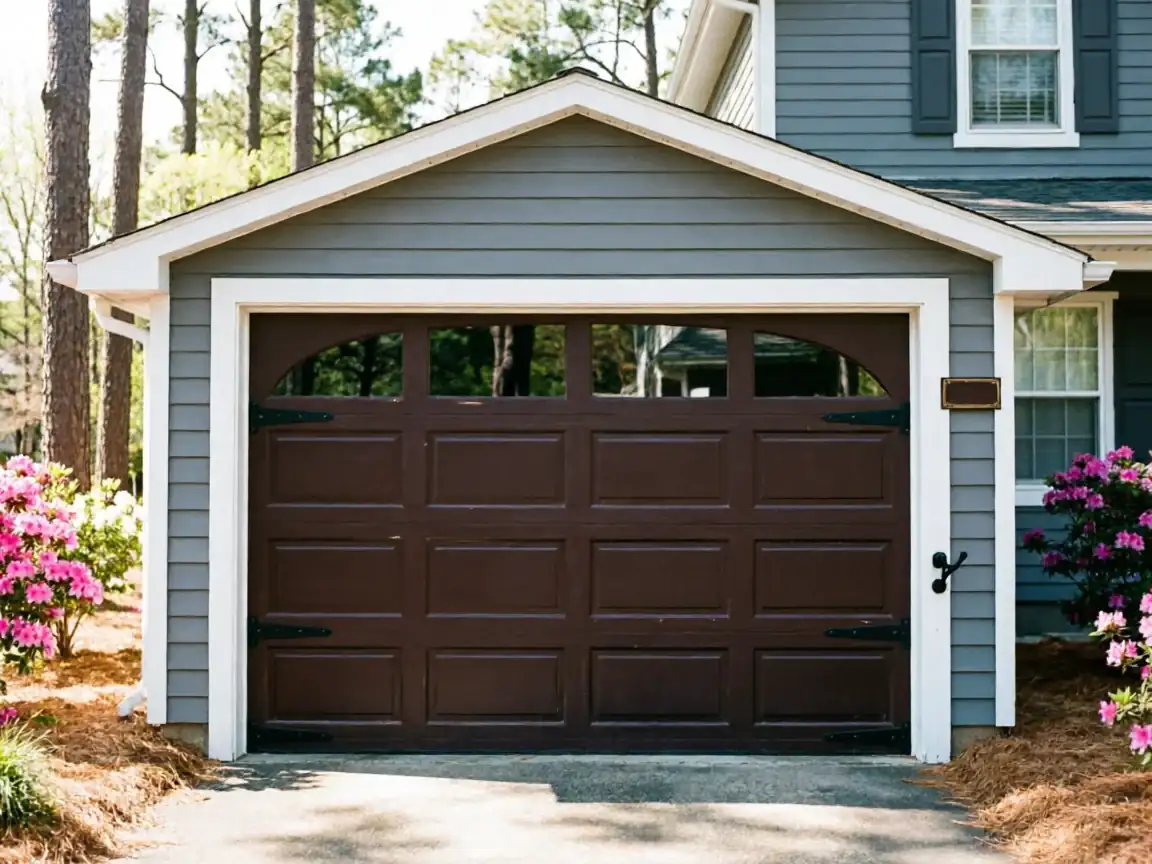
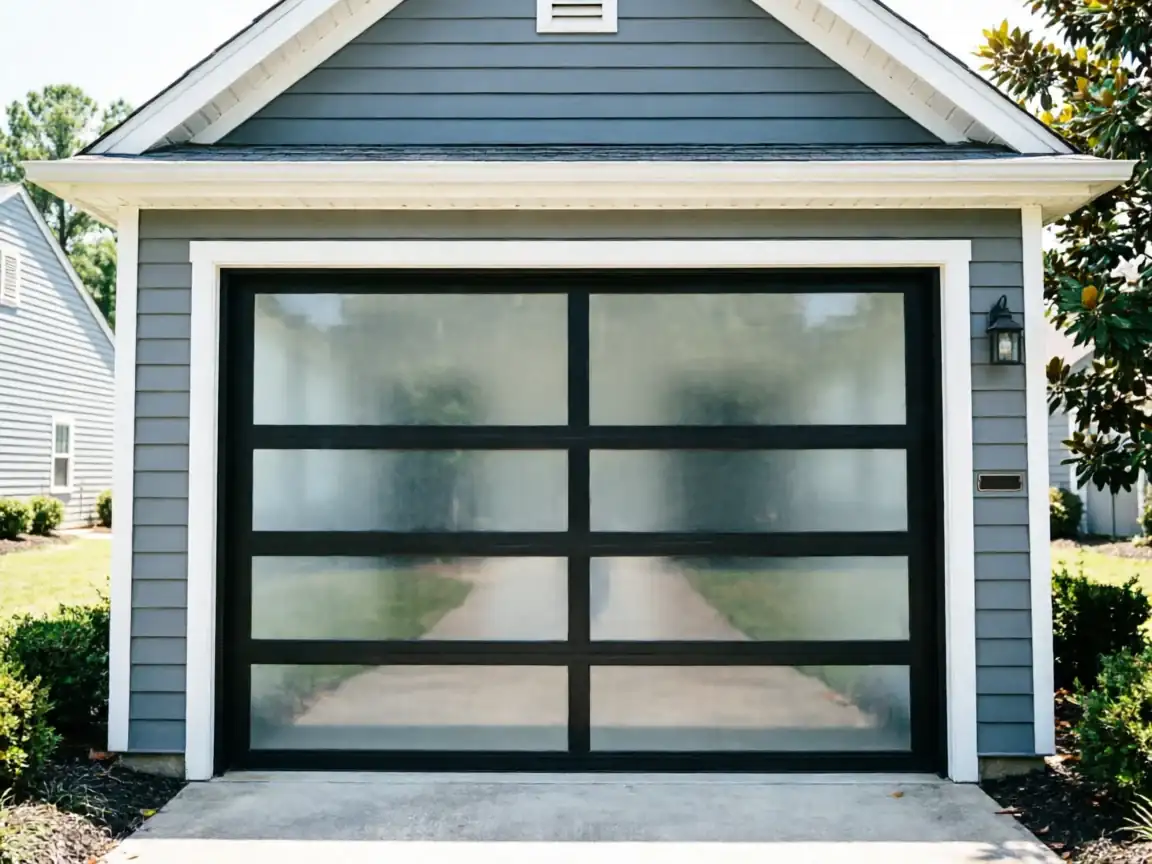
We don't publish a flat price here because what a Clemmons job costs depends on whether it's a straight swap or one that needs reframing, and on the door itself - steel sectional, insulated, wood-look composite, all land in different ranges. What we can tell you is that households in this area run a median income around $84,326, higher than the wider Winston-Salem service area's $78,821, and that shows up in what gets requested: more insulated and composite doors, fewer bare steel panels, than in some of the other towns we cover.
If you want a real number, the honest path is the measurement visit - we won't quote a door we haven't seen the opening for, because on houses from this era the opening is exactly where surprises hide.
Why This Fails Locally
Clemmons sits in a cold-moderate climate band, which means winter matters for a garage door more than people expect - not in a dramatic way, but in the slow way. An uninsulated steel door from the early 90s loses enough heat through the panel that an attached garage can run noticeably colder than the rest of the house, and the bottom seal on a thirty-year-old door has usually hardened enough that it's not sealing against the slab the way it did new.
That's less about the door failing outright and more about it quietly costing you in heating and in how the garage feels to walk into in January. A new door with a proper thermal break and a fresh bottom seal fixes that on day one - it's one of the clearer, most measurable upgrades we install, and in a house built when insulation standards were lower than they are now, it's usually overdue rather than optional.