What You Are Seeing
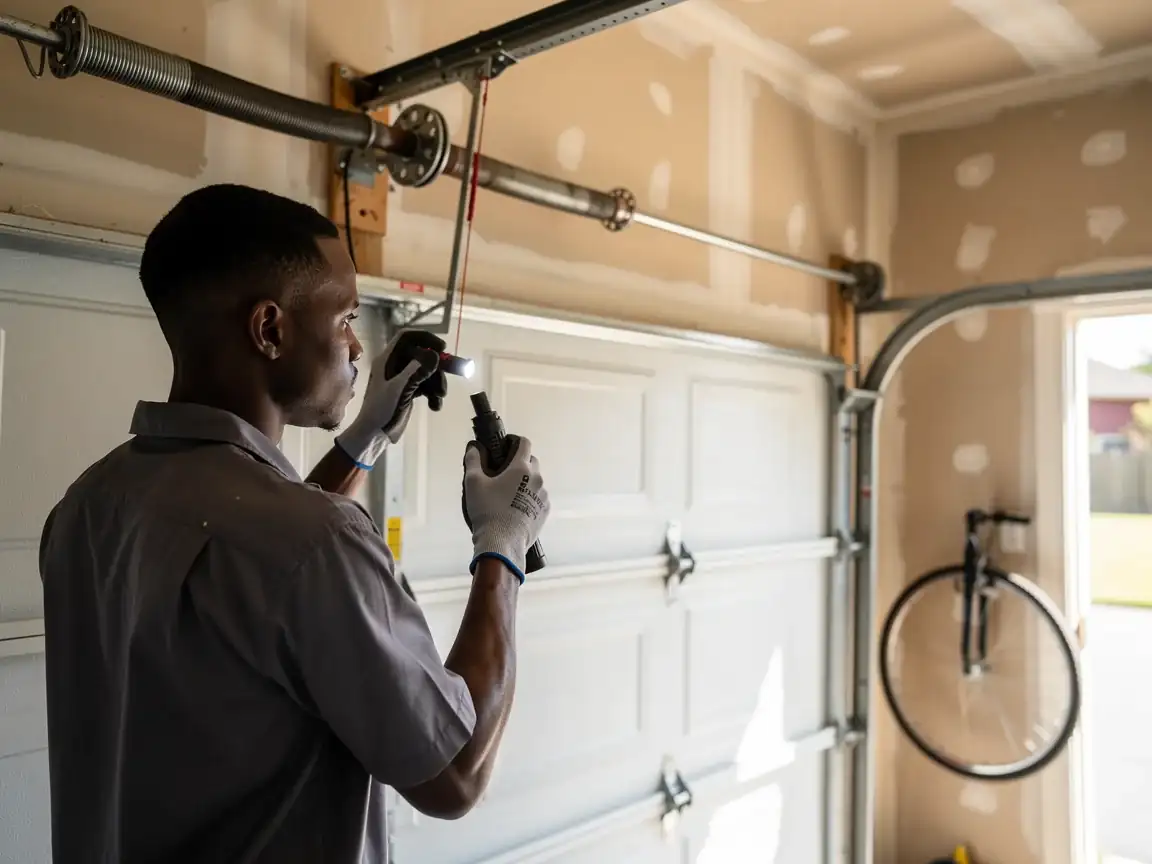
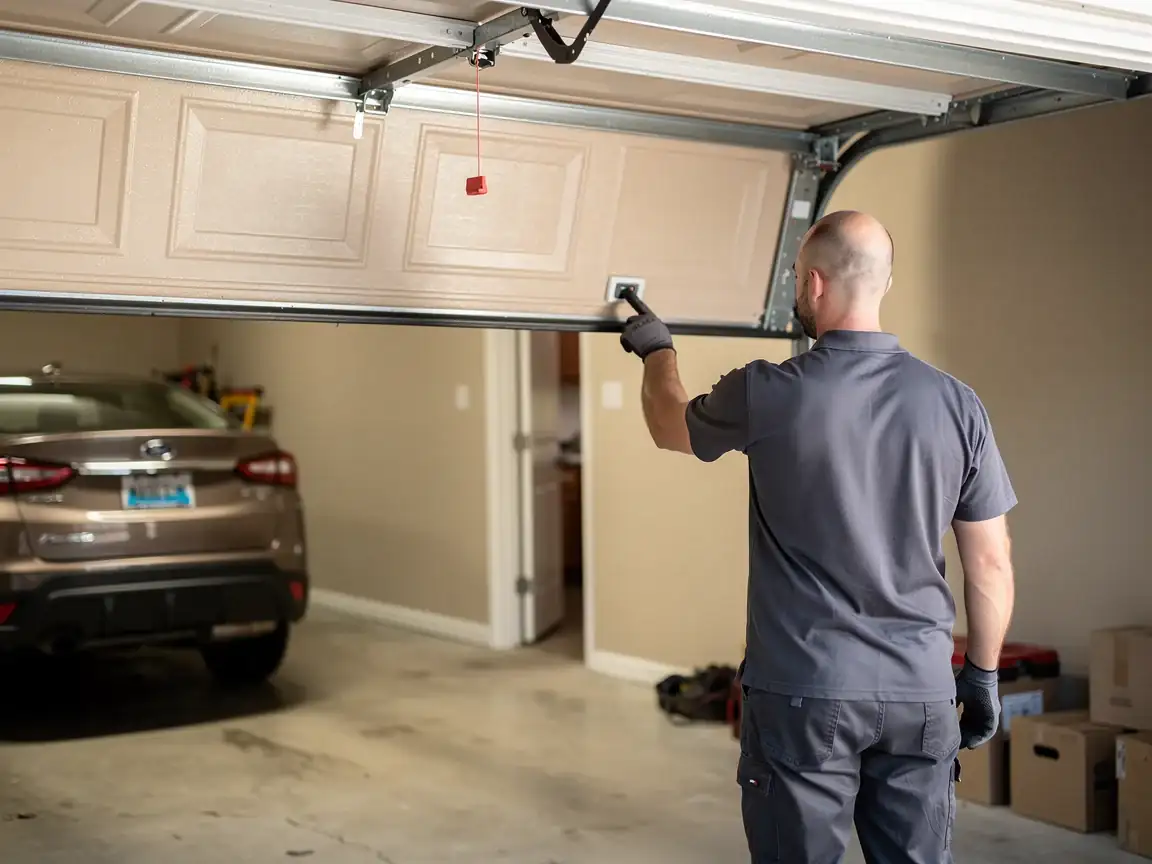
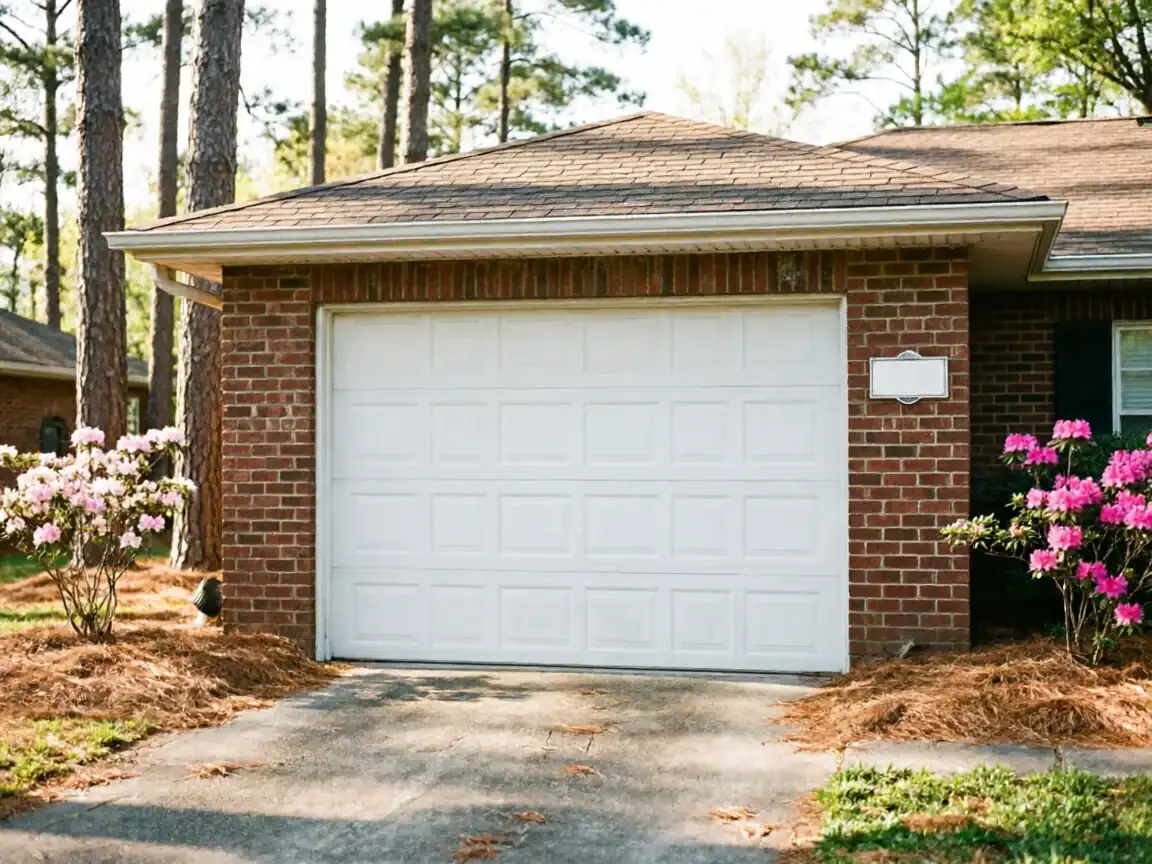
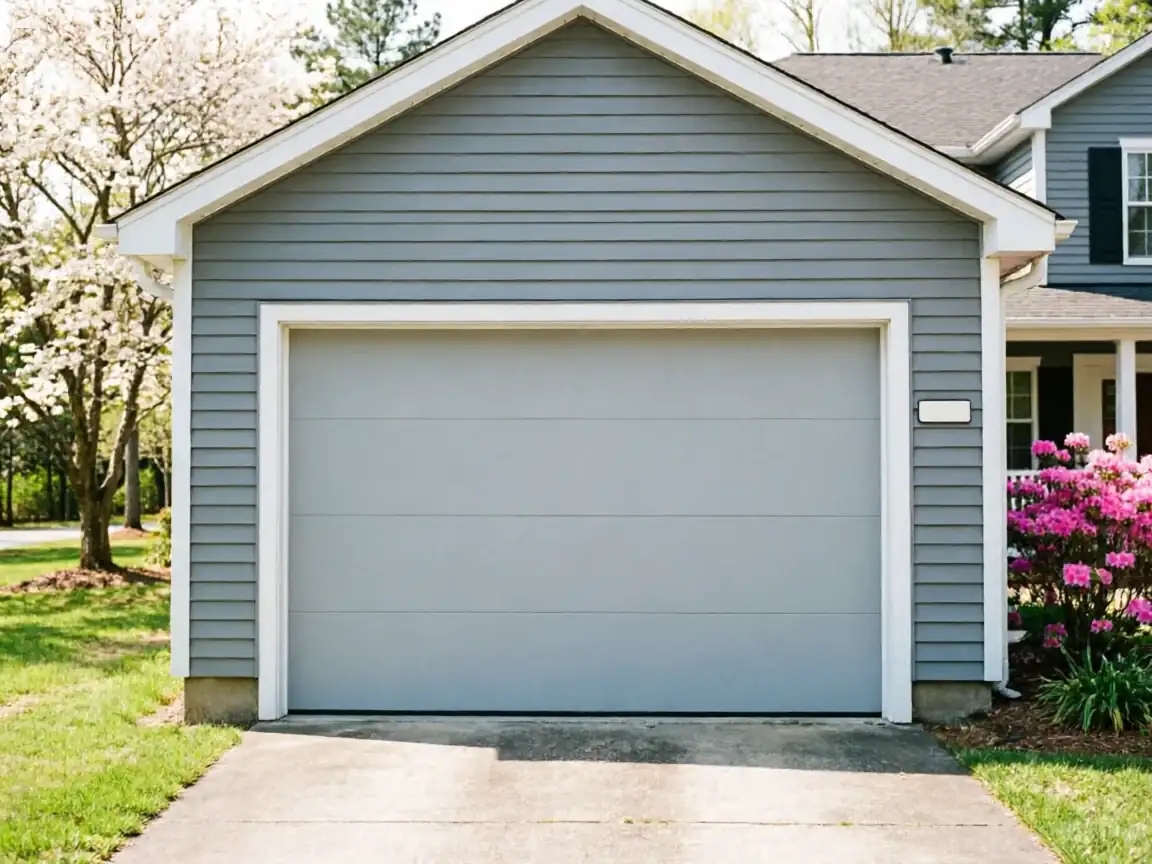
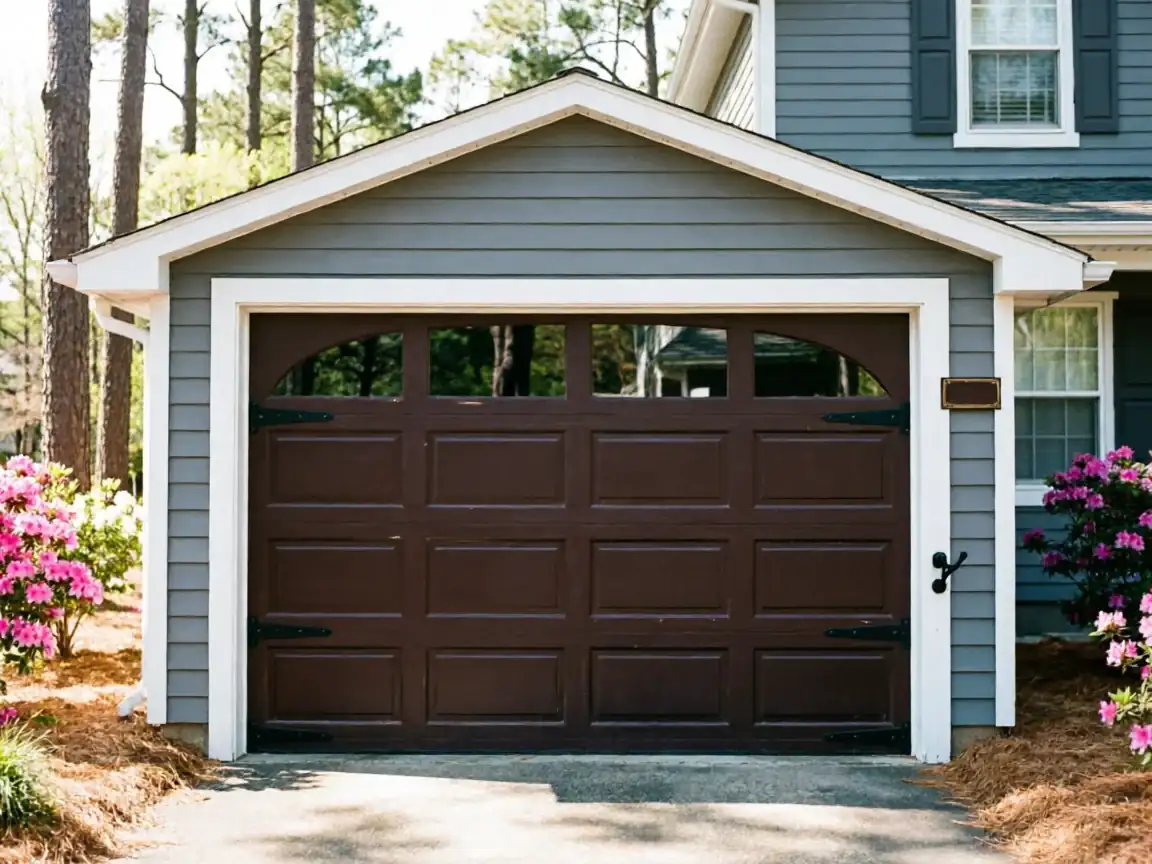
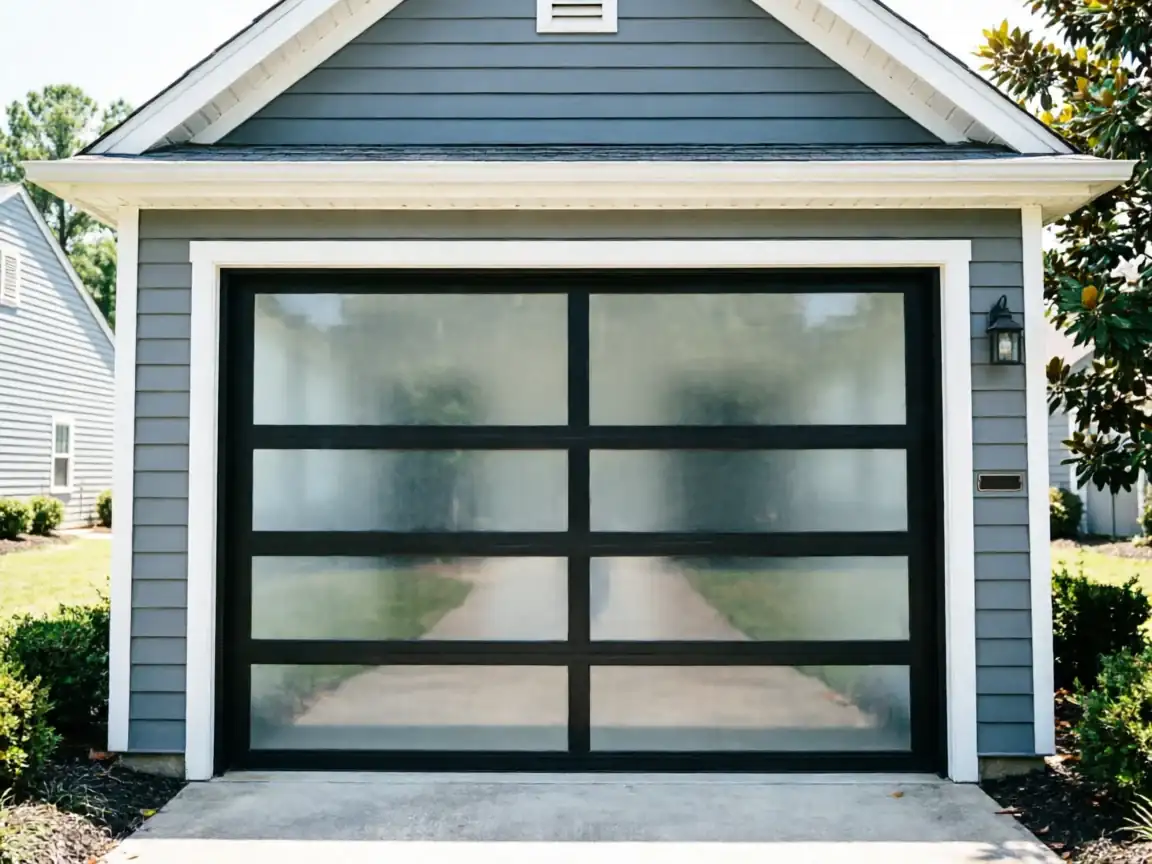
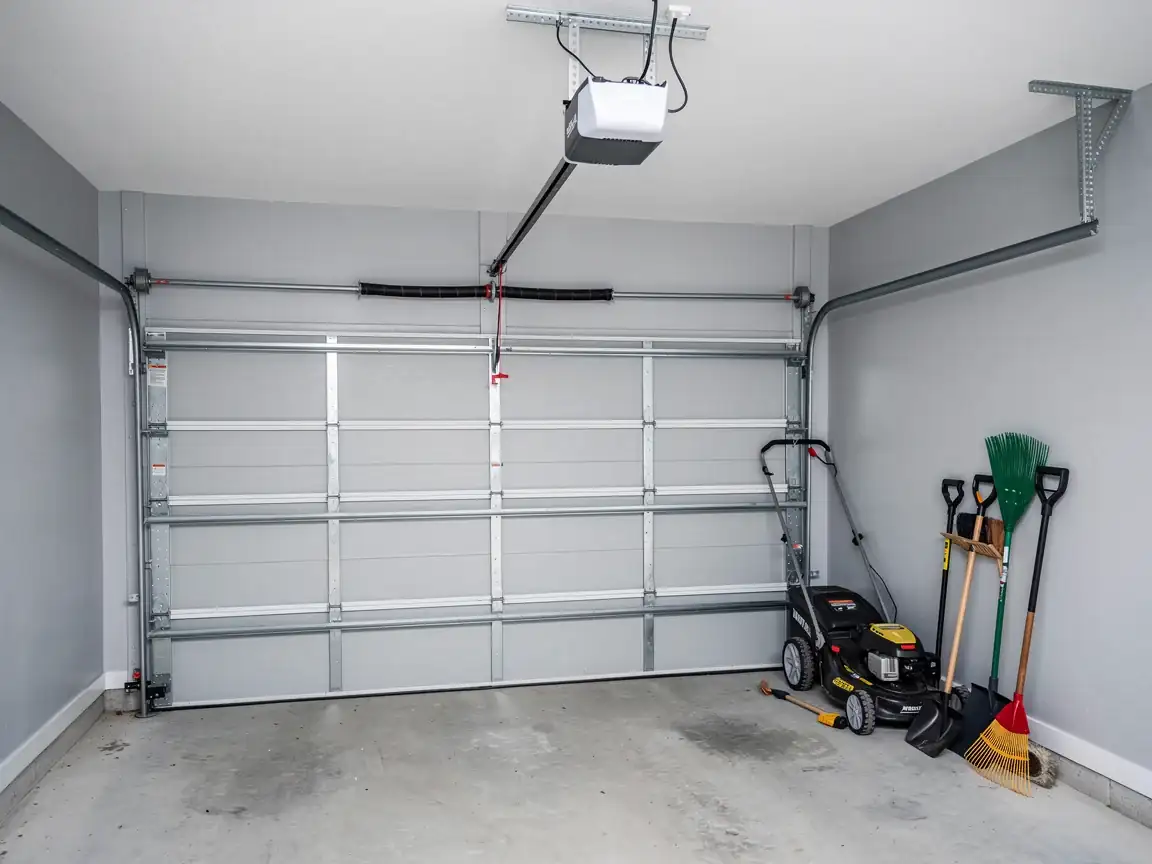
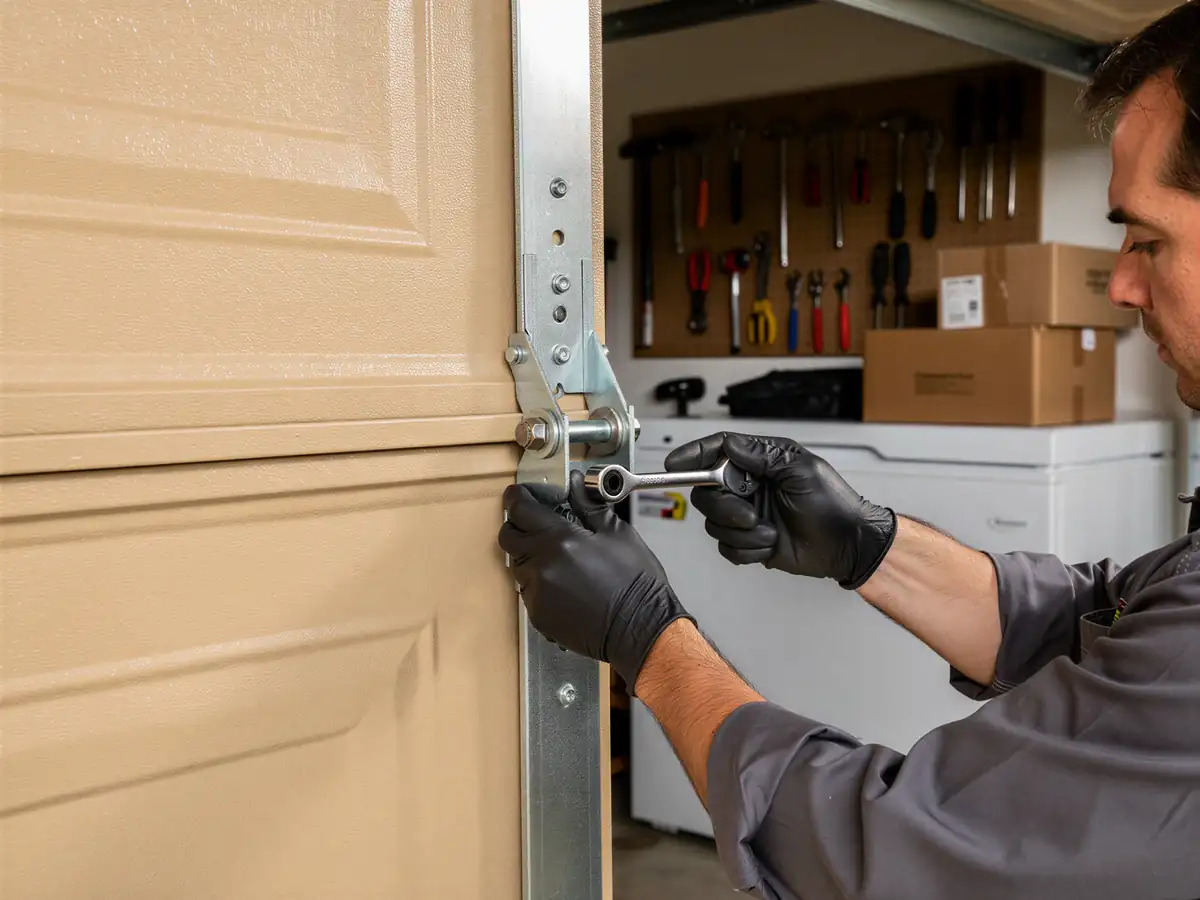
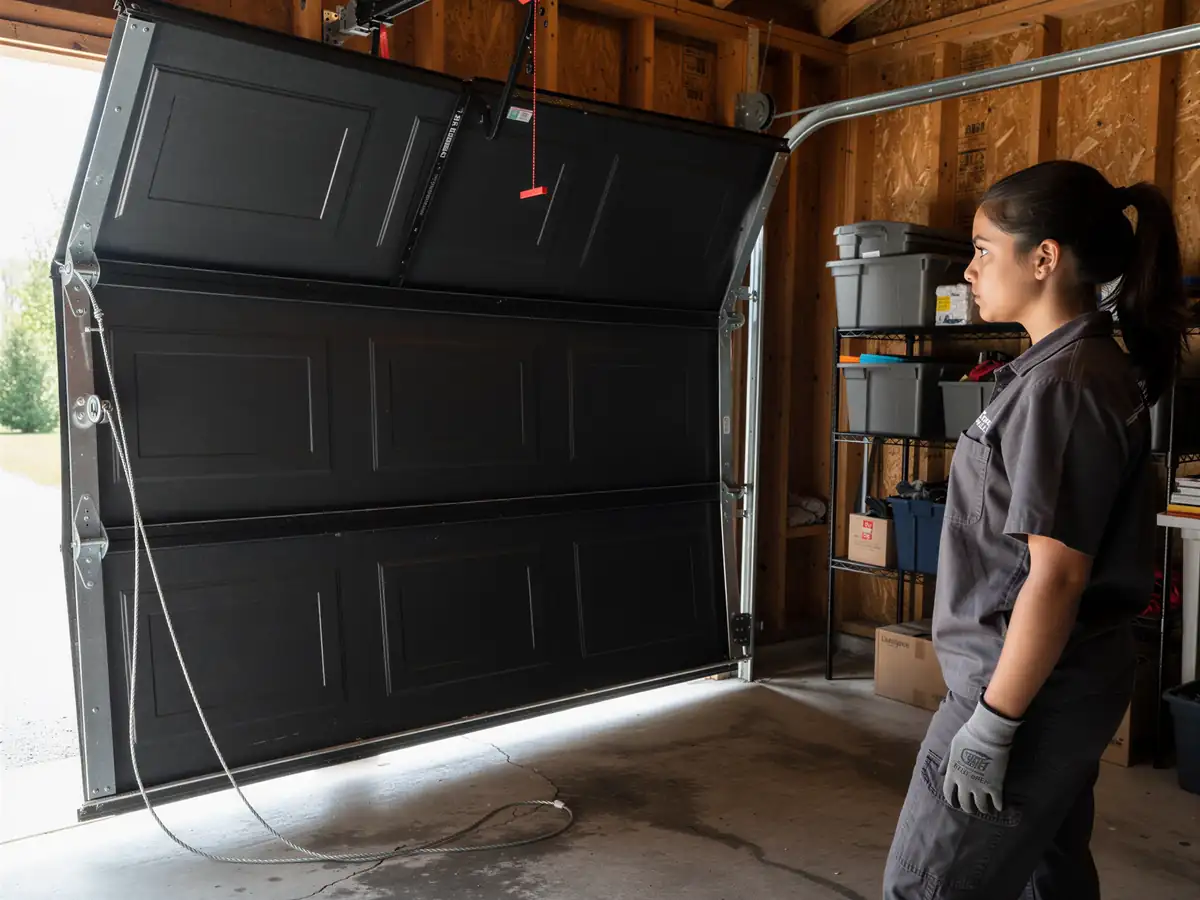
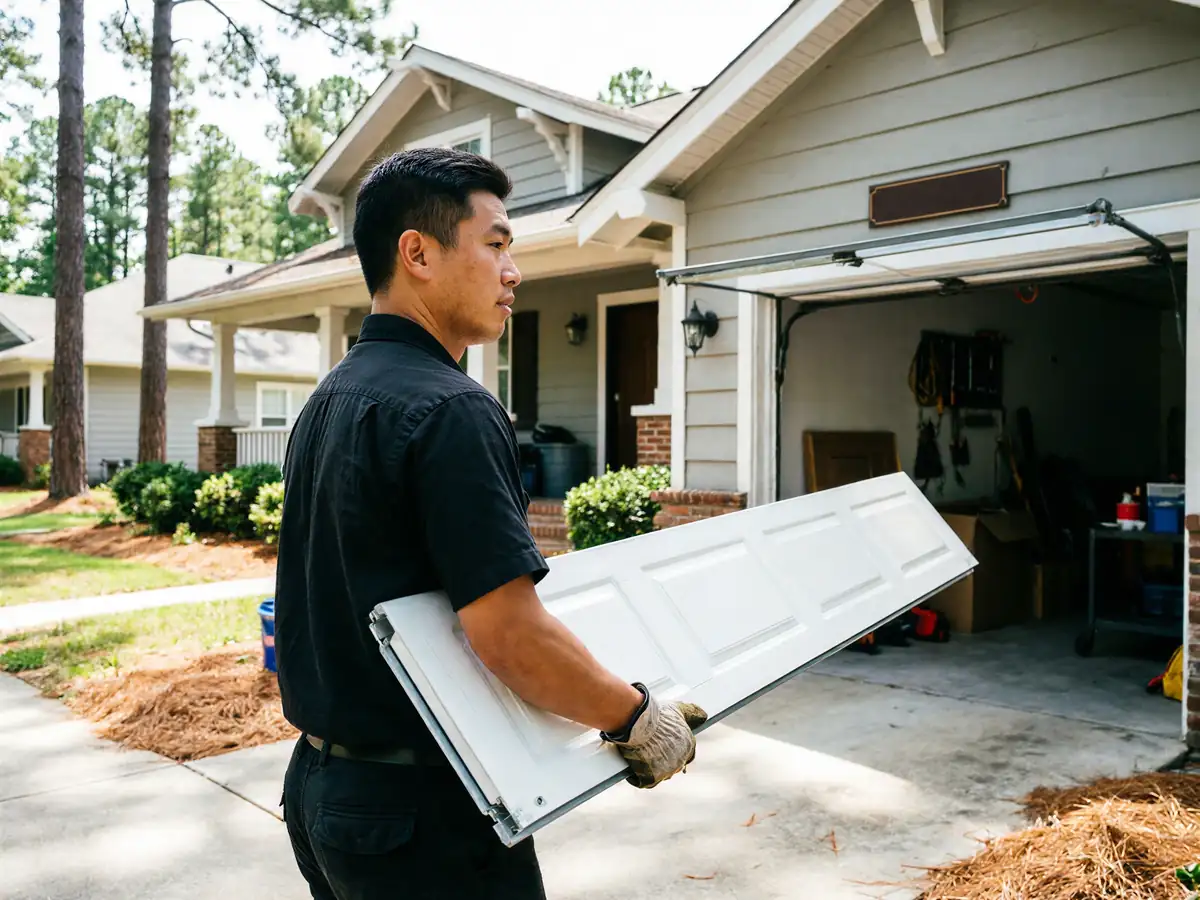
A torsion spring failure on one of these doors usually announces itself with a bang loud enough to bring someone outside, followed by a door that either won't lift at all or lifts a few inches and stops dead. If only the cable has frayed rather than the spring breaking outright, you'll see the door hang crooked, dropping lower on one side as it travels. On the steel panel doors common to this era, a bent track from a car that caught the door edge shows up as a grinding or binding sound rather than a clean stop, and the rollers will often have jumped the track rail entirely. Openers themselves tend to outlast the springs, so a dead opener with a door that moves fine by hand usually points to the opener's circuit board or the wall switch, not the door hardware. None of these are things to force through by hand repeatedly. Forcing a door past a broken spring or a jumped track usually turns a single repair into a spring, a cable, and a bent track all needing work.
Getting It Booked In
There's no branch sitting in Clemmons. The truck comes out of Winston-Salem, about 8 miles up the road, which is a short run compared to some of the farther towns in the service area. When you call, the detail that speeds things up most is telling us whether the door is stuck open, stuck shut, or down and immovable, since a door stuck open on a home with a car trapped inside gets treated differently than one that's simply slow to close. We also ask the rough age of the door if you know it, since a door from the early 1990s needs different spring sizing than anything newer, and showing up with the wrong spring on the truck means a second trip. If you've got the model or spring wind direction from a prior service tag, that helps too, though most homeowners don't and that's fine - we can measure on site.
What You Pay
There's no flat price to quote here without seeing the door, and we're not going to post a number that doesn't hold up once a tech is standing in your driveway. What drives the cost on a door from this era is usually straightforward: spring replacement is a known job with a known part cost, cable and roller work is cheaper still, and track or panel damage from a door that's been forced is where the bill grows, because now you're paying for the spring repair and the body work both. Clemmons households carry a median income on the higher side for the service area, but that doesn't change what a part costs - it just means some homeowners here are quicker to replace an aging opener outright rather than nurse a 30-year-old spring system along. Either path is reasonable. We'll tell you on site which one actually makes sense for the door in front of us, not which one costs more.
Why This Fails Locally
The service area as a whole sits in a cold-moderate climate band, and that cuts both ways on hardware this age. Winters here aren't brutal, but they're cold enough that galvanized torsion springs lose a little tension every freeze-thaw cycle, and a spring installed around 1993 has been through three decades of that cycling. Add in that Clemmons' roughly 8,978 households sit closer together than some of the more rural parts of the service area, meaning more shared driveways and more daily door cycles per unit, and you get springs that reach end of life a bit earlier than the raw age would suggest. None of this is unique to one house - it's a pattern across a neighborhood built in a tight window, which is exactly why the same decade of construction tends to produce the same kind of emergency call within a few years of each other.