Getting It Booked In
Kernersville sits about ten miles east of Winston-Salem
And that's the distance our truck covers to get to you. We don't run a branch here, so when you call, you're booking a visit, not a walk-in counter. Tell us the age of the house if you know it - in Kernersville that usually means early 1990s, since the median year built here is 1993 - and whether the door is moving at all or stuck dead.
That detail matters more than it sounds like it should
A door from a 1993 build has had roughly thirty years of openings and closings, and most torsion springs are rated for somewhere around 10,000 cycles. Two openings a day for three decades gets a household close to that number without anyone noticing until the spring lets go on a Tuesday morning. We ask about the house's age up front so we bring the right spring diameter and wind, not a guess.
We schedule from Winston-Salem
So same-day isn't something we promise on the phone - it depends on the truck's route that day. What we will do is tell you honestly on the call whether it sounds like a same-visit fix or a parts-order job.
How Long You Are Without the Door
Most Kernersville calls we get are spring failures or opener faults, and both of those are usually a single visit once the tech is on-site, assuming the part is a stock size. Steel sectional doors from the early-to-mid '90s used fairly standard torsion spring diameters, so we're rarely waiting on a special-order spring for a house this age.
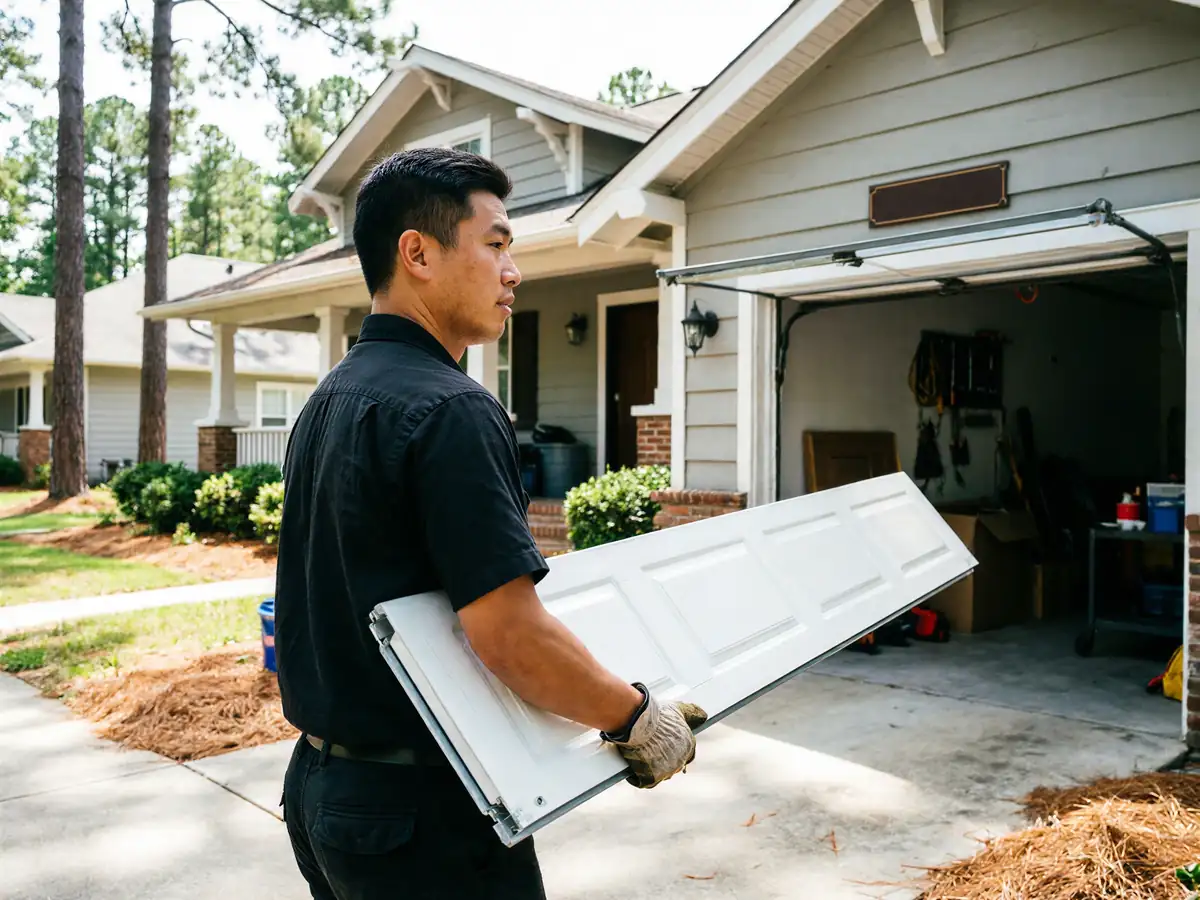
Where it stretches out is the door itself, not the hardware behind it. If a panel is bent or the track is bowed on a door old enough to be original to a 1993 build, we may not carry a matching replacement panel on the truck, since manufacturers don't keep thirty-year-old panel profiles in production. That's a parts-order situation, and we'll tell you that on-site rather than let you assume it's a same-day job.
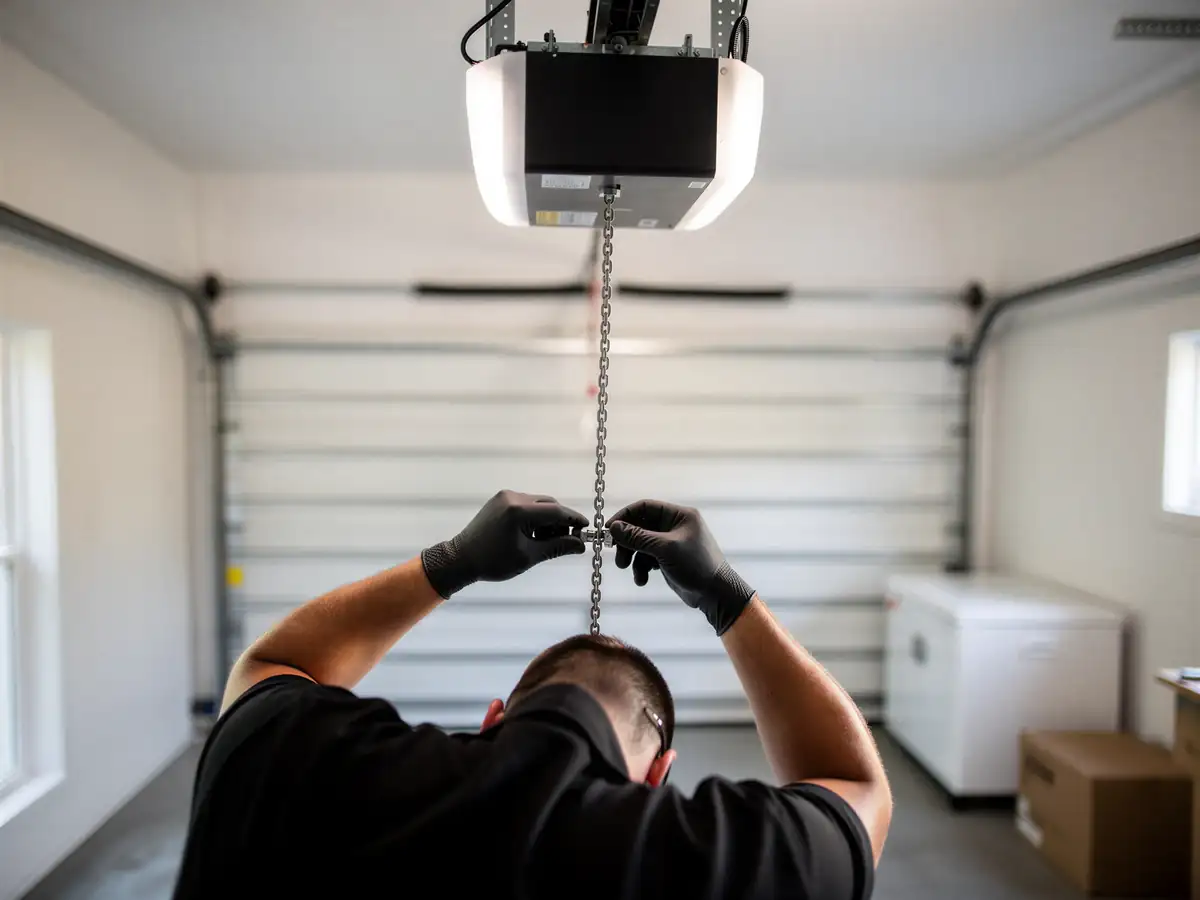
One honest limit: if the opener is an original chain-drive unit from that era and the logic board has failed, we often recommend replacing the opener outright rather than hunting a board for a unit that old. Repair parts for openers that age are inconsistent, and a new opener costs about the same as chasing down a used board with no warranty on it.
What Is on the Truck
For a town where the housing stock runs mostly 1980s and '90s, our truck carries torsion springs in the common residential diameters and wind directions that fit that era of door, standard nylon and steel rollers, and galvanized lift cable in the lengths that fit a typical 7-foot sectional door. We also carry weatherstrip and bottom seal, since rubber that's been compressing against a slab for thirty winters is usually brittle enough to crack when you peel it off.
We stock universal safety sensors and standard drive belts and chains for openers, which covers most replacements without a special order. What we don't carry as stock is panel sections matched to discontinued door lines - if your door is original to the house and the manufacturer stopped making that panel profile years ago, that's a parts search, not a truck item.
Winston-Salem's broader service area runs COLD-moderate on climate, which is part of why the cable and roller stock we carry is rated for that temperature swing rather than for a warmer-climate spec. It's a small distinction, but it's the reason the hardware on the truck isn't generic.
How We Fix It
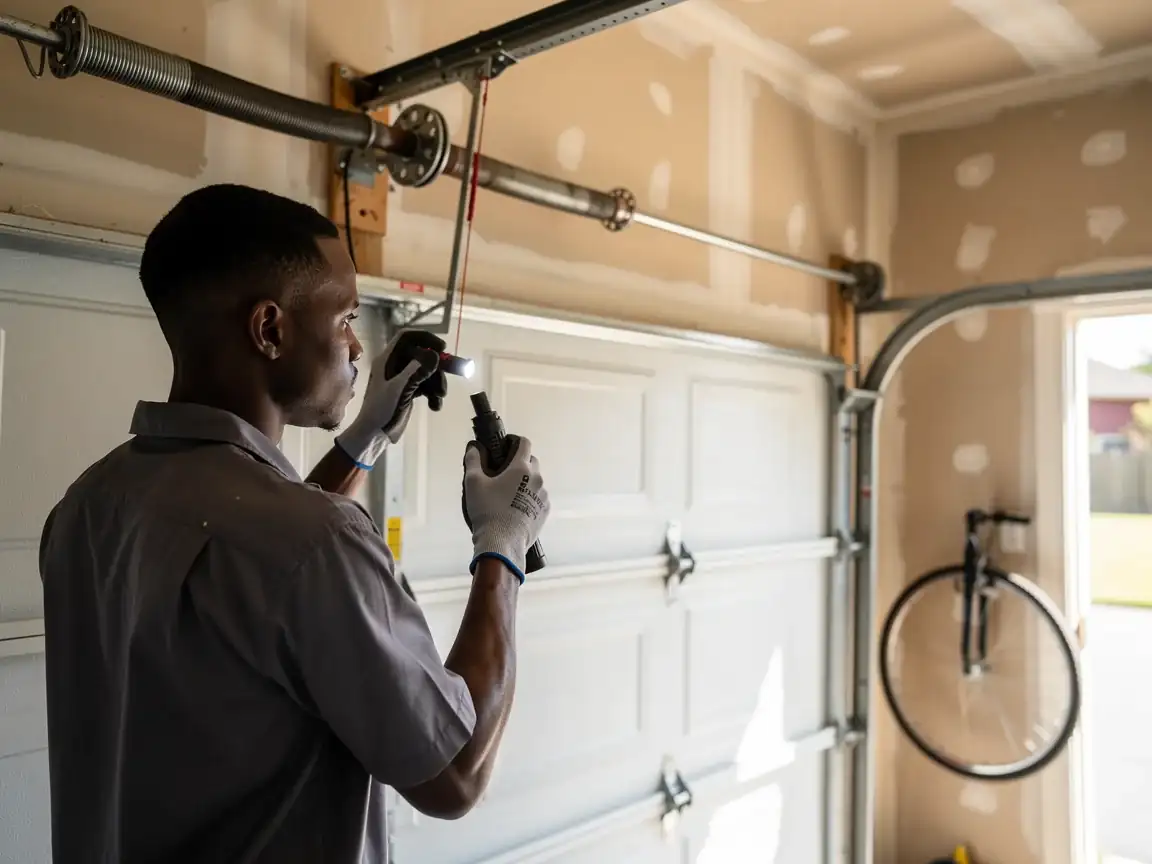
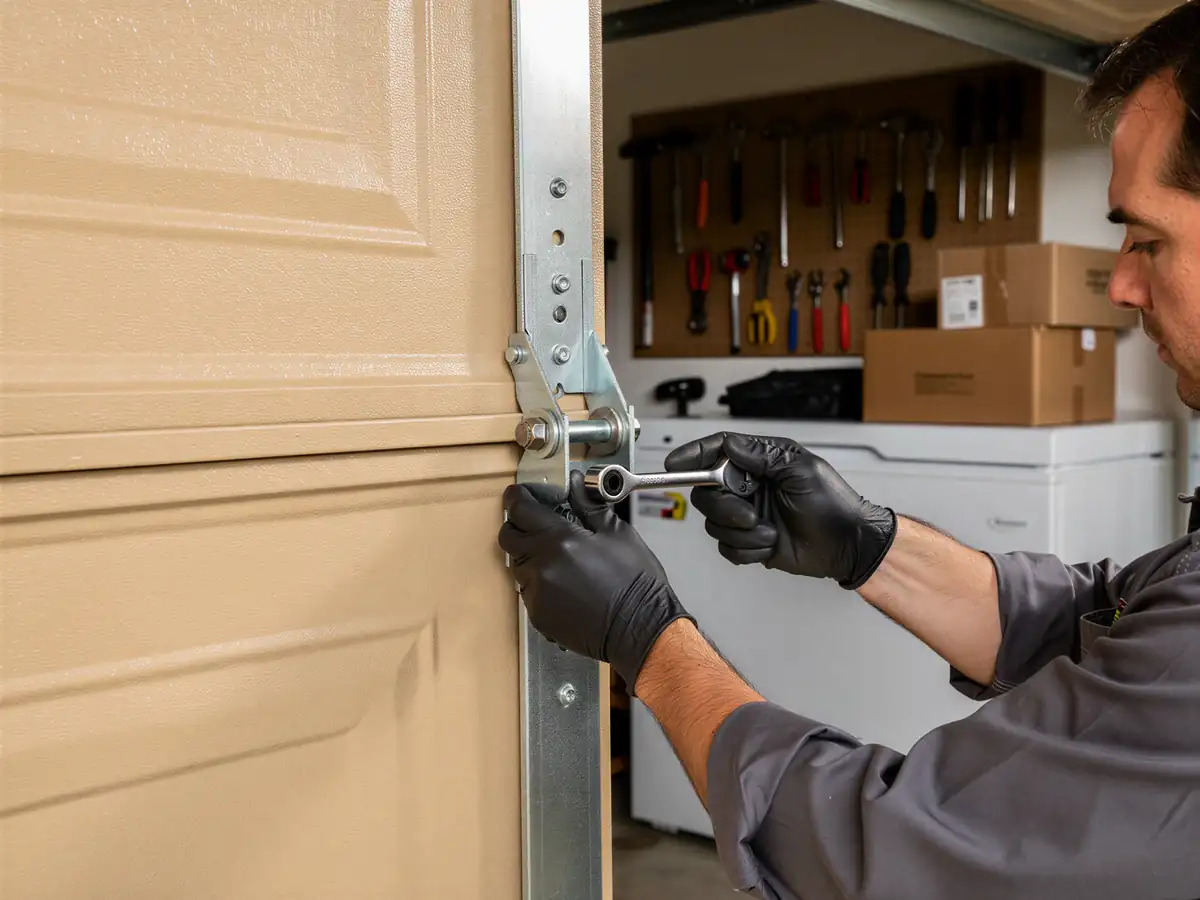
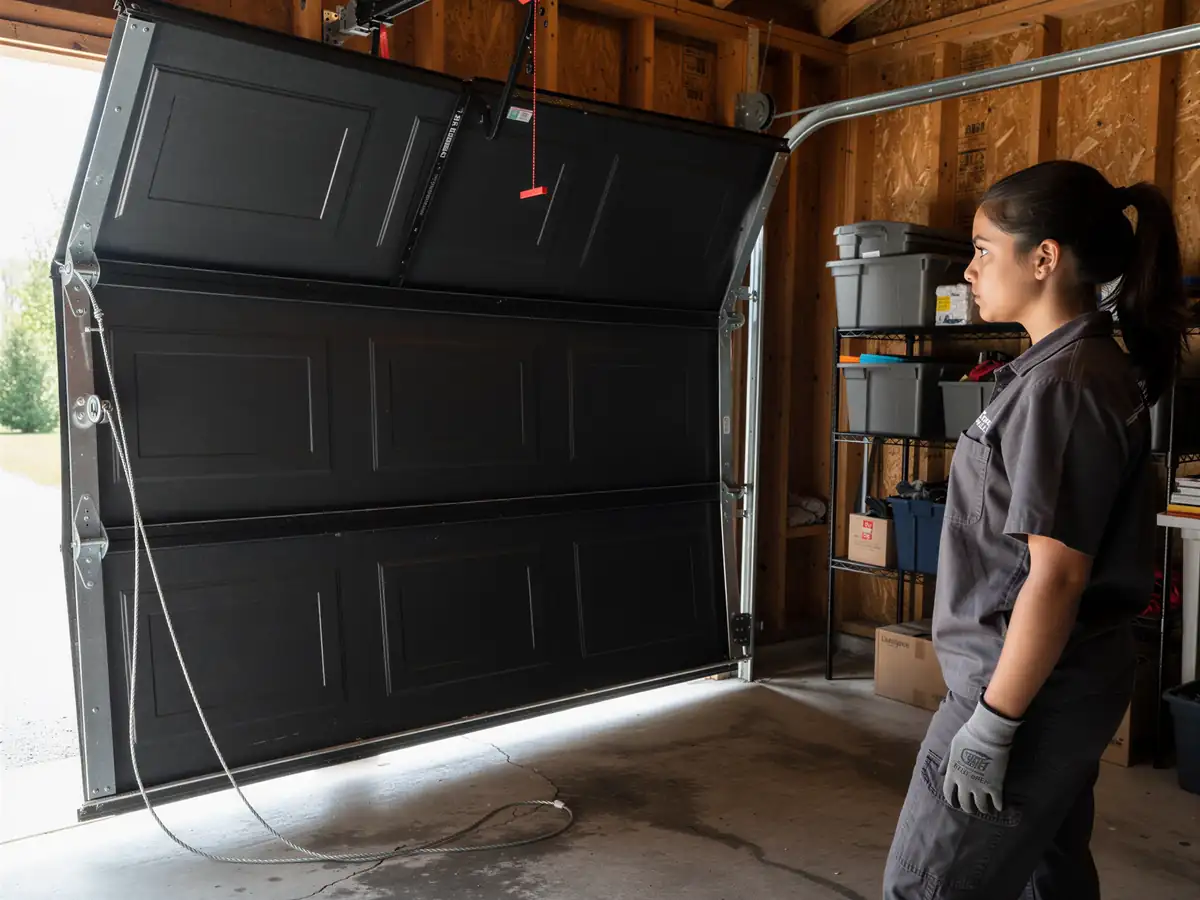
On a torsion spring job, we unload the door under control with clamps and a winding bar
Pull the old spring off the shaft, measure wire gauge and wind direction against what's there rather than guessing from the house's age alone, and set the new spring to match the door's actual weight. Builds from the early '90s sometimes had a lighter insulated door added later without re-balancing the spring, so we check that before assuming the original spec still fits.
For opener faults, we start with the simple things
Travel limits, sensor alignment, the wall button wiring - before replacing a board or motor. A surprising number of "broken opener" calls in houses this age turn out to be a sensor knocked out of alignment by a bike or a trash can, not a dead unit.
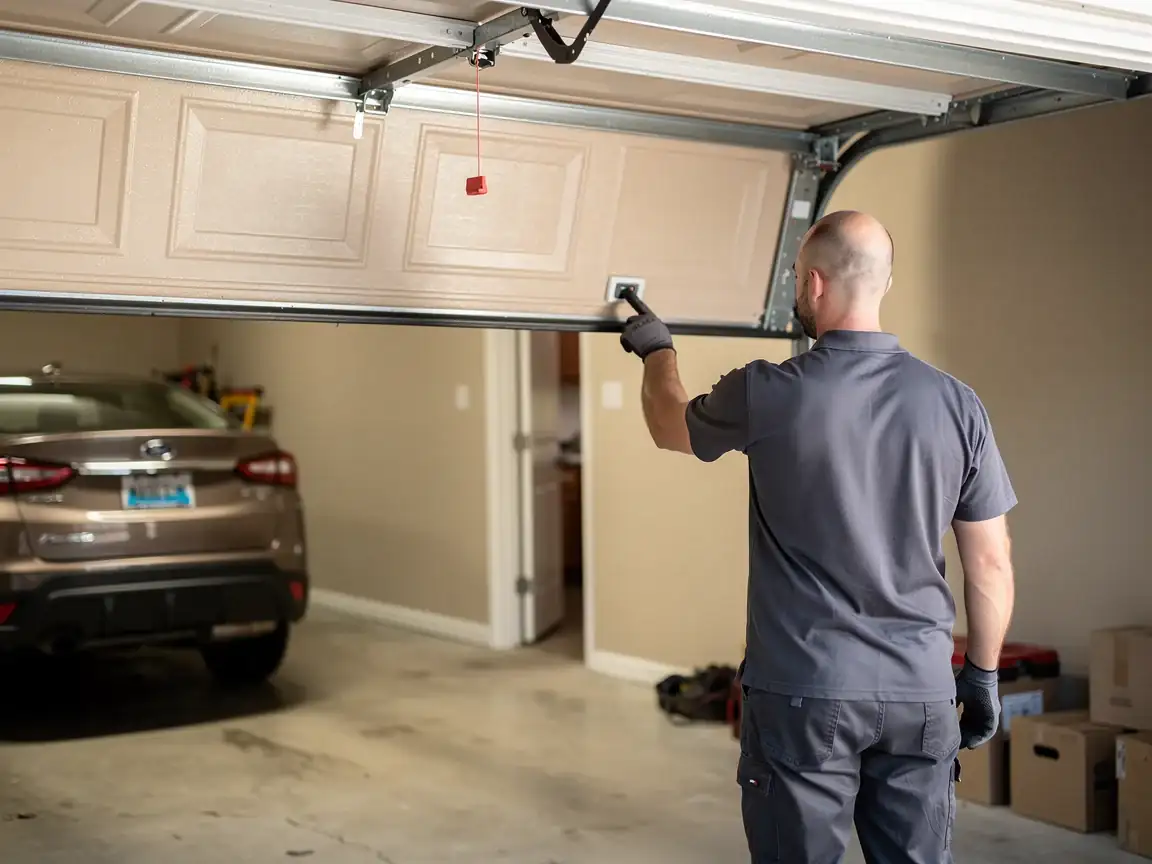
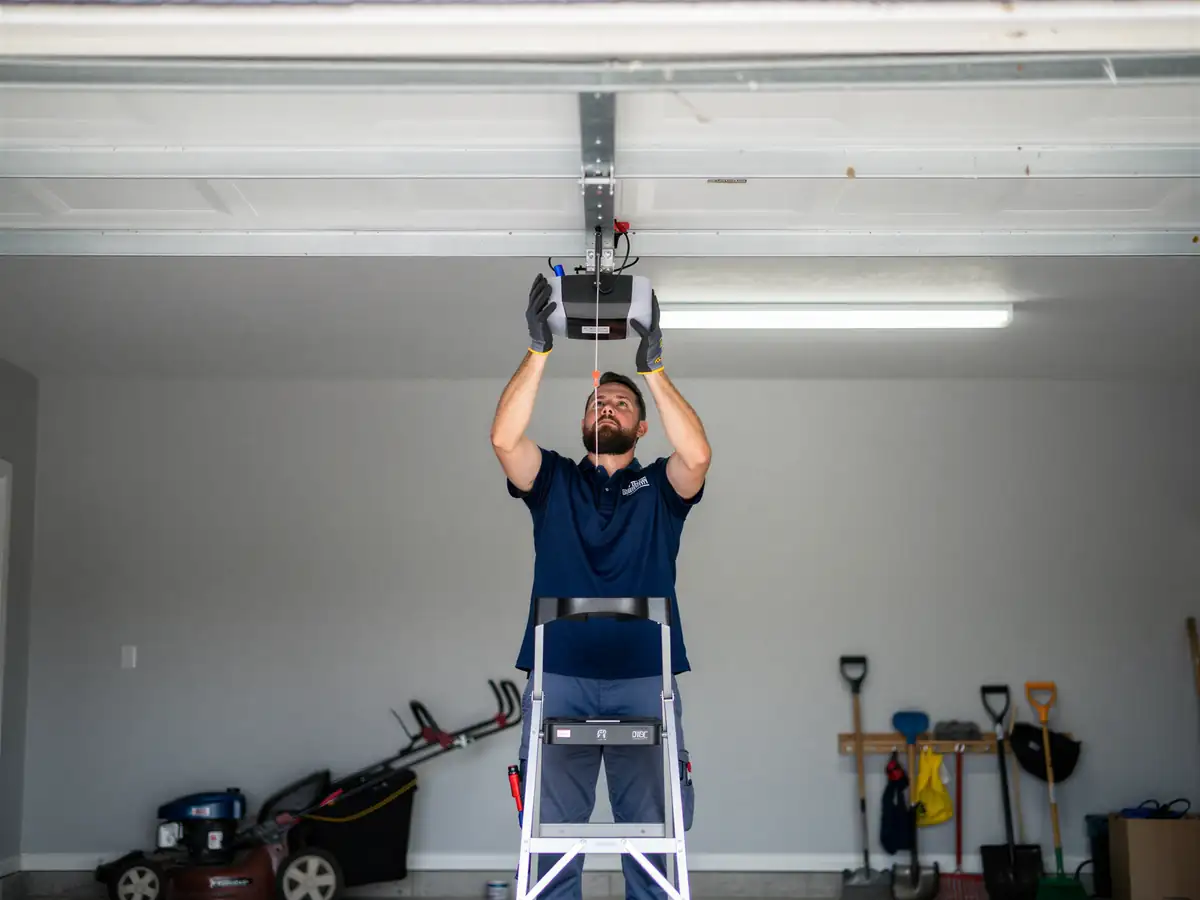
If the fix is a full opener swap, we mount the new unit, set travel and force limits to the specific door's weight
And test the reversal safety feature before we leave - that's not optional, it's the one step that keeps a door from closing on something.
Why This Fails Locally
Kernersville's 12,074 households sit at a lower median income, $69,923, than the $78,821 median across the rest of the service area, and that gap shows up in how long people run a door before calling - more repairs stretched past the point of an easy fix, fewer early opener replacements. It's not a complaint, just a pattern we see on the truck.
The bigger driver is simply the age of the housing stock. A medium build year of 1993 means a large share of Kernersville's garage doors and openers are old enough that original hardware is wearing out on a predictable schedule - springs near end of cycle life, chain-drive openers with aging logic boards, rollers that have outlasted their lubrication. None of that is a Kernersville-specific defect; it's what thirty-year-old equipment does everywhere. What's local is the concentration of houses that hit that age at roughly the same time, which is why we see clusters of similar calls out of this town rather than one-off failures.